



Searches for free laptop programs near me continue to rise in 2026 as more people need reliable devices for school, work, healthcare, and online services. This guide explains how free laptop programs near me actually work, where legitimate offers come from, and how to focus on real opportunities instead of misleading claims.
1. Why So Many People Are Searching for “Free Laptop Programs Near Me” in 2026
Interest in free laptop programs near me keeps growing because laptops are no longer optional tools. They are required for school portals, remote work, telehealth visits, benefit management, and job applications. As device prices continue to rise, many households begin with the same question: Is there any way I can get a laptop for free?


In practice, completely free laptops are rare and usually limited to specific locations or short-term initiatives.
Most real programs operate through subsidies, refurbishing efforts, or bundled support tied to income or benefit eligibility. Understanding where these programs actually come from helps applicants avoid scams and focus only on legitimate options.
2. Types of Free Laptop Programs You Might Find in Your Area
When people search for free laptop programs near me, they usually discover that laptop support does not come from a single source. Instead, different types of programs exist at the local, nonprofit, and federal levels, each with its own rules, availability, and limitations.
Community Digital Inclusion Projects
One common option comes from community-led digital inclusion projects run by cities, counties, school districts, or workforce agencies. These initiatives are designed to reduce the digital divide by providing laptops or technology access to students, job seekers, and low-income residents within a specific area.
Nonprofit Refurbished Device Programs
Another path many applicants encounter is nonprofit refurbished device programs.
These organizations collect donated laptops, refurbish them, and redistribute them to qualifying individuals. While the devices are usually not new, they are functional and intended to support education, employment, and basic online access.
Lifeline Providers Offering Device Support
For applicants who want a more structured and nationally recognized option, Lifeline-connected providers are often considered one of the safest and fastest starting points.
Through the Lifeline Program, eligible low-income households can access subsidized connectivity, and in some cases, discounted or promotional device support tied to enrollment from Lifeline providers.
Eligibility is typically based on participation in programs such as SNAP, Medicaid, SSI, or meeting income thresholds under federal poverty guidelines. While laptops are not always available, Lifeline providers offer a verified and regulated pathway that helps applicants avoid unreliable or misleading offers.
>>> Read more: Free Government Phone Eligibility: Who Qualifies and Rules Explained Simply
3. What Documents You May Need Before Applying for a Laptop under Lifeline
Before starting your application, preparing the right documents in advance can significantly reduce delays. Lifeline providers are required to verify eligibility, identity, and residency to ensure benefits are issued correctly and comply with federal rules.
Proof of Government Assistance
If you qualify through government assistance, you will need official proof of participation. This usually includes a recent award letter, benefit approval notice, or official program statement showing your name and active status.
Common qualifying programs include SNAP, Medicaid, SSI, Federal Public Housing Assistance, or Veterans Pension benefits. So for example, if you are not enrolled in Medicaid but qualify through another program, the same type of official documentation is required.
Identity & Address Verification
All applicants may need to verify their identity and address. This helps prevent duplicate benefits and ensures compliance with one-benefit-per-household rules.
Typical documents include:
- A government-issued photo ID (state ID, driver’s license, or passport)
- Proof of address, such as a utility bill, lease agreement, or official mail with your name and current address
Income Documentation
If you are qualifying based on income instead of program participation, you will need to show proof that your household income falls within Lifeline limits.
Accepted documents often include:
- Recent pay stubs
- Tax returns
- Social Security benefit statements
- Unemployment or disability income letters
Some providers may request multiple months of documentation if income is not consistent.
4. How to Apply for a Free Laptop through Lifeline providers?
Applying through a Lifeline provider is one of the most structured and regulated ways to begin your search for laptop assistance. While laptops are not always available, following the correct steps helps you access real offers and avoid misleading programs.
Step 1: Check Service Eligibility by ZIP Code
Start by entering your ZIP code on a provider’s website to confirm service availability in your area. Lifeline benefits are location-dependent, and device options can vary by state.
Step 2: Select a Lifeline Plan with Device Support
Once eligibility is confirmed, choose a Lifeline-supported service plan. These plans usually include free monthly talk, text, and data, which is required before accessing any device offers.
Even if a laptop is not listed, enrolling in a supported plan is often the first step toward device eligibility when stock becomes available.
Step 3: Review Available Devices and Alternatives
If laptops are unavailable, providers often display alternative devices that still support essential needs such as online learning, job applications, and telehealth.
These devices allow users to stay connected while waiting for the laptop inventory to return.
Step 4: Upload Documents If Required and Submit Application
After selecting your plan and device option, upload your documents securely through the online portal. Double-check that all files are clear and match the information entered in your application.
Once submitted, your application will be reviewed by the provider and the Lifeline verification system.
Step 5: Approval and Device Shipment
If approved, you will receive confirmation and tracking details. Devices are typically shipped directly to your address. Processing times vary depending on verification speed and device availability.
Note: AirTalk Wireless operates under the federal Lifeline Program as an Eligible Telecommunications Carrier (ETC). Eligibility varies by state and program. Offers depend on availability and qualifications. Service is non-transferable and limited to one service per household.
5. Alternatives: If Free Laptops Are Not Available Near You
Because laptop supply is limited and often inconsistent, many applicants do not find an immediate laptop offer even after qualifying. In these cases, choosing a practical alternative helps you stay connected while continuing to monitor laptop availability.
Low-Cost Tablets Through Lifeline Providers (Including AirTalk Wireless)
When laptops are out of stock, AirTalk Wireless, as an approved Lifeline provider, is one of the most reliable alternatives for low-income households looking for device access. While laptops are not always available, AirTalk consistently offers free or deeply discounted tablets tied to Lifeline enrollment.
These tablets are specifically selected to support essential daily needs and are far more consistently available than laptops. Through AirTalk Wireless, eligible users can access Android tablets that are suitable for:
- School portals, online classes, and homework platforms
- Telehealth visits, patient portals, and prescription management
- Job searches, email communication, and document access
- Video calls, government benefit management, and essential apps

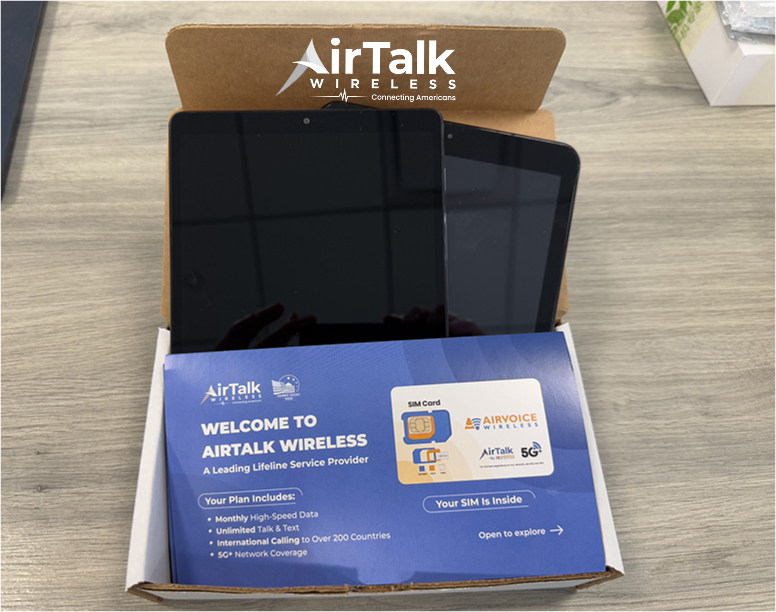
For many applicants, choosing a tablet through AirTalk is not a downgrade, but a practical interim solution. It allows households to stay online immediately while continuing to check back for laptop restocks or limited-time device bundles when they become available.
AirTalk also advises applicants to:
- Check device availability regularly by ZIP code
- Watch for limited laptop or bundle promotions
- Use tablets or phones as a temporary solution instead of waiting offline
In practice, this approach helps families avoid long gaps in connectivity while still keeping a path open to future laptop offers.
IMPORTANT: The government does not subsidize devices. Lifeline programs cover basic service costs only. Free or discounted devices, upgrade plans, or top-ups are exclusive benefits provided by AirTalk Wireless as part of our promotional offers. Terms and conditions apply. Limited-time promotion—offers vary by state, stock availability, and eligibility.
Refurbished Chromebook Programs
Another option is refurbished Chromebook programs run by nonprofits and community partners. These programs typically provide gently used laptops that are restored for basic educational and work use.
Refurbished Chromebooks are often:
- More affordable than new laptops
- Available through waitlists rather than instant approval
- Suitable for web-based tasks, school platforms, and teleconferencing
Availability varies by location, and applicants may need to meet income or assistance-based eligibility similar to Lifeline standards.
Local Buyback Programs Through Schools or Workforce Centers
Some school districts, job training centers, and workforce development offices operate local buyback or redistribution programs. These programs reuse laptops collected from businesses, grants, or technology upgrades and reassign them to eligible residents.
These opportunities are usually:
- Location-specific
- Time-limited
- Focused on students, job seekers, or retraining participants
Checking with local schools, libraries, or employment offices can uncover options that do not appear in national searches.
Conclusion
Searching for free laptop programs near me often leads to frustration because fully free laptops are rare and limited in supply. While qualifying through assistance programs is an important first step, availability depends on inventory, location, and timing.
FAQs
How to claim a free laptop?
To claim a free laptop programs near me, you must first qualify through a recognized low-income or assistance-based program. Most legitimate options require eligibility verification, document submission, and availability confirmation. Because laptops are limited, applicants are encouraged to apply through trusted providers and consider alternatives if laptops are out of stock.
Are free laptop programs available in every state?
No. free laptop programs near me vary by location and depend on local funding, partnerships, and inventory. Some states or cities have active digital inclusion projects, while others rely mainly on national assistance programs where laptops may only appear during limited promotions.