


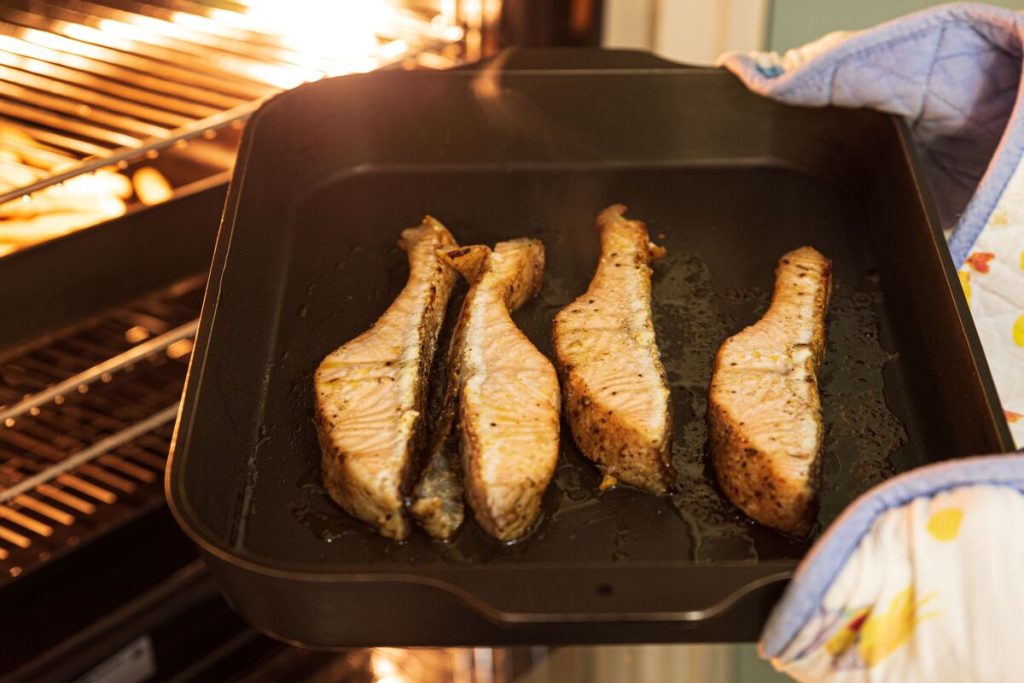
How long to bake salmon at 400? The time depends on several factors, including the thickness of the fillet, whether it is fresh or frozen, and whether it is baked with foil. Even small differences can affect the final texture and doneness.
This guide explains the recommended baking times, safe internal temperature, and practical tips to help you bake tender, flavorful salmon with confidence.
1. How Long to Bake Salmon at 400?
For most fresh salmon portions, the simple answer is 12 to 15 minutes. Thin fillets may finish sooner, while thick center-cut pieces can require several extra minutes.
Instead of relying only on a timer, consider the size and shape of each portion. Unevenly cut fillets may not finish cooking at exactly the same time.
Understanding how long to bake salmon at 400 also helps you adjust the cooking time for different cuts, whether you’re preparing individual portions for dinner or a larger fillet for family meals.
Recommended Baking Times by Fillet Thickness
A thin salmon fillet measuring about ½ inch thick may cook in 8 to 10 minutes. A standard 1-inch fillet generally needs 12 to 15 minutes, while a piece closer to 1½ inches thick may require 16 to 20 minutes.
These estimates apply to a fully preheated oven. Opening the oven repeatedly can lower the temperature and extend the total cooking time.
Safe Internal Temperature for Salmon
The safest way to check salmon is with a food thermometer inserted into the thickest section. The FDA and FoodSafety.gov recommend cooking finfish, including salmon, to an internal temperature of 145°F or 63°C. The flesh should also appear opaque and separate easily with a fork.
Review the FDA’s seafood safety guidance and the FoodSafety.gov temperature chart for additional information.
Check the temperature shortly before the estimated finish time so that the fish does not remain in the oven longer than necessary.
| Salmon type | Approximate thickness | Baking time at 400°F |
| Thin fresh fillet | ½ inch | 8–10 minutes |
| Standard fresh fillet | 1 inch | 12–15 minutes |
| Thick fresh fillet | 1½ inches | 16–20 minutes |
| Foil-wrapped fillet | About 1 inch | 15–18 minutes |
| Frozen fillet | About 1 inch | 20–25 minutes |
Cooking times are estimates. Always confirm doneness with a thermometer because oven performance and fillet size can vary.
>>> Read More: How to Reheat Fried Chicken So It Stays Crispy and Juicy?
2. Baking Salmon at 400: Foil vs. No Foil
Both methods can produce an enjoyable meal, but they create different textures. Foil traps steam around the fish, while uncovered baking allows the exterior to become slightly firmer and more browned.
How Long to Bake Salmon in Foil at 400°F?
People asking how long to bake salmon in foil at 400 can generally plan for 15 to 18 minutes for a standard 1-inch fillet. Seal the foil loosely rather than pressing it directly against the fish, leaving enough space for steam to circulate.
This method works particularly well with lemon slices, herbs, garlic, or a small amount of butter because the enclosed packet retains moisture and aroma.
How Long to Bake Salmon Without Foil at 400°F ?
The answer to how long to bake salmon at 400 without foil is usually 12 to 15 minutes for an average fillet. Place the fish skin-side down on a lined or lightly greased baking sheet.
Uncovered salmon can develop a lightly roasted surface, but it may lose moisture more quickly. Begin checking it early, especially when preparing a thin or skinless portion.
Which Method Produces Better Results?
Foil is a helpful option when softness and moisture are the priorities. Baking without foil is better for people who prefer a firmer surface and more visible browning.
Neither method is automatically superior. The best choice depends on the desired texture and the seasonings used.


3. How Long to Bake Frozen Salmon at 400°F?
Frozen salmon can go directly into the oven, making it a convenient option when there is no time to defrost dinner. However, it requires a longer cooking period than a fresh fillet.
Can You Bake Frozen Salmon Without Thawing?
Yes, frozen salmon can be cooked without thawing first. USDA food-safety guidance explains that cooking food from its frozen state can be safe, although it generally takes longer than cooking thawed food.
Remove any external packaging, brush away loose ice crystals, and place the fish on a prepared baking tray before cooking.
Recommended Cooking Time
When determining how long to bake frozen salmon at 400, allow approximately 20 to 25 minutes for a standard portion. A thick fillet may need closer to 30 minutes.
For better moisture retention, cover the salmon during the first 12 to 15 minutes. Then uncover it, add seasoning if necessary, and continue baking until the center reaches a safe temperature.
Tips for Even Cooking
Arrange the fillets in a single layer with space between them. Avoid stacking or overlapping the portions because this may prevent heat from circulating evenly.
If one end is much thinner than the other, fold the narrow edge underneath itself. This creates a more consistent thickness and helps reduce the chance of overcooking the thinner section.
4. Tips for Perfectly Baked Salmon Every Time
Once the timing is clear, a few straightforward preparation habits can make the final result more consistent.
Even if you already know how long to bake salmon at 400 degree, proper seasoning, accurate temperature checks, and a short resting period are equally important for achieving juicy, flaky salmon every time.
Season Before Baking
Pat fresh salmon dry before adding oil and seasoning. Removing surface moisture helps the ingredients stick and supports better browning when the fish is baked uncovered.
Salt, black pepper, garlic, lemon, paprika, dill, and parsley are easy options. Avoid applying a thick layer of sugary sauce too early because it may darken before the salmon is fully cooked.
Check Doneness with a Thermometer
Insert the thermometer into the thickest part of the fillet without touching the baking tray. Color alone is not always a reliable measurement, so temperature provides a more dependable safety check.
When a thermometer is unavailable, look for opaque flesh that separates easily when pressed gently with a fork, as recommended by the FDA.
Let Salmon Rest Before Serving
Remove the salmon from the oven and allow it to rest for about three minutes. This brief pause lets the heat settle and makes the fillet easier to serve without breaking apart.
Avoid leaving cooked fish at room temperature for an extended period. Refrigerate leftovers promptly in a covered container.
Everyday questions often require simple and reliable answers. Explore more practical cooking, technology, household, and lifestyle guides in the AirTalk Wireless News section.


Conclusion
So, how long to bake salmon at 400 depends mainly on the fillet’s thickness and whether it is fresh, frozen, covered, or uncovered.
A standard fresh portion usually takes 12 to 15 minutes, while frozen salmon may require 20 to 25 minutes. Use these estimates as a starting point, but confirm that the thickest section reaches 145°F. With appropriate seasoning, careful temperature checks, and a short resting period, baked salmon can remain tender, flavorful, and easy to prepare.