


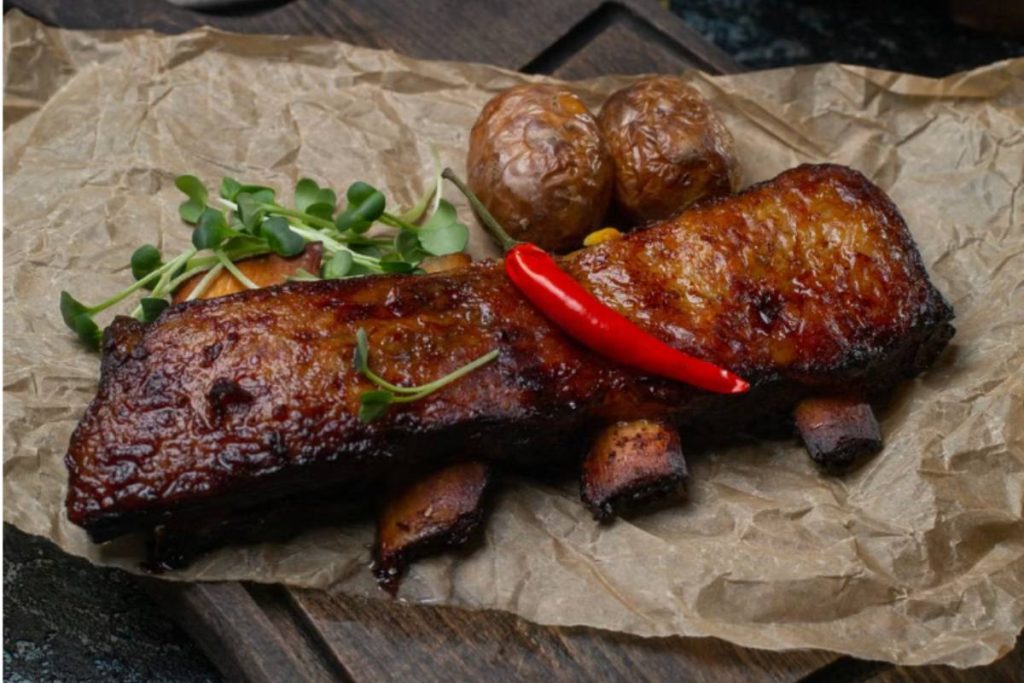
Great smoked ribs take patience, but timing them correctly can be tricky when you’re cooking at home. Leave them too little time and they may still be tough; push them too far and you can lose the texture you’re aiming for.
This guide explores how long to smoke ribs and what you need to get consistently tender, flavorful results.
1. Smoking Ribs Time at a Glance
So, how long does it take to smoke ribs?
Most pork ribs take roughly 4-6 hours when smoked low and slow around 225-250°F, although the exact time varies with the cut, thickness, cooking temperature, and whether you wrap them. Traeger similarly gives a typical range of about 4-6 hours at 225°F.
| Rib Type | Smoker Temperature | Approx. Smoking Time | Best Indicator |
| Baby back ribs | 225°F | 4-5 hours | Tender with little resistance |
| Baby back ribs | 250°F | 3.5-4.5 hours | Meat tender and beginning to pull back |
| Spare ribs | 225°F | 5-6 hours | Tender between the bones |
| Spare ribs | 250°F | 4-5 hours | Flexible rack with tender meat |
Treat these times as estimates rather than strict deadlines. Rib thickness and your preferred tenderness can shift the finish time considerably.
2. How Long to Smoke Ribs at Different Temperatures?
Both 225°F and 250°F work well for ribs. The main difference is cooking speed: 225°F gives you a longer low-and-slow cook, while 250°F can shorten the process without moving far outside the traditional smoking range.
Smoking Ribs at 225°F
For how long to smoke ribs at 225, plan on approximately 4-6 hours. Baby backs often finish toward the shorter end, while larger spare ribs may need more time.
Traeger lists 225-250°F as a typical range for smoking pork ribs and notes that ribs at 225°F commonly take 4-6 hours. One of its baby back recipes cooks a 2-2½-pound rack for approximately five hours at 225°F.
Keep the smoker temperature stable and begin checking tenderness before the estimated finish time rather than automatically removing the ribs when the clock reaches a certain number.
Smoking Ribs at 250°F
For how long to smoke ribs at 250, expect approximately 3.5-5 hours, depending on the cut and cooking method.
Weber, for example, uses a 250°F setup for baby back ribs with an initial two-hour smoke, followed by wrapped and finishing stages totaling roughly four hours.
Because 250°F cooks slightly faster than 225°F, check the ribs earlier rather than simply following the same timeline you would use at the lower temperature.
3. What Determines How Long to Smoke Ribs?
There is no universal answer to how long to smoke ribs because two racks cooked at the same temperature can finish at different times. Several factors determine the actual timeline.


Type and Size of the Ribs
Baby back ribs are generally smaller and leaner than spare ribs, so they often cook faster. Larger, thicker racks need more time for the connective tissue to soften and the meat to become tender.
Thickness matters within the same cut as well. A particularly meaty rack can take longer than a thinner rack of baby backs.
Smoker Temperature
A smoker running consistently at 250°F will generally cook ribs faster than one held at 225°F.
Temperature fluctuations also affect the timeline. Frequently opening the smoker releases heat, while a smoker that repeatedly drops below its target temperature can extend the cook.
Wrapped vs. Unwrapped Ribs
Wrapping ribs partway through cooking can speed up tenderization by trapping heat and moisture around the meat.
Leaving them unwrapped exposes the surface to smoke and dry heat for longer, which can help develop a firmer bark but may require additional cooking time. Traeger notes that wrapping can accelerate cooking while helping retain moisture.
Desired Tenderness
Some people prefer ribs that retain a little bite, while others want meat that pulls away from the bone with very little resistance.
That preference changes when you should remove them from the smoker. Instead of treating cooking time as the only indicator, use tenderness tests near the end of the estimated window.
4. How Long to Smoke Baby Back Ribs
For how long to smoke baby back ribs, a useful starting range is approximately 4-5 hours at 225°F, with somewhat less time often needed at 250°F.
For reference, Traeger’s current baby back rib recipe uses 225°F for about five hours, while Weber’s 250°F method takes roughly four hours across its smoking, wrapping, and finishing stages.
5. How to Smoke Ribs Step by Step
Once you have a general idea of how long to smoke ribs, the cooking process itself is straightforward. The goal is to build flavor gradually while giving the ribs enough time to become tender without drying out.
Step 1. Trim and Remove the Membrane
Trim away loose pieces of fat or meat from the rack. Check the bone side for the thin membrane covering the ribs.
Slide a butter knife underneath one edge, loosen it, then grip it with a paper towel and pull it away. Removing the membrane allows seasoning and smoke to reach the meat more evenly and prevents a tough layer on the back of the finished ribs.
Step 2. Season the Ribs
Pat the ribs dry, then season both sides with your preferred dry rub. A simple combination of salt, pepper, paprika, garlic powder, and brown sugar works well, but you can adjust the seasoning to your preferred flavor.
Let the seasoning sit while the smoker comes to temperature.
Step 3. Preheat the Smoker
Preheat the smoker to your chosen cooking temperature, typically 225°F or 250°F.
Wait until the smoker has reached a stable temperature before adding the ribs. Starting with consistent heat makes the cooking timeline easier to manage.
Step 4. Smoke the Ribs
Place the ribs in the smoker with the bone side down and close the lid.
Let them smoke without repeatedly opening the smoker. During this stage, the surface will gradually darken and develop a flavorful bark.
Step 5. Wrap the Ribs If Desired
Once the bark has developed, you can wrap the ribs tightly in foil or butcher paper to continue cooking.
Wrapping is optional. It traps moisture and can speed up tenderization, while leaving the ribs unwrapped generally produces a firmer exterior.
If you add barbecue sauce, save most of it for the final stage so it does not burn during the longer cook.
Step 6. Finish Until Tender
Continue smoking until the ribs reach your preferred tenderness. Do not rely solely on the estimated cooking time.
Use the bend test, check how easily a toothpick or probe slides between the bones, and look for meat beginning to pull back from the ends of the bones.
Step 7. Rest Before Slicing
Remove the finished ribs from the smoker and let them rest for about 10-15 minutes before slicing.
Resting gives the meat a short period to settle and makes the rack easier to handle. Slice between the bones and serve while warm.


6. How to Tell When Smoked Ribs Are Done
Ribs can be difficult to judge by internal temperature alone because the meat is thin and surrounded by bones. Instead, combine several physical signs of tenderness.
- Bend test: Lift the rack around the middle with tongs. Properly cooked ribs should bend noticeably, and the surface may begin to crack.
- Probe test: Insert a toothpick or temperature probe between the bones. It should slide into the meat with little resistance.
- Bone exposure: The meat often pulls back slightly from the ends of the bones as the ribs cook.
- Texture: The meat should be tender but does not necessarily need to fall completely off the bone.
USDA recommends cooking whole cuts of pork to a minimum safe internal temperature of 145°F (62.8°C) followed by a three-minute rest, but ribs are normally cooked well beyond that point to break down connective tissue and achieve the desired tenderness.
>>> Read more: How Long to Grill Chicken Breast: Tips for Juicy Chicken
7. Should You Wrap Ribs While Smoking?
You do not have to wrap ribs, and both methods can produce good results. The choice comes down to the texture you want and how long to smoke ribs within your planned cooking window.
Wrapping ribs traps moisture and heat around the meat, which can accelerate tenderization and produce a softer exterior. Foil creates the strongest steaming effect, while butcher paper allows slightly more moisture to escape.
Leaving ribs unwrapped keeps the surface exposed to the smoker throughout the cook. This generally produces a firmer bark and gives the ribs more uninterrupted exposure to smoke, but the cooking process can take longer.
A common middle ground is to smoke the ribs unwrapped until the bark develops, wrap them during the middle portion of the cook, then unwrap them again near the end to set the sauce or firm up the exterior.
Conclusion
The clock provides a useful starting point for how long to smoke ribs, but tenderness should ultimately determine when they leave the smoker. Keep the cooking temperature steady, allow enough time for the meat to tenderize, and use physical doneness cues rather than following a fixed number of hours alone.
The AirTalk Wireless Blog is also worth a look when you want more food inspiration and practical reads for everyday life.