


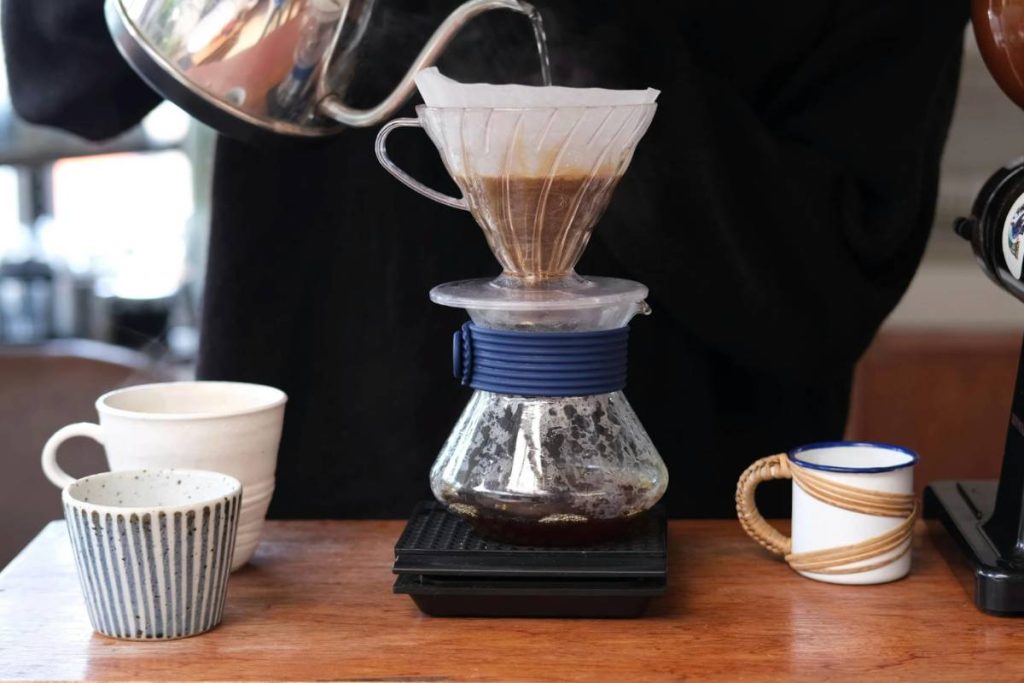
Pour-over coffee looks simple until you try making it consistently. One cup tastes smooth and balanced, while the next suddenly turns bitter, weak, or sour, even though you used the same beans.
Getting better at how to brew pour over coffee usually comes down to controlling a few small details correctly: water temperature, grind size, pouring speed, and timing. Once those pieces start working together, pour-over brewing becomes one of the easiest ways to make cleaner, more flavorful coffee at home.
1. What Makes Pour-Over Coffee Different from Drip or French Press?
With pour-over methods, you directly control:
Pour-over coffee gives the brewer much more control over extraction compared to automatic drip machines or French press brewing.
- Water flow
- Brewing speed
- Saturation of the grounds
- Brew temperature
- Extraction time
This often creates a cleaner and brighter flavor profile with more noticeable acidity and clarity.
Compared to French press coffee, pour-over brewing usually produces:
- Less sediment
- Lighter body
- Cleaner finish
- More flavor separation
Compared to standard drip coffee makers, pour-over brewing offers more precision and customization from cup to cup.


2. What You’ll Need to Brew Pour-Over Coffee
Before practicing how to brew pour over coffee, having the right equipment makes consistency much easier.
Dripper (V60, Chemex, Kalita Wave)
The dripper controls how water flows through the coffee grounds.
Popular options include:
- Hario V60
- Chemex
- Kalita Wave
Each brewer creates slightly different flow rates and extraction styles.
For example:
- V60: cleaner, brighter cups
- Chemex: lighter body and clarity
- Kalita Wave: more forgiving extraction
Paper or Metal Filter
Filters affect both flavor and texture.
Paper filters usually create:
- Cleaner cups
- Less oil
- Lower sediment
Metal filters often produce:
- Fuller body
- More coffee oils
- Heavier mouthfeel
Most beginners find paper filters easier for consistent results.
Gooseneck Kettle and Scale
A gooseneck kettle helps control pouring speed and direction much more precisely.
A scale is equally important because small measurement changes can dramatically affect extraction.
Using both tools makes how to brew pour over coffee much more repeatable and consistent.
Fresh Whole-Bean Coffee and Grinder
Fresh coffee beans matter more than almost any brewing gadget.
For best results:
- Buy whole beans
- Grind immediately before brewing
- Use filtered water
- Store beans properly
A burr grinder is usually preferred because it creates more even particle sizes than blade grinders.
3. How to Brew a Pour Over Coffee: Step-by-Step
Once the setup is ready, the brewing process itself becomes much easier to control with repetition and consistency.
Step 1: Boil and Cool Your Water to the Right Temperature
Water that is too hot can over-extract the coffee, while cooler water may produce weak or sour flavors.
Most pour-over brewing works best around:
- 195°F to 205°F
- 90°C to 96°C
After boiling, many brewers wait about 30 seconds before pouring if no temperature-controlled kettle is available.
Step 2: Rinse the Filter and Preheat the Dripper
Before adding coffee grounds:
- Place the filter inside the dripper
- Rinse thoroughly with hot water
- Discard the rinse water
This step helps:
- Remove paper taste
- Warm the brewer
- Stabilize brewing temperature
Skipping this step can noticeably affect flavor quality.
Step 3: Grind and Measure Your Coffee
For most pour-over methods, a medium grind size works best as a starting point.
A common brewing ratio is:
1:161:161:16
That usually means:
- 20g coffee → 320g water
- 25g coffee → 400g water
Precise measurements improve consistency significantly.
Step 4: Bloom the Grounds for 30 to 45 Seconds
Blooming releases trapped gases from freshly roasted coffee.
To bloom properly:
- Pour a small amount of water evenly over the grounds
- Saturate all coffee lightly
- Wait about 30 to 45 seconds
Fresh coffee typically expands and bubbles during this stage.
Step 5: Pour in Slow, Concentric Circles
After blooming, continue pouring slowly and evenly.
Good pouring technique usually involves:
- Slow circular motions
- Even saturation
- Avoiding aggressive pouring
- Keeping water flow controlled
This stage heavily affects extraction balance and flavor clarity.
Step 6: Let It Drip Fully and Serve
Once pouring finishes, allow the coffee bed to drain completely.
Avoid:
- Stirring aggressively
- Removing the brewer too early
- Rushing the drawdown
After dripping stops, serve immediately for the best flavor experience.
5. How Long to Brew Pour Over Coffee?
Brew time affects extraction just as much as grind size and water temperature.
Total Brew Time Targets by Dripper Type
Most pour-over brews finish somewhere between 2:30 and 4:00 minutes
General targets include:
- V60 → around 2:30–3:30
- Kalita Wave → around 3:00–4:00
- Chemex → around 4:00–5:00
Different beans and grind settings can shift these ranges slightly.
Signs Your Brew Is Too Fast or Too Slow
Brew speed can reveal extraction problems quickly.
Brewing too fast often creates:
- Sour flavors
- Thin body
- Weak sweetness
Brewing too slowly may create:
- Bitterness
- Harsh finish
- Muddy flavors
Adjusting grind size is usually the fastest fix.
6. Best Tips – How to Brew Perfect Pour Over Coffee Every Time
Consistency matters more than chasing complicated techniques. Small adjustments usually create the biggest improvements over time.
Get the Coffee-to-Water Ratio Right (The Golden Ratio)
The brewing ratio strongly affects strength and balance.
A common starting point is:
1:15 to 1:171:15\text{ to }1:171:15 to 1:17
From there:
- Stronger coffee → use less water
- Lighter coffee → use more water
Small ratio adjustments can dramatically change flavor perception.
Dial In Your Grind Size
Grind size controls extraction speed directly.
As a general guide:
- Too coarse → weak or sour
- Too fine → bitter or muddy
Most brewers spend more time adjusting grind size than any other variable.
Master Your Pouring Technique
Pouring consistency is one of the hardest parts of how to brew pour over coffee, but it improves quickly with repetition.
Focus on:
- Steady water flow
- Controlled circles
- Even saturation
- Consistent pouring speed
Cleaner technique often leads to cleaner-tasting coffee.
7. Common Pour Over Mistakes and How to Fix Them
Even with good beans and equipment, small brewing mistakes can completely change how pour-over coffee tastes. Most problems usually come from the extraction balance, grind size, or pouring consistency.
Bitter or Over-Extracted Coffee
Bitter coffee often means the grounds were extracted for too long or too aggressively.
Common causes include:
- Water that is too hot
- Grinding too fine
- Brewing too slowly
- Excessive agitation while pouring
To fix it:
- Use a slightly coarser grind
- Shorten total brew time
- The water temperature is slightly lower
- Pour more gently
Small grind adjustments usually make the biggest difference.
Sour or Under-Extracted Coffee
Sour flavors often happen when the coffee does not extract enough.
This can result from:
- Water is flowing too quickly
- Grind size is too coarse
- Brewing with cooler water
- Uneven saturation
To improve extraction:
- Grind slightly finer
- Extend brew time slightly
- Pour more evenly
- Make sure all grounds become fully saturated
Under-extracted coffee often tastes thin or sharp instead of balanced.
Uneven Saturation of the Grounds
Uneven saturation creates inconsistent extraction, where some grounds over-extract while others barely brew at all.
This commonly happens when:
- Pouring too aggressively
- Missing dry spots in the coffee bed
- Pouring only in the center
- Water channels form unevenly
Improving pouring consistency usually helps most.
Focus on:
- Slow circular pours
- Even coverage across the coffee bed
- Stable kettle control
- Maintaining a consistent water level
More even saturation usually creates sweeter and cleaner cups.
>>> Read more: How to Get Rid of a Headache: Fast Relief Methods That Work 2026
8. FAQs
What Is the Best Coffee Ratio for pour-over?
A common starting point is a coffee-to-water ratio between 1:15 and 1:17, depending on how strong you want the coffee to taste.
How Fine Should I Grind Coffee for pour-over?
Most pour-over brewing works best with a medium grind size similar to table salt. Adjust finer or coarser depending on brew speed and taste.
Can You Brew Pour Over Coffee Without a Gooseneck Kettle?
Yes, but controlling water flow becomes harder. A gooseneck kettle helps create more even extraction and better consistency.
Why Does My Pour Over Coffee Taste Weak?
Weak coffee often comes from grinding too coarse, using too much water, brewing too quickly, or under-extracting the grounds.
Final Thoughts
Getting comfortable with how to brew pour over coffee takes a little experimentation, but small adjustments usually create noticeable improvements very quickly. Grind size, water temperature, brew ratio, and pouring consistency all work together to shape the final cup.
Once the process becomes more familiar, pour-over brewing offers one of the easiest ways to make cleaner, more balanced, and more flavorful coffee at home.