


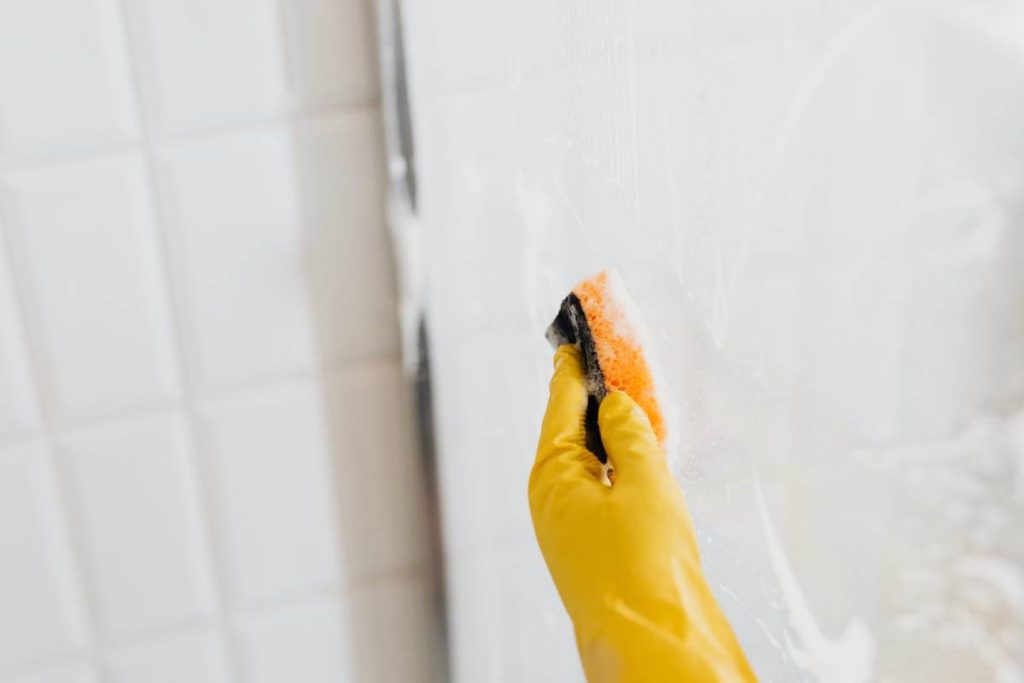
Cloudy shower glass can make an otherwise clean bathroom look dull, especially when soap scum, water spots, and mineral deposits build up over time. Some marks wipe away easily, while others need a little more attention and the right cleaning method.
This guide explains how to clean shower glass step by step, tackle stubborn stains, and keep the glass clearer for longer.
1. What You’ll Need to Clean Shower Glass
You do not need a long list of specialized products to get shower glass clear again. The right supplies depend mostly on whether you are dealing with everyday water spots, soap scum, or heavier mineral buildup.
Everyday Cleaning Supplies
For routine cleaning, gather a few basic tools:
- Microfiber cloths
- A non-scratch sponge
- A squeegee
- A spray bottle
- Warm water
- Rubber cleaning gloves
A microfiber cloth is especially useful for the final drying step because it removes remaining moisture without leaving as much lint behind. Avoid steel wool and highly abrasive scrubbers, which may scratch or damage some glass surfaces and finishes around the shower.
Commercial Glass Cleaners
A commercial bathroom or shower-glass cleaner can be convenient for regular buildup. Look for a product specifically labeled for glass and, when needed, one formulated to tackle soap scum or hard water deposits.
Always follow the manufacturer’s directions, including recommended contact time and ventilation. Also check whether the cleaner is safe for nearby materials such as natural stone, metal fixtures, protective glass coatings, and grout before spraying it across the entire shower.
Natural Cleaning Alternatives
White vinegar is a popular option for mineral deposits and hard water spots because its acidity can help dissolve mineral buildup. A common approach is to dilute white vinegar with water in a spray bottle before applying it to the glass.
For more stubborn residue, baking soda can sometimes be made into a gentle paste with water. However, use it cautiously because abrasive cleaning methods may not be appropriate for every shower-glass coating.
Never mix vinegar or other acids with chlorine bleach. Mixing cleaning chemicals can produce dangerous fumes.


2. How to Clean Shower Glass Step by Step
The basic process for how to clean glass shower doors is straightforward: loosen surface residue, give the cleaner enough contact time to work, gently remove the buildup, and dry the glass thoroughly.
Rinse the Glass
Start by rinsing the shower glass with warm water. This helps remove loose dirt and softens some of the soap residue sitting on the surface.
If possible, work from the top down so loosened residue moves toward the bottom of the shower rather than back over areas you have already cleaned.
Apply Your Cleaning Solution
Spray your chosen glass cleaner evenly over the surface, paying extra attention to cloudy areas and visible water spots.
For a commercial cleaner, use the amount recommended on the label. If you are using a homemade solution, first test it on a small, inconspicuous area, particularly if the shower glass has a special protective coating.
Let It Sit
One important part of how to clean shower glass is giving the cleaning solution time to loosen the buildup instead of immediately wiping it away.
Follow the product’s recommended contact time. For homemade solutions, a few minutes may be enough for light buildup. Do not allow the cleaner to completely dry onto the glass, as this can leave additional residue and make rinsing more difficult.
Scrub Gently
Use a soft microfiber cloth or non-scratch sponge to work across the glass. Focus on areas where soap scum or water spots remain visible.
Avoid aggressive scrubbing with razor blades, steel wool, or abrasive pads unless the glass manufacturer specifically states that the method is safe. These tools can potentially scratch glass or damage protective coatings.
Rinse and Dry With a Microfiber Cloth
Rinse the glass thoroughly with clean water to remove both loosened residue and cleaning solution.
Next, use a squeegee to remove most of the water, working from the top toward the bottom. Finish with a clean, dry microfiber cloth around the edges and anywhere streaks remain.
Drying matters because leaving water droplets on the surface can allow minerals to settle back onto the glass as the water evaporates.
3. How to Remove Tough Stains From Shower Glass
Regular cleaning may not be enough when buildup has been accumulating for weeks or months. If you’re researching how to clean shower glass doors that already look cloudy, first identify the type of residue.
Soap scum, hard water stains, mildew, and concentrated mineral deposits may require different approaches.
Soap Scum
Soap scum develops when soap residue combines with minerals in water and sticks to the shower surface. It can appear as a cloudy, whitish film that becomes more noticeable over time.
Apply an appropriate bathroom cleaner and allow it to sit according to the label before gently scrubbing with a non-abrasive sponge. For a homemade approach, diluted white vinegar may help loosen some residue, provided it is compatible with the surrounding materials.
Rinse thoroughly and dry the glass afterward.
Hard Water Stains
If you want to know how to clean glass shower doors with hard water stains, the white or cloudy marks you see are often mineral deposits left behind as water evaporates.
An acidic cleaner designed for mineral deposits can help dissolve this buildup. White vinegar is another commonly used option for compatible surfaces. Apply the solution, give it time to work, gently wipe or scrub the affected area, then rinse thoroughly.
Severe hard water stains may require several cleaning cycles rather than increasingly aggressive scrubbing. This reduces the risk of damaging the glass while gradually breaking down the deposits.
Mold and Mildew
Dark spotting around shower doors often develops on seals, tracks, caulk, or other damp areas rather than on the center of the glass itself.
Use a bathroom cleaner labeled for the affected surface and follow its safety instructions carefully. Improve ventilation while cleaning and wear gloves where appropriate.
Do not combine different mold cleaners or mix bleach-containing products with vinegar, ammonia, or other household cleaners. After cleaning, rinse as directed and dry the area thoroughly to reduce the moisture that encourages regrowth.
Stubborn Mineral Deposits
Heavy mineral deposits can form when hard water repeatedly dries on the glass without being removed. Over time, the buildup may become much more difficult to clean than ordinary water spots.
Start with a cleaner formulated for hard water or mineral deposits and follow its specified contact time. Repeat the treatment when necessary rather than immediately switching to abrasive tools.
If deposits remain despite repeated cleaning, check the shower-glass manufacturer’s care recommendations before trying stronger chemicals or scraping methods. What looks like removable buildup can sometimes be glass etching or surface damage, which ordinary cleaning will not fully reverse.
>>> Also read: How to Measure Room for Furniture? 4 Simple Steps to Get the Perfect Fit
4. How to Keep Shower Glass Clean Longer
Once you know how to clean shower glass, the easiest way to avoid another difficult deep clean is to prevent water, soap, and minerals from sitting on the surface for too long. A few small habits after each shower can significantly slow down the return of cloudy buildup.

Use a Squeegee After Every Shower
Run a squeegee over the glass after showering to remove water before it has a chance to evaporate. Start at the top and work downward with overlapping strokes.
This simple habit reduces the water droplets that leave mineral spots behind. It also removes some soap residue before it dries onto the surface.
Apply a Water Repellent
A shower-glass water repellent or protective treatment can create a surface that makes it harder for water droplets and residue to cling to the glass.
Choose a product designed specifically for shower glass and follow the application instructions carefully. If your shower already has a factory-applied protective coating, check the manufacturer’s care recommendations before adding another treatment.
A water repellent does not eliminate the need for cleaning, but it can make routine maintenance easier.
Clean Regularly
Do not wait until the glass becomes heavily clouded before cleaning it. A quick weekly wipe-down is generally easier than removing layers of hardened soap scum and mineral deposits later.
How frequently you need to clean depends on shower use and water hardness. Homes with hard water may need more frequent maintenance because mineral deposits can accumulate quickly.
Improve Bathroom Ventilation
Moisture that remains in the bathroom after a shower can contribute to mildew and keep shower surfaces damp for longer.
Run the bathroom exhaust fan during and after showering, and leave the shower door open when practical to encourage airflow. If your bathroom has a window, opening it when conditions allow can also help excess moisture escape.
5. Common Mistakes to Avoid When Cleaning Shower Glass
Even a good cleaning product can produce disappointing results when it is used incorrectly. Avoiding a few common mistakes can protect the glass and prevent you from creating more work for yourself.
Using Abrasive Scrubbers
Steel wool, harsh scouring pads, and abrasive powders may appear useful for stubborn deposits, but they can scratch surfaces or damage certain protective glass coatings.
Start with a microfiber cloth or non-scratch sponge instead. For difficult buildup, give an appropriate cleaner more time to loosen the deposit or repeat the treatment rather than immediately scrubbing harder.
Letting Cleaners Dry on the Glass
When learning how to clean shower glass, it is important to distinguish between giving a product time to work and leaving it on until it dries.
Many cleaners need some contact time to dissolve soap scum or mineral buildup. However, letting the solution dry completely can leave streaks or residue behind and make the surface harder to rinse.
Follow the recommended contact time on commercial products, then rinse the glass thoroughly before the cleaner dries.
Skipping Regular Maintenance
Waiting until the shower door becomes visibly cloudy makes cleaning much more difficult. Each time water evaporates, it can leave minerals behind, while soap and body-care products add another layer of residue.
Regular squeegeeing and light cleaning help interrupt that buildup before it becomes stubborn. This usually requires far less effort than repeatedly deep-cleaning heavily stained shower glass.
Conclusion
Knowing how to clean shower glass is largely about matching the cleaning method to the type of buildup. Everyday residue may need little more than an appropriate cleaner and microfiber cloth, while soap scum and hard water stains can require additional contact time and targeted treatment.
Once the glass is clear, prevention makes the biggest difference. Remove water with a squeegee, keep the bathroom well ventilated, and clean the glass regularly so mineral deposits and soap residue have less opportunity to build up again.
If you’re looking for more practical ideas for keeping your home and daily routine running smoothly, visit the AirTalk Blog for more topics and everyday solutions.