


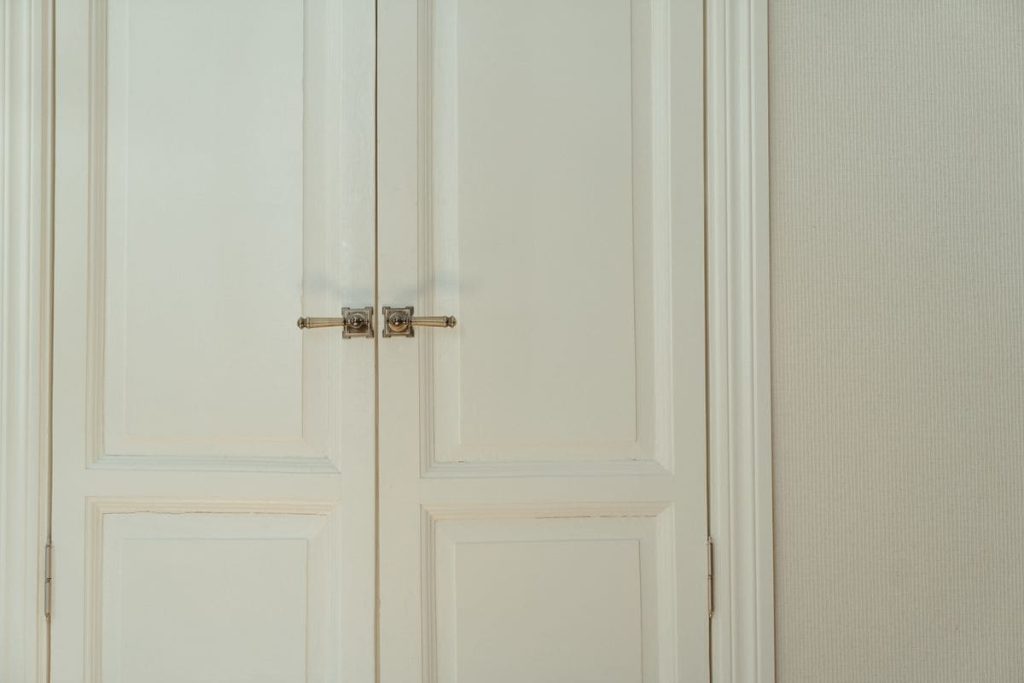
It’s your home, so it’s helpful for you to learn how to fix whatever door problem, including what causes a door to sag and how to fix a sagging door DIY. Because if we’ve got a door that’s sticking, rubbing, or refusing to latch, we might as well fix it properly like an absolute champ, right?
1. What Causes a Door to Sag?
A sagging door is easy to identify if you know what to look for.
The most common sign is rubbing at the top of the door jamb on the latch side. Other signs include the door dragging on the floor, sticking when you open or close it, or uneven gaps around the frame. A door that is properly aligned will have even gaps along the sides and top.
If the misalignment gets worse, the door can become difficult to close, latch, or lock. It may also fail to seal tightly against the weatherstripping, allowing drafts, light, or noise to enter.
A door can sag for several reasons.
- Loose hinges are common, especially if the hinge screws have loosened over time.
- Worn hinges or hardware can also cause the door to shift out of place.
If the hinge holes are stripped and the screws do not hold, the door may slowly drop from its own weight.
Changes in the environment can also cause doors to sag. Humidity and temperature changes can make wood doors and frames expand or contract. These effects are usually temporary and do not always mean there is a serious problem.
If the misalignment does not go away or gets worse, there may be a structural problem. If you notice several doors or windows sticking, gaps in the walls, or uneven floors, you may need to check for foundation movement.
In these cases, learning how to fix a sagging door that won’t latch or how to fix a sagging door that won’t lock can help restore proper alignment and function.
2. Tools and Materials You’ll Need
You only need a few basic tools to fix a sagging door:
- Screwdriver
- Drill or driver
- 3-inch wood screws (used to secure the top hinge into the wall stud for extra support)
- Wood glue (used to help fix stripped screw holes)
- Toothpicks or small wood plugs (fill in stripped screw holes before adding screws)
- Thin shims (cardboard or plastic pieces used to adjust the position of the hinge)
- Wedge or door support (holds the door steady while you work on the hinges)
- Utility knife or scraper
- Replacement hinges (needed if any of the current hinges are bent or damaged)
3. How to Fix a Sagging Door (Step-by-Step)
Follow these steps on how to fix a sagging door. Start with the simplest adjustment and test the door after each change before moving to the next step.
Note: The steps below can apply to how to fix a sagging storm door and how to fix a sagging screen door. However, some doors may require adjustments specific to their hardware and frame.
Step 1: Start With the Easiest Fixes
- Check all hinge screws on the door and frame. Tighten any loose screws with a screwdriver, starting at the top hinge.
- If the screws are tight and the door still sags, replace one or more short screws in the top hinge with a longer screw. Drive the longer screw through the hinge and door jamb into the wall stud if possible. This gives a stronger anchor and pulls the hinge back into place.
- Check the screw holes as you work. If a screw spins but does not tighten, the wood may be stripped. Remove the screw. Fill the hole with small pieces of wood like toothpicks or a wood plug and add wood glue. Let it dry, trim the material flush, and reinstall the screw.


Step 2: Shim and Adjust Hinges
If tightening or replacing screws does not fix the alignment, the next step in how to fix a sagging door is to support the door before adjusting the hinges.
- Place a wedge or other support under the door so its weight does not pull on the hinge while you work.
- To change the hinge position slightly, place a thin shim behind the hinge leaf. Use a small piece of cardboard, plastic, or another thin material. Reinstall the hinge over the shim. Make small adjustments instead of using a thick shim all at once.
- After each adjustment, remove the support and test how the door swings and closes. Check if the gaps around the door are more even and if the latch lines up with the strike plate.
Step 3: Address Paint Buildup or Damage
If the hinges have been painted over many times, paint buildup under the hinge leaves can stop them from sitting flat.
- Remove extra paint with a scraper or utility knife. Be careful not to damage the wood.
- Check the hinge area for crushed, cracked, or damaged wood. If the hinge does not sit flat because of damage, repair the area before reinstalling the hinge.
- Do not sand or trim the door right away. Only remove material from the door as a last step, since the problem is often with the hinge alignment, not the door size.
Step 4: Fine-Tune the Door So It Closes Properly
- When the hinges are secure, open and close the door a few times. Make sure it moves freely without rubbing, the gaps around the frame are even, and the latch fits into the strike plate.
- If the door closes but the latch does not line up with the strike plate, adjust the strike plate instead of removing material from the door.
- Tighten all hardware after the final adjustment.
- Test the lock to make sure the door closes and locks properly.
>>> Read more: How to Fix Wobbly Chair (Simple DIY Repairs)
4. How Much Does It Cost to Fix a Sagging Door? When It’s Time to Call a Professional
The cost to fix a sagging door depends on the cause. If you do the repair yourself, you may only need to buy replacement screws, shims, or wood filler. This usually costs $0 to $10. If you hire a professional, the price is higher because labor and service fees are included.
A minor hinge adjustment or realignment usually costs $70 to $200. Fixing stripped screw holes, damaged wood, or reinforcing the hinge area can cost $100 to $250.
Replacing a damaged door frame or fixing rot is more expensive. This can cost $350 to $850 or more, depending on the work and local labor rates.
The cost of repairing a door varies depending on its type, material, and the extent of the damage.
DIY repairs work for minor hinge problems. If the door frame is rotten, cracked, or badly damaged near the hinges, get professional help. Also get help if the door is very heavy and hard to support.
5. Prevent Your Door From Sagging Again
After you fix a sagging door, routine maintenance helps keep it aligned. Focus on the hinges and screws, and watch for early signs of movement.
Routine Hinge Maintenance:
- Check all hinge screws regularly and tighten any that are loose. The top hinge carries most of the door’s weight, so check it carefully. Do not over-tighten the screws.
- Keep the hinges clean and make sure they move smoothly. If a hinge looks worn, bent, or damaged, replace it before it causes bigger problems.
- Check the door frame and the wood around each hinge. Moisture, rot, or repeated movement can weaken these areas and make it hard for screws to hold.
Monitor Early Warning Signs:
Do not wait until the door will not close. Look for new rubbing, uneven gaps, sticking, or a latch that does not line up with the strike plate. These are early signs the door is starting to shift.
Seasonal changes can cause small movements in wooden doors and frames. This does not always mean there is a serious problem. If the misalignment gets worse or comes back soon after a repair, check the cause. Fixing problems early can prevent damage to hinges, screw holes, or the door frame.

>>> Read more: How To Deep Clean Kitchen Easily In 7 Steps
6. FAQs
Why does my door shake?
A door can shake if the hinges, screws, strike plate, or frame are loose.
How to fix a sagging door that won’t latch?
Tighten the hinge screws, focusing on the top hinge. If the door still does not latch, adjust the hinges or move the strike plate.
How do you lift a door that has dropped?
Hold the door up from underneath and tighten the hinge screws. If the door still sags, use a longer screw in the top hinge and anchor it into the wall stud.
How to fix a sagging aluminum storm door?
Check the hinge screws and mounting hardware. Tighten them if they are loose. Look for any bending or damage in the frame. Aluminum bends more easily than wood, so do not use too much force.
How to fix a sagging screen door?
Inspect and tighten the hinges and mounting screws. If the door is still not straight, see if the frame or hinges are bent.
Conclusion
So, what’s the deal? There is no single fix. It is worth starting with the simplest adjustments and testing the door as you go.
If the problem keeps returning or the frame is badly damaged, that’s when professional help may be the better option. It’s how to fix a sagging door the right way. We’ll keep this guide updated with practical solutions and recommendations, so follow our blog for more helpful tips and home repair advice.