


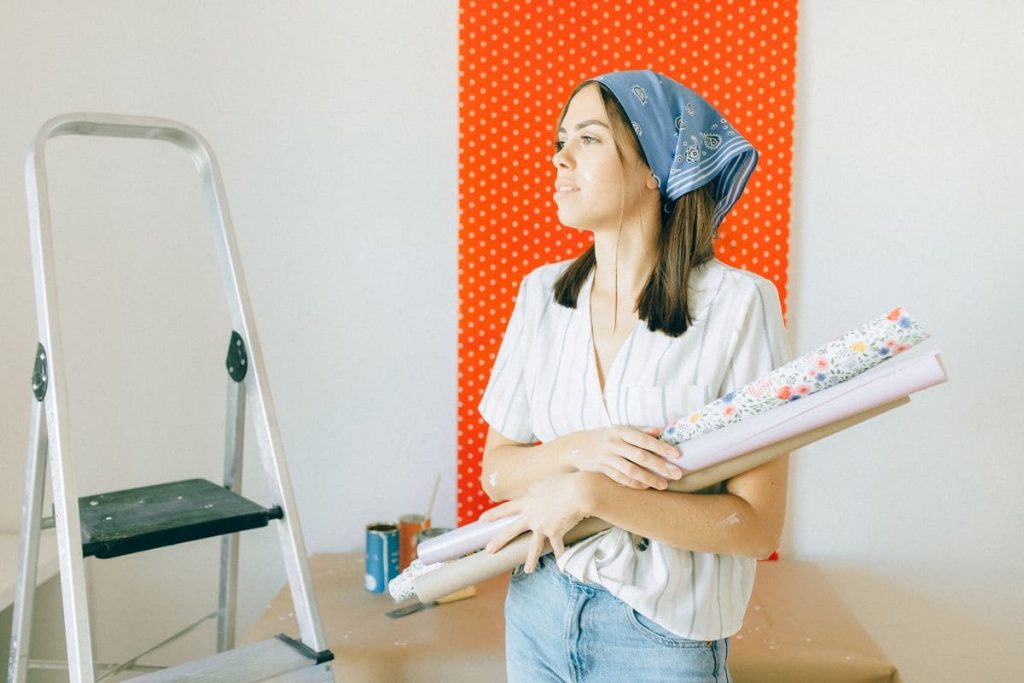
Wallpaper can totally change the vibe of a room, but taking it down is rarely as easy as just peeling it off. If you’re getting ready to paint, put up new wallpaper, or just want a fresh look, this step-by-step guide explains how to remove wallpaper the right way, including the best tools to use and how to loosen stubborn adhesive.
1. What You’ll Need for Wallpaper Removal
Having all your supplies ready to go before you start will make things so much easier.
Tools and Materials:
- Plastic putty knife
- Wallpaper scoring tool (for vinyl wallpaper)
- Bucket of warm water
- Sponge or soft scrubbing pad
- Clean cloths or microfiber towels
- Wallpaper removal solution or remover
- Wallpaper steamer (for stubborn wallpaper)
- White vinegar or fabric softener (for homemade removal solution)
- Spray bottle
- Drop cloths or plastic sheeting
- Spackle and fine-grit sandpaper (for wall repairs)
Prepare the Room:
- Remove or cover furniture with drop cloths.
- Protect floors with plastic sheeting or canvas drop cloths.
- Turn off the power to the room before using water.
- Cover electrical outlets and light switches.
- Open windows or provide ventilation.
- Keep a trash bag nearby for wallpaper scraps.
- Wear gloves if using commercial wallpaper remover.


2. How to Remove Wallpaper Step by Step
Take your time and work in small sections. Patience is key here. Below is exactly how to remove wallpaper without making a mess.
Step 1: Test the Wallpaper and Remove the Top Layer
First things first, figure out what kind of wallpaper you have. Start in a hidden spot and gently lift an edge with a plastic putty knife. Sometimes you get lucky, and it peels right off, but if it’s vinyl-coated, you’ll need to remove that top layer before you can get to the backing.
Testing a small spot also lets you see how your wall will react, so you’ll know if you need to be extra careful.
Before you get started, lay down some drop cloths, turn off the power to the room, and cover up your outlets so you don’t get any water where it shouldn’t go.
Step 2: Loosen the Wallpaper With Water, Steam, or Remover Solution
If the wallpaper is being stubborn, grab a wallpaper scoring tool and make a bunch of tiny holes to help the solution soak in. You can use hot water, a store-bought remover, or even a mix of fabric softener and water or some vinegar.
For really tough spots, a wallpaper steamer can be a lifesaver. Let your solution soak in for about 15 to 20 minutes, and if it starts to dry out before the glue softens, just add a little more.
Step 3: Scrape Away the Wallpaper Carefully
Once the glue has loosened, start peeling the wallpaper at a seam or corner with your plastic putty knife. Go slow and gently scrape underneath as you pull.
Do work in small sections instead of trying to tackle the whole wall at once. If the paper keeps tearing into little pieces, just add more solution and give it a bit more time to soak.
Step 4: Remove Remaining Wallpaper Glue and Residue
How to remove wallpaper glue: Once you’ve got all the wallpaper off, grab a sponge or a soft scrubbing pad and wash away any leftover glue with warm water. Wipe everything down with clean water after, and let the wall dry out completely before you move on.
If you spot any small dents or dings, fill them with spackle and give the wall a light sanding so it’s nice and smooth for paint or new wallpaper.
>>> Read more: How to Fix a Wobbly Chair (Simple DIY Repairs)
3. Which Wallpaper Removal Method Works Best?
Let’s talk about the pros and cons of the three main ways to remove wallpaper, so you can figure out what will work best for you.
Removing Wallpaper With Steam
Pros:
- Steam is great because it loosens up even the most stubborn wallpaper glue, and you don’t have to mess with any harsh chemicals.
- If you’re dealing with older wallpaper or a wall that has several layers, steamers can really make a difference.
- Once you get the hang of it, using a steamer can actually make big walls go a lot faster.
Considerations:
- Just be careful – steamers get really hot, so you’ll want to watch your hands.
- Don’t leave the steamer in one spot for too long or you might end up damaging your walls.
- If you don’t already have a steamer, you might need to rent or buy one, which is something to keep in mind.
Removing Wallpaper With Hot Water or DIY Solutions
Pros:
- This method is super budget-friendly, and you probably already have everything you need at home.
- It’s also safe for most projects as long as you use it the right way.
- All you really need is a sponge or a spray bottle.
Considerations:
- If your wallpaper is really stuck on, you might have to go over it a few times.
- It helps a lot if you score the wallpaper first, so the water can soak in properly.
- This way can take a little longer than using a steamer or store-bought remover, so just be patient.
Using Chemical Wallpaper Removers
Pros:
- These products are made to break down tough wallpaper glue fast.
- They’re a good option if water just isn’t cutting it.
- You’ll probably spend less time scraping, which is always a win.
Considerations:
- Make sure to read the instructions and use these products safely.
- Keep your space well ventilated while you’re working.
- Store-bought removers do cost more than DIY options, but they can save you a lot of time if you’re dealing with a stubborn wall.
4. How to Remove Stubborn Wallpaper Problems
What to do when wallpaper will not peel off easily:
If your wallpaper just won’t budge, don’t yank on it, as you’ll risk damaging your walls.
Try scoring the surface, then add more hot water or wallpaper remover, or use a steamer. Let it soak for 15 to 20 minutes, then give it another go.
How to remove wallpaper glue that won’t come off:
In case you’re dealing with stubborn wallpaper glue, you might need to clean the walls again.
Go over the sticky spots with warm water or a wallpaper adhesive remover, let it sit for a bit, then wipe it away with a sponge or a gentle scrub pad. Finish up with clean water so there’s no leftover film before everything dries.
What to do if wallpaper removal damages the wall:
Ending up with small tears or dents when taking down wallpaper can happen to anyone. Once your wall is totally dry, just fill in those spots with spackle, let it cure, and sand it smooth.
Fixing these spots now means your paint or new wallpaper will look so much better and last longer.

5. What to Do After Removing Wallpaper
Once you’ve pulled off the wallpaper, make sure to really clean your walls. Get rid of any leftover glue, dust, or little bits of paper; even a tiny bit of sticky residue can mess with your paint or new wallpaper. Wipe everything down with clean water and let it dry out for a full day before moving on.
After your walls are dry, check for any cracks, nail holes, or small dings from taking down the wallpaper. Fill those spots with spackle, let it dry, and then sand everything smooth so your walls are ready for the next step.
If you’re going to paint, definitely use a good primer. It will seal the wall, even things out, and help your paint go on so much better. If you’re putting up new wallpaper, just double-check that your walls are totally clean, smooth, and dry. That way, your new wallpaper will stick well and look amazing.
>>> Read more: How to Fix Leaking Shower Head
6. Frequently Asked Questions
Should I remove wallpaper myself or hire a professional?
If your walls are painted drywall and in good shape, and you’re only dealing with one layer of wallpaper in a smaller room, you can totally tackle this yourself. And you’ll save some money too.
But if you have plaster walls, lots of layers, textured surfaces, or a big space to cover, you should call in a pro. The same goes if you’re short on time or if you think there might be mold or lead paint hiding underneath.
How do I remove wallpaper glue after the paper is gone?
Mix up some warm water with a squirt of dish soap or even a splash of fabric softener, then sponge it right onto the walls. Let it sit for a few minutes to loosen the glue, then gently scrape with a putty knife. Keep a damp cloth handy to wipe away any leftover residue as you go.
What should I do if I find mold behind wallpaper?
If you spot mold behind your wallpaper, stop what you’re doing right away and don’t mess with it. For a tiny patch, you might be able to clean it up with some detergent and water, but if it’s a bigger area, you can’t see where it ends, or you have any health concerns, it’s time to call in a certified mold specialist.
Can vinegar remove wallpaper?
Yes! You can mix equal parts white vinegar and hot water in a spray bottle and really soak the wallpaper. Let it sit for 15-20 minutes so the vinegar can break down the glue, then start peeling or scraping.
This is a cheap and non-toxic method, but if you’re dealing with stubborn or extra-thick wallpaper, you might have to go over it a couple of times or score it first to help the vinegar get through.
How to remove wallpaper border?
To remove a wallpaper border, lift a corner with a putty knife or your fingernail. If it peels easily, slowly pull it away at a low angle, applying a wallpaper removal solution or vinegar-water spray underneath if it resists.
Conclusion
How to remove wallpaper? Make sure you take it slow and don’t rush, it’s worth it. Work on one section at a time, and make sure you’re using the right removal method for your wallpaper. That’s it!
If you’re looking for more home projects or just some everyday tips, keep it updated! We’re always sharing new inspiration and practical advice here on the AirTalk Wireless blog.