


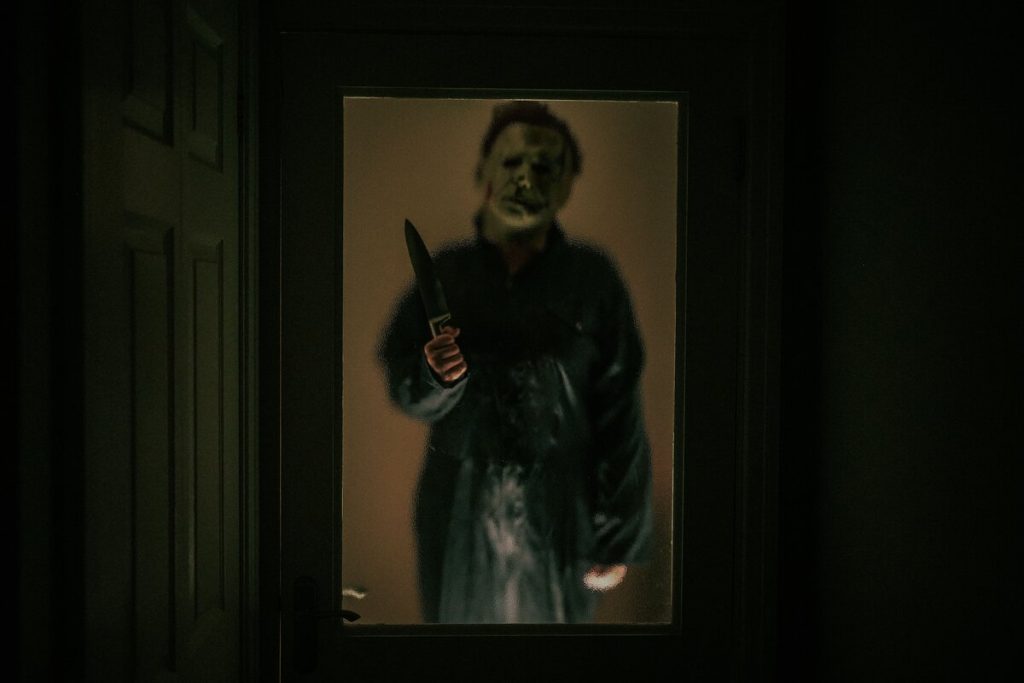
The image is hard to forget: a silent man in a pale mask walking through a quiet suburban neighborhood on Halloween night.
Since “Halloween” first terrified audiences in 1978, Michael Myers has become one of the most recognizable horror villains in movie history. But his blank stare, ordinary setting, and almost human appearance have made fans wonder where the story came from.
So, is Halloween based on a true story, or did Michael Myers come entirely from John Carpenter’s imagination?
1. Is Halloween Based on a True Story?
No. The original “Halloween” is not a true story, and Michael Myers was not a real serial killer who stalked the fictional town of Haddonfield, Illinois.
The 1978 movie was written and directed by John Carpenter, with Debra Hill serving as co-writer and producer. Its characters, murders, and central storyline were created for the film.
However, that does not mean the movie came from nowhere. Carpenter and Hill drew from several real experiences, cultural fears, horror traditions, and stories that already existed outside the movie.
That distinction is important when answering “is the movie Halloween based on a true story“. The film is fictional, but some of the ideas behind it have connections to reality.
Michael Myers was partly shaped by an unsettling experience Carpenter had while visiting a psychiatric institution as a college student. Other elements came from the growing popularity of slasher movies and the familiar fear of a dangerous stranger entering an otherwise ordinary home. The movie also used Halloween itself as the perfect setting for a story about anonymity, darkness, and fear.
So, there is no single real case that can be called the true story of “Halloween”. Instead, the film combines several influences into something that feels disturbingly plausible.


2. Is Michael Myers in “Halloween” Based on a Real Person?
Michael Myers was not modeled directly on one real criminal. His origins are more complicated, which is part of what makes the character so unsettling.
John Carpenter has explained that one particular encounter stayed with him for years. While he was a college student, Carpenter visited a psychiatric institution and saw a young patient whose expression struck him as unusually empty and disturbing. Carpenter later connected that memory with the character who would become Michael Myers.
That experience provided a starting point, but Carpenter deliberately took the character much further. Michael was eventually designed to feel less like an ordinary murderer and more like an almost unknowable presence.
The Psychiatric Patient Who Inspired Michael Myers
Carpenter’s visit to a psychiatric institution in Kentucky became one of the most frequently discussed inspirations behind Michael Myers. During the visit, he encountered a young boy whose blank, emotionless expression left a lasting impression on him.
Years later, when Carpenter was developing “Halloween”, that memory helped shape his idea of a person whose appearance gave away almost nothing about what was happening inside.
There are several important distinctions, though:
- The patient was not Michael Myers.
- Carpenter did not turn the boy’s real life into a movie plot.
- There is no evidence that the patient became a real-life killer or that the film recreated his story.
- The experience mainly influenced Carpenter’s conception of Michael’s unsettling appearance and personality.
This is why claims that Michael Myers was “a real person” can be misleading. A real encounter helped inspire the character, but Michael himself remained fictional.
Why Michael Myers Became More Than a Realistic Killer
Carpenter did not want Michael to feel like a typical criminal with an understandable motive. Instead, he wanted the character to become something closer to a force that could not easily be explained or stopped.
Another influence was the 1973 movie “Westworld”, particularly the portrayal of a relentless killer who behaves almost like a machine. Carpenter used that idea to push Michael beyond the boundaries of a realistic murderer.
That decision explains why Michael can seem strangely detached throughout the original movie. He rarely speaks, gives little indication of what he is thinking, and does not provide viewers with a detailed explanation for his actions.
This is also why asking is Halloween movie based on a true story does not fully explain what makes Michael frightening. The character may have roots in a real experience, but his final form was intentionally transformed into something mythic.
In the original film, Michael is often credited as “The Shape,” a name that captures this idea. He looks human, but the movie gives him an almost inhuman sense of persistence.

>>> Also read: It’s Halloween! How Many Halloween Movies Are There?
3. What Inspired the Original “Halloween” Movie?
The original “Halloween” came together from several different influences rather than one true-crime case. Carpenter and Hill combined personal experiences, Halloween traditions, earlier horror movies, and familiar stories about danger in ordinary suburban homes.
Understanding these influences helps explain why the movie feels so realistic even though its story is fictional. The setting looks familiar, the victims are ordinary teenagers, and Michael does not initially look like a supernatural monster. Much of the fear comes from the possibility that something terrible could happen in a place that feels completely normal.
John Carpenter and Debra Hill’s Inspiration
Carpenter and Hill played different but complementary roles in shaping the movie’s world.
Carpenter brought the idea of Michael as an almost unstoppable presence, while Hill’s experiences growing up in a small town and working as a babysitter helped contribute to the movie’s everyday suburban atmosphere.
The fictional town of Haddonfield was designed to feel ordinary rather than threatening. That choice mattered because Michael’s presence becomes more disturbing when he appears among familiar streets, houses, schools, and front yards.
The movie also built tension around babysitting. Instead of placing the characters in an obviously dangerous location, the story begins in an environment where teenagers should feel relatively safe.
That contrast became one of the film’s most effective ideas: the danger does not announce itself. It simply appears in the background and slowly moves closer.
So when people ask is Halloween based on a true story, the better question may be what real fears Carpenter and Hill were drawing from. The answer includes the fear of being watched, the vulnerability of being alone at home, and the possibility that danger can exist in an otherwise familiar neighborhood.
The Influence of Samhain and Halloween Folklore
Halloween itself provided another important layer. The holiday has ancient roots in Samhain, a Celtic festival associated with the transition into winter and traditions surrounding the dead. Over centuries, Halloween developed into the familiar holiday celebrated on October 31, complete with costumes, masks, decorations, and nighttime activities.
Carpenter’s movie uses those traditions without simply retelling an ancient Halloween legend.
The holiday gives Michael a natural disguise. On a night when people expect costumes and masks, a masked stranger does not immediately stand out. Darkness also becomes part of the atmosphere, while the familiar celebration creates an unsettling contrast with the violence happening nearby.
Later films in the franchise went further by connecting Michael Myers to supernatural ideas involving Samhain. Those later explanations should not be confused with the origin of the 1978 movie, which presented Michael primarily as a mysterious human killer.
That distinction matters when considering is Halloween based on a true story. The movie’s connection to Halloween folklore adds atmosphere and mythology, but it does not turn Michael Myers into a figure from an actual historical legend.

The True Story Behind the Iconic Captain Kirk Mask
One of the strangest real stories connected to “Halloween” has nothing to do with a murderer. It involves William Shatner.
The mask worn by Michael Myers in the original film was adapted from a commercially available Captain Kirk mask based on Shatner’s face. Production designer Tommy Lee Wallace reportedly found the mask while searching for something that looked blank and expressionless.
The transformation was surprisingly simple:
- The eye openings were enlarged.
- The eyebrows and sideburns were removed.
- The hair was altered.
- The mask was painted a pale white color.
The result looked very different from the friendly face audiences associated with Captain Kirk.
This is one of those rare pieces of movie trivia that really is true. The most recognizable face in “Halloween” began as an inexpensive costume mask rather than a custom horror prop. The production team’s decision helped create the empty, almost human appearance that became central to Michael Myers.
Real-Life Urban Legends and “The Babysitter and the Man Upstairs”
Another major influence came from an urban legend commonly known as “The Babysitter and the Man Upstairs.” In the story, a babysitter receives disturbing phone calls while watching children. She eventually learns that the calls are coming from somewhere inside the house.
The legend had circulated for years before “Halloween”, and similar ideas appeared in other horror movies. It reflected a broader cultural fear: a young person alone in a house may believe everything is safe until an unseen intruder reveals that they are already inside.
There were also real crimes that shared certain details with the babysitter legend, including the 1950 murder of 13-year-old babysitter Janett Christman in Missouri. However, there is no solid evidence that “Halloween” directly retells Christman’s murder.
This is another reason the question is Halloween the movie based on a true story needs a careful answer. Real events, urban legends, and cultural fears may resemble elements of the movie without becoming its actual source material.
>>> Also read: What Countries Celebrate Halloween? How is Halloween Celebrated?
FAQs
Did anyone survive Michael Myers?
Yes. Several characters survive encounters with Michael Myers throughout the “Halloween” franchise. Laurie Strode is the most famous survivor, escaping Michael in the original 1978 film and returning in several later installments.
Is Michael Myers pure, evil, or broken?
The original movie deliberately avoids giving Michael a detailed psychological explanation. Dr. Sam Loomis describes him as evil, but the film does not provide a clear diagnosis or simple reason for his behavior. Later movies introduced different explanations, but they are not consistent across the entire franchise.
Why did Michael Myers start killing?
The original “Halloween” does not provide a clear motive. Michael murders his sister Judith as a child and later returns to Haddonfield, where he begins stalking and killing residents. His lack of an understandable motivation is part of what makes him frightening.
Who finally kills Michael Myers?
There is no concrete answer because the franchise has multiple timelines and continuities. Michael is killed or seemingly killed in different ways across different films, while later entries sometimes reset or ignore earlier events. In “Halloween Ends” (2022), Laurie Strode ultimately kills Michael.
Why did Michael Myers never speak?
Michael’s silence was an intentional part of his character. By giving him almost no dialogue, the filmmakers removed a normal way for viewers to understand his thoughts or motives. His silence, blank mask, and slow movements make him feel less like a person viewers can reason with and more like an unexplained threat.
Conclusion
So, is Halloween based on a true story?
No. Michael Myers was never a real killer, and the original movie does not recreate a specific true crime. However, real experiences, urban legends, Halloween traditions, and other horror influences helped shape the story.
That mixture of familiar fears and fictional terror is exactly what made “Halloween” feel so believable, and why Michael Myers remains one of horror’s most enduring figures.
For more interesting reads and helpful everyday guides, check out the AirTalk Wireless Blog and discover more topics to explore.