



Many Medicaid members need to call at some point, whether to check eligibility, resolve billing questions, or confirm benefits. The problem is that Medicaid does not operate through a single contact center.
Phone numbers vary by state, plan, and issue type, which often leads to confusion and wasted time. Understanding how Medicaid phone support is structured helps you reach the right office faster and avoid delays when you need help.
1. Is There One National Medicaid Phone Number?
Many people search for a single phone number for Medicaid, but there is no universal number that handles all Medicaid issues nationwide. This is because Medicaid is not run as one centralized federal program.


Why Medicaid Phone Numbers Are State-Based
Medicaid is a joint federal and state program. While the federal government sets overall rules, each state is fully responsible for running its own Medicaid program, including:
- Eligibility and enrollment
- Benefit administration
- Member services
- Provider payments and billing
Because of this structure, state Medicaid agencies control their own phone systems, and contact numbers differ by state. Calling a number from another state or a general federal line usually will not resolve member-specific issues.
When Federal Medicaid Numbers Are Used
Federal Medicaid phone numbers are not used for individual eligibility, billing, or member services.
The Centers for Medicare & Medicaid Services and its Center for Medicaid and CHIP Services primarily handle:
- General policy guidance
- Technical assistance
- Grants and reimbursements
- System-level or program questions
For reference, CMS can be contacted at:
- Toll-Free: 877-267-2323
- Local: 410-786-3000
- TTY Toll-Free: 800-877-8339
However, CMS will usually redirect individuals back to their state Medicaid agency for personal cases.
2. The Main Phone Numbers for Medicaid Members
Most Medicaid members interact with state or plan-level phone numbers, not federal offices. Understanding which number to call saves time and avoids call transfers.
State Medicaid Office Phone Number
The state Medicaid office handles core functions such as:
- Eligibility determinations
- Enrollment and renewals
- Address or household updates
- Coverage category questions
This number is best used when:
- You are applying for Medicaid
- Your coverage status is unclear
- You received a notice that you do not understand
Medicaid Managed Care Plan Phone Number
If you are enrolled in a Medicaid managed care plan, many services are handled by your plan rather than the state directly.
Plan phone numbers are used for:
- Finding doctors or specialists
- Transportation scheduling
- Prescription and pharmacy questions
- Prior authorizations
Calling your managed care plan is often the fastest option for care-related questions.
Member Services vs Provider Services
Most Medicaid cards list two different phone numbers:
- Member Services for patients
- Provider Services for doctors and clinics
Members should always call Member Services. Calling Provider Services can lead to delays or transfers, since those lines are designed for billing and claims questions from healthcare offices.
3. How to Find the Correct Medicaid Phone Number for Your State
Because numbers vary by state and plan, using the right source is important.
Option 1: Check Your Medicaid Card
Your Medicaid card usually lists:
- Member Services phone number
- Managed care plan contact information
This is often the most accurate number for your specific coverage.
Option 2: Use Your State Medicaid Website
Every state maintains an official Medicaid website with contact details. These sites provide:
- State Medicaid office phone numbers
- Eligibility and enrollment contacts
- Managed care plan directories
Searching your state’s official Medicaid page helps ensure you get an up-to-date number.
Option 3: Call the Enrollment or Eligibility Office
If you are applying for Medicaid or dealing with renewals, your state enrollment or eligibility office is the correct contact.
These offices can:
- Check application status
- Explain the required information
- Update personal details
- Direct you to the correct department
Starting with the right office reduces long wait times and repeated transfers.
4. Common Problems When Contacting Medicaid by Phone
Calling Medicaid can be frustrating, even when you have the right number. Many issues are tied to how Medicaid is structured and how communication is handled.
Long Wait Times and Call Transfers
High call volumes often lead to long wait times, especially during renewal periods or policy updates. Callers may be transferred between departments if the issue involves eligibility, billing, or managed care plans.
Being transferred multiple times increases the chance of dropped calls or missed information, which can delay resolving the issue.
Being Told to Contact Another Office
Because Medicaid responsibilities are split between state agencies and managed care plans, callers are often redirected. For example:
- The state office may refer you to your managed care plan
- The plan may refer you back to the state for eligibility issues
Without clear guidance, this back and forth can slow down application updates, benefit questions, or billing fixes.
Missing Calls Due to No Active Phone
Medicaid offices and plans often return calls or leave voicemails after an initial contact. If you do not have active phone service, these callbacks are missed.
Missed calls can result in:
- Delayed application reviews
- Unresolved eligibility questions
- Missed renewal deadlines
Not having a working phone makes it harder to complete time-sensitive Medicaid tasks.
>>> Read more: Can You Use Medicaid Out of State? (Common Questions)
5. Why Reliable Phone Access Matters for Medicaid Members
Phone communication is central to how Medicaid works. Applications, renewals, appointment coordination, and benefit questions often depend on timely phone contact.
Missed Calls Can Delay Medicaid Benefits
When Medicaid cannot reach you, actions may be paused until contact is made. This can affect:
- Application approvals
- Renewal confirmations
- Requests for additional information
- Plan changes or updates
In some cases, benefits may be temporarily interrupted if required responses are not received on time.
Free Phone Options for Medicaid Members Through Lifeline
Medicaid enrollment qualifies eligible individuals for the federal Lifeline program. Lifeline helps reduce the cost of phone service through approved providers.
Lifeline itself does not supply phones or wireless plans. Instead, approved providers deliver the service. Many also offer free or discounted devices as part of their own enrollment promotions, depending on location and inventory.
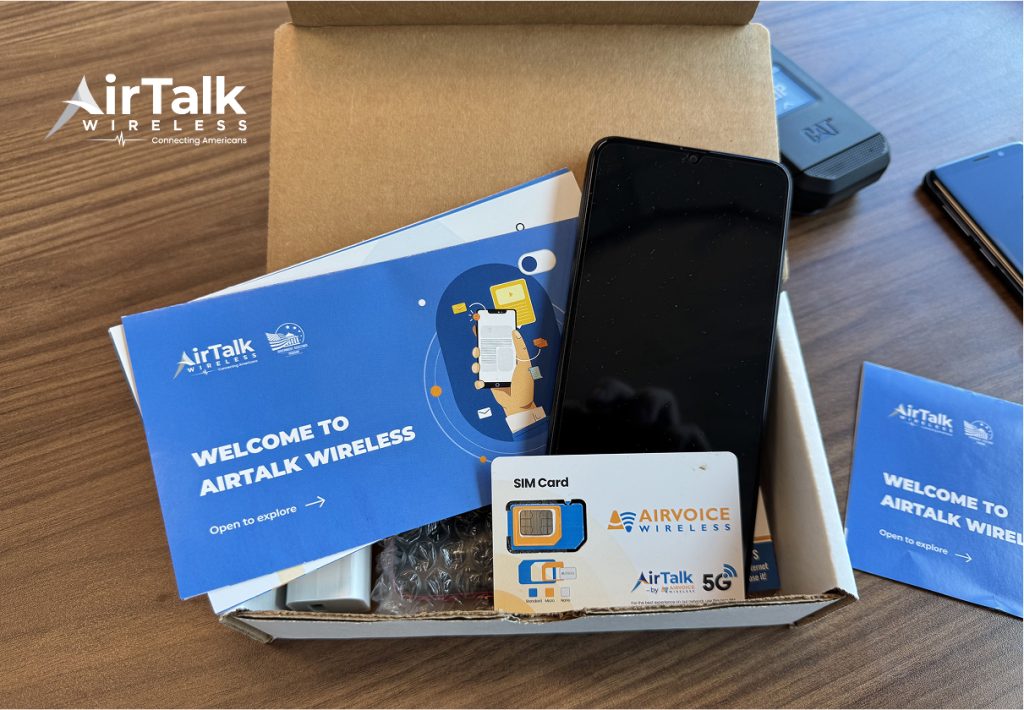
Having a free phone with Medicaid through a Lifeline provider can help members stay reachable for important calls. One of those providers is AirTalk Wireless, which offers phone service and devices to eligible Medicaid members depending on location and availability.

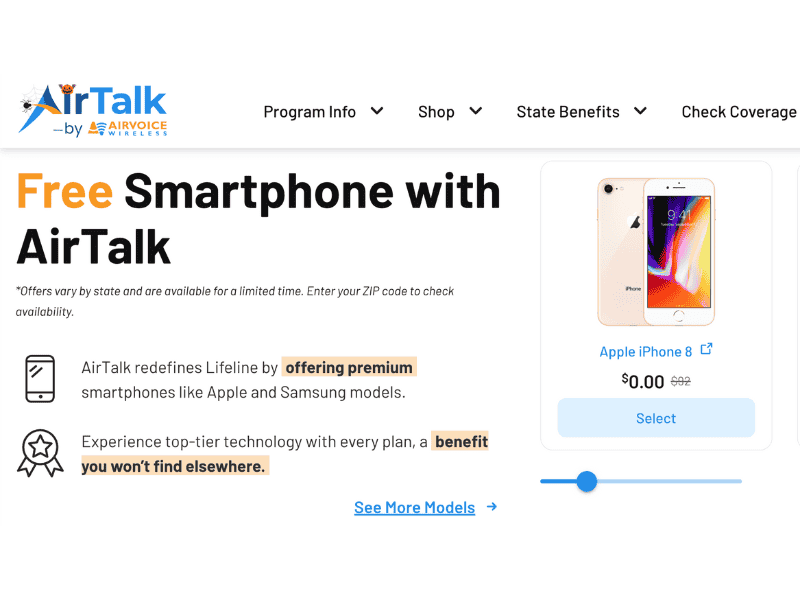
Phone options may vary by ZIP code and inventory, but can include models such as:
- iPhone 8 Plus
- iPhone SE
- iPhone 11
- Comparable Android smartphones
These devices support calling, texting, and basic internet access, which helps members respond to Medicaid offices, managed care plans, and healthcare providers.
IMPORTANT: The government does not subsidize devices. Lifeline programs cover basic service costs only. Free or discounted devices, upgrade plans, or top-ups are exclusive benefits provided by AirTalk Wireless as part of our promotional offers. Terms and conditions apply. Limited-time promotion—offers vary by state, stock availability, and eligibility.
To apply, members generally:
- Visit the provider’s website
- Enter their ZIP code to view available service plans and phone options.
- Pick a plan and a device that suits your needs
- Complete the online application using Medicaid eligibility
- Submit and wait for approval through the National Verifier
Availability and delivery timelines depend on location and provider processing.

Conclusion
Finding the correct phone number for Medicaid is important, but being reachable matters just as much. Long wait times, call transfers, and missed callbacks can delay applications and benefits.
Reliable phone access helps Medicaid members respond on time and avoid unnecessary interruptions. For eligible individuals, Lifeline-supported phone service through providers like AirTalk Wireless can help maintain consistent communication and keep benefits on track.