



Access to mental health care should not depend on income level. For millions of Americans, Medicaid plays a critical role in making psychiatric services affordable. However, many people still struggle to understand what it really means to find a psychiatrist that accept Medicaid, what services are covered, and how to navigate common obstacles. This guide breaks down everything you need to know, clearly, accurately, and practically.
1. Psychiatrist That Accept Medicaid: What It Actually Means?


A psychiatrist that accept Medicaid is a licensed medical doctor (MD or DO) who is enrolled with a state Medicaid program and agrees to accept Medicaid reimbursement rates as payment for covered psychiatric services. This status is not automatic. Even highly qualified psychiatrists must go through credentialing, contracting, and compliance processes before they can treat Medicaid patients.
Importantly, not every psychiatrist participates in Medicaid, even if they accept other insurance plans. Participation can vary by state, by managed care plan, and even by office location.
That is why searching specifically for a psychiatrist that accept Medicaid is necessary, rather than assuming all providers are covered.
Will Medicaid pay for a Psychiatrist?
Yes, Medicaid will pay for a psychiatrist when services are deemed medically necessary and provided by an approved provider. This means care must be delivered by a psychiatrist that accept Medicaid and is enrolled with your state Medicaid program or managed care organization.
- Psychiatric evaluations and diagnostic assessments provided by a psychiatrist that accept Medicaid
- Medication management and prescription oversight
- Ongoing treatment for conditions such as depression, anxiety, bipolar disorder, schizophrenia, and PTSD
- Crisis intervention and stabilization services (state-dependent)
However, coverage details vary by state Medicaid program and by whether you are enrolled in fee-for-service Medicaid or a managed care plan. Some plans may require prior authorization, referrals, or limit the number of visits with a psychiatrist that accept Medicaid, especially for non-emergency or ongoing care.
How to find a Psychiatrist that takes Medicaid?
Finding a psychiatrist that take Medicaid requires more than a general internet search. Reliable methods include:
- State Medicaid provider directories, which list psychiatrists currently contracted with Medicaid
- Managed care organization (MCO) websites, if your Medicaid is administered through a private insurer
- Community mental health centers, which often employ psychiatrists who accept Medicaid
- Primary care referrals, which can help speed up approvals in states that require them
When contacting an office, always confirm that they accept your specific Medicaid plan, not just Medicaid in general. This step helps avoid appointment denials later.
2. Common Challenges When Using Medicaid for Psychiatry
Even after locating a psychiatrist that accept Medicaid, patients may face systemic barriers. Understanding these challenges upfront can help you plan more effectively.
Limited availability and long wait times
Because Medicaid reimbursement rates are lower than private insurance, fewer providers choose to participate as a psychiatrist that accept Medicaid. This often leads to high demand and extended waitlists, especially in rural or underserved areas.
Plan-specific restrictions
Some Medicaid plans require referrals from a primary care provider before psychiatric services are approved. Others limit the number of visits per year or require periodic reauthorization.
Geographic gaps in care
In certain regions, especially outside major cities, there may be very few or no, psychiatrists accepting Medicaid within a reasonable distance.
These challenges do not mean care is unavailable, but they do explain why finding a psychiatrist Medicaid provider can take persistence and accurate information.
>>> Read more: Medicaid Dentist Near Me: Covered Dental Care and Extra Benefits You May Qualify For
3. Medicaid, Mental Health Care, and Lifeline Support
Mental health care does not exist in isolation. For individuals receiving psychiatric treatment through Medicaid, remaining connected is a critical part of managing care, not just a convenience. Communication with psychiatrists, therapists, pharmacies, case managers, and emergency services often depends on having reliable phone and internet access.
Many Medicaid recipients face financial barriers that make it difficult to maintain consistent mobile service. Missed calls, disconnected phone numbers, or limited data access can lead to delayed appointments, interrupted medication management, or missed follow-ups.
This is where Medicaid connects with other federal assistance programs designed to support overall access to care, not just medical coverage alone. One of the most important of these programs is Lifeline.
Medicaid is officially recognized by the Federal Communications Commission (FCC) as one of the qualifying programs for Lifeline. This means that if you are enrolled in Medicaid, you may automatically meet the eligibility requirements for Lifeline without needing to prove income separately.
Through approved-providers of Lifeline program, eligible Medicaid participants may receive:
- A free or discounted smartphone, depending on provider availability
- Free monthly talk, text, and data, designed to support essential communication needs
- Ongoing access to service as long as eligibility is maintained
For individuals working with a psychiatrist that accept Medicaid, this connectivity plays a direct role in treatment continuity. Many psychiatric providers rely on phone calls or text reminders for appointment confirmations, medication adjustments, lab follow-ups, and care coordination. Telepsychiatry, now widely used across Medicaid programs, also requires stable phone or data access to function properly.
In addition, Medicaid recipients managing mental health conditions may need quick access to crisis hotlines, care coordinators, or after-hours support. Providers-supported phone service ensures that lack of connectivity does not become an additional barrier during urgent situations.
For many households, being enrolled in Medicaid is enough to qualify for Lifeline immediately, making it one of the most accessible supplemental benefits available to individuals receiving mental health care.
4. How AirTalk Wireless Helps Medicaid Recipients Stay Connected?
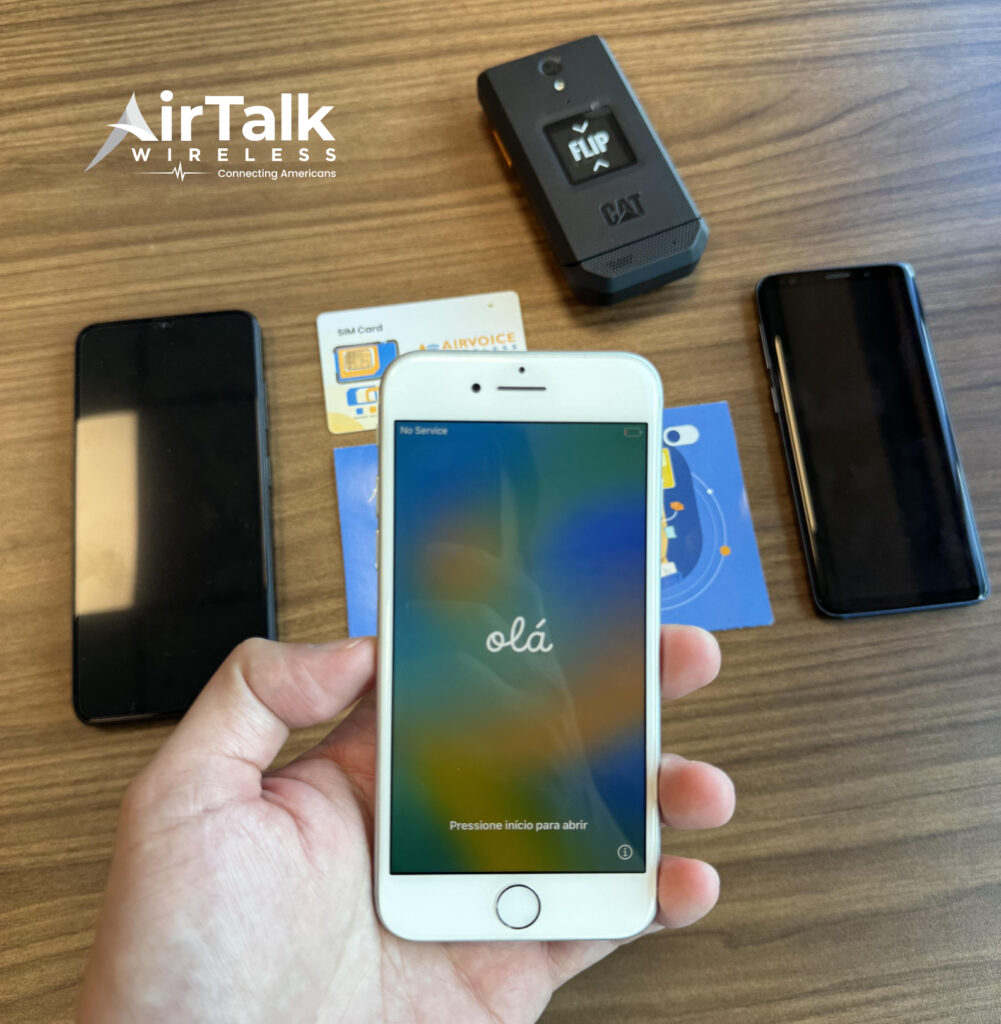
AirTalk Wireless is a Lifeline-approved provider that supports eligible Medicaid recipients with free phone service. For individuals seeking or already seeing a psychiatrist that accept Medicaid, reliable phone access can make a measurable difference.
With AirTalk Wireless, eligible users may receive:
- A free smartphone or discounted device option
- Monthly service including calls, texts, and data
- Access that helps manage telehealth appointments, medication refills, and provider communication
Mental health treatment often involves coordination between psychiatrists, therapists, pharmacies, and support services. Without stable phone access, these systems break down. AirTalk Wireless helps close that gap by ensuring connectivity remains consistent—even for low-income households.

Final Thoughts
Finding a psychiatrist that accept Medicaid can feel overwhelming, but understanding how Medicaid psychiatric coverage works makes the process far more manageable. Medicaid does cover psychiatric care, including evaluations and medication management, when provided by approved professionals. While challenges such as limited availability and plan restrictions exist, accurate information and proper verification can significantly reduce delays.
Beyond clinical care, programs like Lifeline, and providers such as AirTalk Wireless, play a crucial role in supporting mental health access. Keeping connected is not a luxury; it is a necessity for managing appointments, treatment plans, and long-term stability. By combining Medicaid benefits with communication support, individuals can navigate mental health care with greater confidence and continuity.