


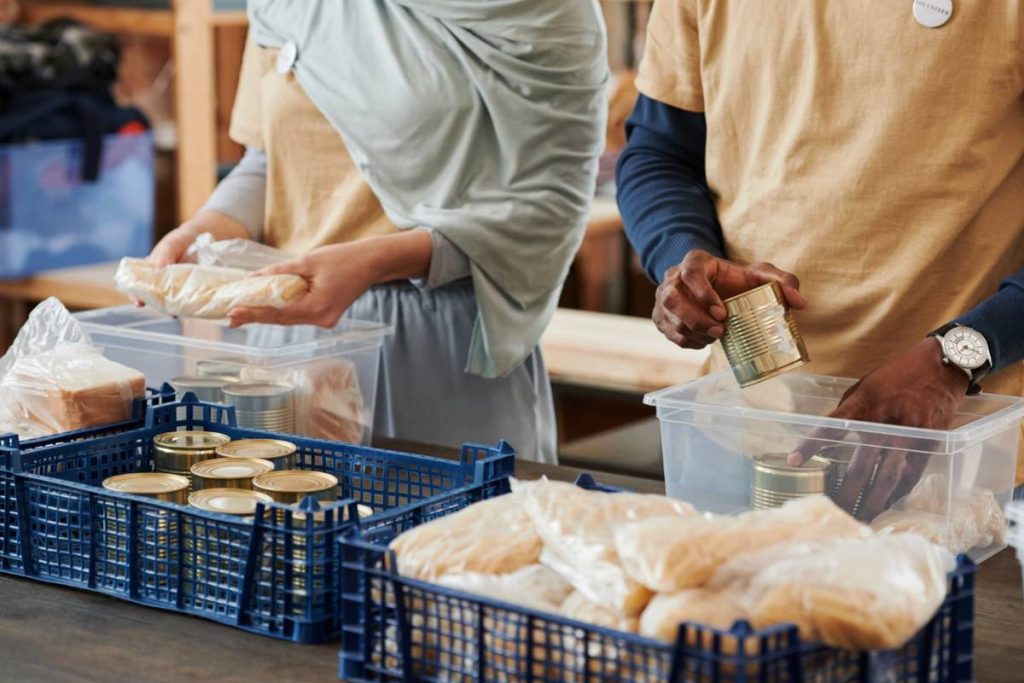
Food banks play an important role in communities, especially when individuals and families have difficulty accessing enough food.
Yet it is not always clear what happens behind the scenes, who can receive assistance, or how food banks differ from the places where people actually pick up groceries.
This guide explains what is a food bank, how the system works, and the different ways people can receive help or support it.
1. What Is a Food Bank?
A food bank is a nonprofit organization that collects, stores, and distributes food to local organizations that serve people experiencing hunger or food insecurity. Rather than operating only as a place where individuals pick up groceries, many food banks function as large distribution hubs supplying food pantries, meal programs, shelters, and other community partners.
So, what is a food bank and how does it work? In simple terms, it connects available food with community organizations that can get that food to people who need it. Food may come from manufacturers, retailers, farmers, government programs, food drives, and individual or corporate donations.
This distribution role is also what distinguishes a food bank from a food pantry. A food bank typically supplies a network of organizations, while a food pantry generally distributes groceries directly to individuals and families.
2. How Does a Food Bank Work?
Food banks operate through a supply and distribution network rather than relying only on food dropped off by individual donors.
The process generally works like this:
- Food is sourced or donated. Food banks receive products from farms, manufacturers, grocery retailers, distributors, government programs, food rescue initiatives, and community donations.
- Products are received and stored. Food is brought to warehouses where it can be inspected, sorted, and stored under appropriate conditions.
- Food is distributed to community partners. Local pantries, shelters, soup kitchens, and other programs obtain food from the food bank.
- Community organizations serve local residents. Depending on the organization, people may receive groceries, prepared meals, or other forms of food assistance.
The exact model varies between organizations. Some food banks also operate direct-distribution programs, including mobile pantries, alongside their larger partner networks.
3. What Is the Purpose of a Food Bank?
The answer to what is the purpose of a food bank extends beyond collecting donated cans. Food banks help build the infrastructure needed to move large quantities of food to communities where it is needed.


Help People Facing Food Insecurity
A central purpose is helping people who do not consistently have enough food or adequate access to nutritious food.
Food insecurity can affect households for many reasons, including job loss, low or unstable income, rising living expenses, unexpected bills, and other financial pressures. Food banks work with community partners to make additional food available when household resources fall short.
Support Communities During Emergencies
Demand for food assistance can increase rapidly after natural disasters, economic disruptions, or other emergencies.
Because food banks already have warehouses, transportation systems, suppliers, and networks of local organizations, they can help move food through communities when normal access becomes disrupted or more households suddenly need assistance.
Reduce Usable Food From Going to Waste
Food banks can also recover safe, usable food that might otherwise leave the food supply chain without being eaten.
For example, retailers, farms, and manufacturers may have surplus products that remain suitable for consumption but cannot be sold for commercial reasons. Food rescue and donation programs can redirect some of this food to hunger-relief organizations instead.
4. Who Can Get Food From a Food Bank?
Understanding what is a food bank also means understanding that assistance is not necessarily distributed under one nationwide set of eligibility rules. Requirements can depend on the program, organization, location, and source of the food being provided.
Who May Qualify for Food Assistance?
Food assistance is generally intended for individuals and households who need help accessing enough food. This can include people experiencing unemployment, reduced working hours, low income, unexpected financial hardship, or other circumstances affecting their food budget.
Some programs may use income or household-size guidelines, particularly when food is provided through a government-supported program. Other community distributions may use different or fewer eligibility requirements.
You do not necessarily need to determine your eligibility on your own before seeking help. A local food bank or pantry can explain which programs are available and what requirements apply.


What Do You Need to Receive Food?
Requirements vary considerably between food assistance programs. Depending on the location and program, you may be asked for information such as:
- Your name and contact information
- Number of people in your household
- Address or ZIP code
- Household income or a self-declaration of eligibility
- Identification or proof of residence for certain programs
Some distributions require little or no documentation, while others have specific eligibility rules. Checking with the particular pantry or distribution site before visiting is the best way to know what, if anything, you need to bring.
>>> Read more: Can You Drop Health Insurance Anytime? What To Know Before You Cancel
5. What Is the Best Thing to Donate to a Food Bank?
It depends on what your local organization currently needs. In general, shelf-stable foods that are nutritious, versatile, and easy to store are useful choices, but checking the food bank’s current wish list before shopping is even better.
Most-Needed Food Donations
Commonly requested items can include:
- Canned vegetables and fruit
- Canned tuna, chicken, and other proteins
- Peanut butter and other shelf-stable nut or seed butters
- Canned or dried beans
- Rice and pasta
- Whole-grain cereals and oatmeal
- Shelf-stable milk
- Canned soups and stews
- Cooking oil
- Low-sodium and no-added-sugar options
Choose products that are unopened, within their acceptable date range, and packaged securely. Smaller or easy-to-open packages may also be more practical for households with limited storage or cooking equipment.
Needs vary throughout the year, so a local food bank’s requested-items list should take priority over a generic donation list.
Foods You Should Avoid Donating
Not everything sitting unused in your pantry is suitable for donation. Food banks may decline items because of food-safety requirements, storage limitations, or packaging condition.
Unless your local organization specifically says otherwise, avoid donating:
- Opened or partially used products
- Food with damaged, leaking, or severely dented packaging
- Home-canned foods
- Items requiring refrigeration when the organization does not accept perishables
- Food outside the organization’s accepted date guidelines
- Unlabeled products
- Items packaged in breakable containers when they are not accepted
Before throwing away a product solely because it has passed a printed date, check the food bank’s policy. Date labels do not all mean the same thing, and organizations may have their own acceptance standards.
6. How to Find Food Assistance Near You
Food assistance is delivered through different organizations and programs, so you do not necessarily need to locate a large warehouse or regional food bank yourself.
Find a Local Food Bank or Food Pantry
If reading about what is a food bank has led you to look for assistance, start with a food-bank network or local pantry directory.
Feeding America’s Find Your Local Food Bank tool allows you to search by ZIP code for a Feeding America member food bank serving your area. The local food bank can then direct you toward nearby pantries and distribution programs.
You can also call 211 in many parts of the United States to ask about local food assistance and other community resources.
Check Requirements Before You Visit
Once you find a pantry or distribution site, confirm the practical details before making the trip.
Check its operating hours, service area, appointment requirements, distribution method, and any documents it asks visitors to bring. Also verify whether food is distributed at the listed address or at a separate location.
Requirements can differ between programs, so information from the specific organization you plan to visit is more reliable than assuming every food pantry operates the same way.
Conclusion
Food banks connect food resources with communities that need them, whether through local pantries, meal programs, emergency response, or other distribution networks. Understanding what is a food bank also makes it easier to know where to turn for assistance and how to contribute effectively.
If you need help or want to donate, checking with a local organization is the most practical next step because needs and requirements differ from one community to another.
Additionally, for more helpful guides on finding community resources, food assistance programs like SNAP/food stamps, and practical budget-friendly tips, feel free to visit the AirTalk Wireless Blog.