


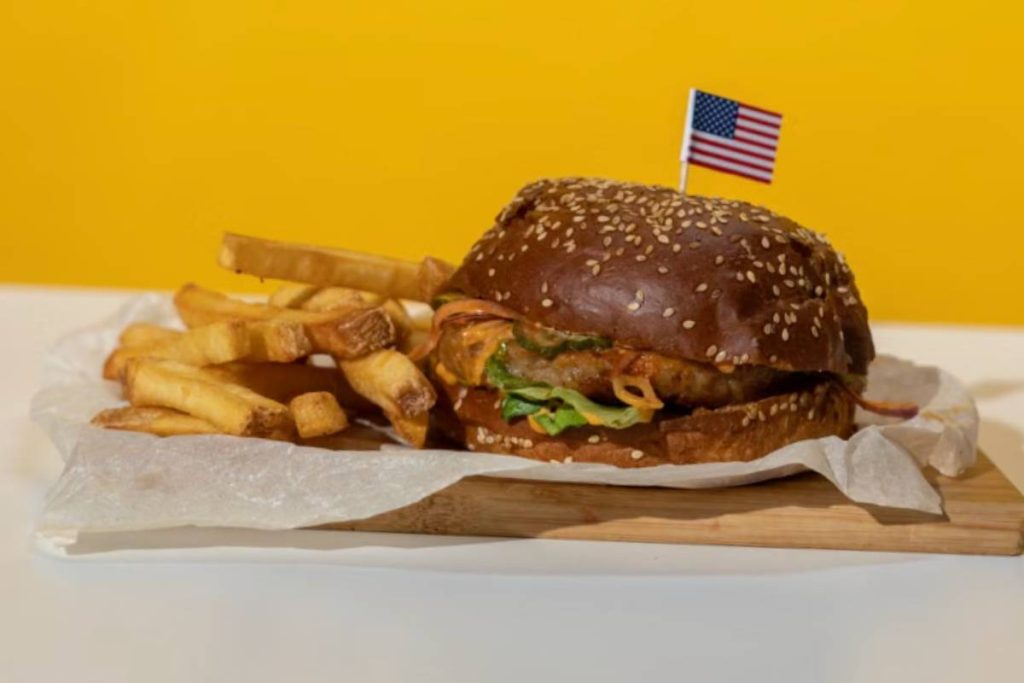
American cuisine is difficult to define with a single dish or cooking tradition. Centuries of immigration, Indigenous foodways, regional ingredients, and cultural exchange have created distinct food traditions across the country.
So, what is American food today? This guide explores the dishes and regional cuisines that have come to represent how America eats and how those traditions developed.
1. What Is American Food?
At its core, American food is a collection of dishes and cooking traditions that developed across the United States.
Rather than coming from one culinary tradition, it reflects Indigenous ingredients and techniques, regional agriculture, immigration, migration, and centuries of cultural exchange.
So what is an American food? It can be something developed in the U.S., such as a regional barbecue style, or a dish with roots elsewhere that evolved into a distinctly American form. Pizza, for example, originated in Italy, but styles such as New York and Chicago deep-dish pizza developed their own identities in the United States.
This diversity is why American cuisine ranges from burgers and barbecue to gumbo, lobster rolls, Tex-Mex, and apple pie.
2. 25 Iconic American Foods You Should Know
When people ask what American food is, a few famous dishes immediately come to mind, but the cuisine extends far beyond hamburgers and hot dogs.
Many of its most recognizable foods are closely tied to a particular city, state, or regional tradition.


Here are 25 iconic examples:
| American Food | Origin/Region | What Makes It Distinctive |
| Hamburger | Nationwide | Ground-beef patty served in a bun with customizable toppings |
| Hot dog | Nationwide | Sausage in a split bun with highly regional toppings |
| Texas brisket | Texas | Beef brisket slowly smoked, often with minimal seasoning |
| Pulled pork barbecue | Southeast | Slow-cooked or smoked pork served pulled or chopped |
| Barbecue ribs | South/Midwest | Slow-cooked ribs with regional rubs and sauces |
| Fried chicken | South | Seasoned chicken with a crisp fried coating |
| Biscuits and gravy | South | Soft biscuits covered with creamy sausage gravy |
| Chicken and waffles | American/Southern traditions | Combination of savory fried chicken and sweet waffles |
| Mac and cheese | Nationwide | Pasta baked or cooked with a rich cheese sauce |
| New England clam chowder | New England | Creamy chowder with clams and potatoes |
| Lobster roll | New England | Lobster meat served in a split-top roll |
| New York-style pizza | New York City | Large, thin, foldable slices |
| Chicago deep-dish pizza | Chicago | Deep crust layered with cheese, toppings, and tomato sauce |
| Philly cheesesteak | Philadelphia | Thinly sliced beef and melted cheese on a long roll |
| Buffalo wings | Buffalo, New York | Fried chicken wings tossed in spicy sauce |
| Gumbo | Louisiana | Rich stew shaped by Creole and Cajun traditions |
| Jambalaya | Louisiana | Seasoned rice dish with meat, seafood, or both |
| Po’ boy | Louisiana | Louisiana sandwich commonly filled with seafood or roast beef |
| Tex-Mex chili | Texas/Southwest | Hearty chile-based meat dish with regional variations |
| Corn dog | United States | Battered hot dog fried on a stick |
| Apple pie | Nationwide | Apple-filled pastry strongly associated with American culture |
| Pecan pie | South | Sweet pie filled with pecans and syrup-based filling |
| Key lime pie | Florida | Tart lime custard pie traditionally associated with the Florida Keys |
| S’mores | Nationwide | Toasted marshmallow and chocolate between graham crackers |
| Chocolate chip cookies | Massachusetts | Cookies made with chocolate chips, developed in the U.S. |
Burgers and Hot Dogs
What is the most American food?
The hamburger is probably one of the strongest contenders, one of the most solid proof being Americans consuming 13 billion hamburgers annually. Its exact history is debated, but the modern burger became deeply connected with American diners, drive-ins, fast-food restaurants, cookouts, and backyard grilling.
Hot dogs have a similar story. Their sausage roots trace back to European traditions, but the American hot dog developed countless regional variations. Chicago-style hot dogs come loaded with vegetables and condiments, while New York versions are commonly associated with mustard and sauerkraut.
Together, burgers and hot dogs show how foods with immigrant roots can evolve into distinctly American staples.
>>> Read more: Fast Food Open 24 Hours: 2026’s Top Lists
Barbecue
American barbecue is not simply meat cooked on a grill. Traditional barbecue generally relies on slow cooking or smoking and has developed into several major regional styles.
Among the most recognizable are:
- Texas barbecue: Famous for smoked beef brisket.
- Carolina barbecue: Closely associated with pork and vinegar- or mustard-based sauces, depending on the region.
- Kansas City barbecue: Known for a broad range of meats and thick, sweet sauces.
- Memphis barbecue: Particularly associated with pork ribs and pulled pork.
If “what is the most American food?” means a culinary tradition developed through strong regional identities, barbecue is another compelling answer.
Fried Chicken and Southern Classics
Southern cooking has contributed many dishes now eaten throughout the country. Fried chicken is one of the most recognizable, with seasoned chicken coated and fried until crisp on the outside.
Other classics include:
- Biscuits and gravy: Buttery biscuits topped with creamy sausage gravy.
- Chicken and waffles: Fried chicken paired with waffles, often served with syrup or another sweet accompaniment.
- Mac and cheese: A staple of many American tables, particularly within Southern and soul food traditions.
These dishes also demonstrate why American cuisine cannot be separated from African American culinary history and the development of Southern foodways.
Regional Favorites
Some iconic American foods make the most sense when connected to the places that created or popularized them.
- New England is famous for clam chowder and lobster rolls.
- Philadelphia has the cheesesteak.
- Buffalo, New York gave its name to Buffalo wings.
- New York City developed its distinctive thin pizza style, while Chicago became synonymous with deep-dish pizza.
Louisiana contributes an especially distinctive culinary tradition through foods such as gumbo, jambalaya, and po’ boys, shaped by African, French, Spanish, Caribbean, Indigenous, and other influences.
The Southwest and Texas also developed foods shaped by the long interaction of Mexican, Indigenous, Spanish, and American culinary traditions, including the broad category now known as Tex-Mex.
Desserts and Sweet Treats
American cuisine has its own collection of desserts with strong regional or cultural associations.
- Apple pie: Although fruit pies existed long before the United States, apple pie became an enduring symbol of American home cooking.
- Pecan pie: Closely associated with Southern cuisine and pecan-growing regions.
- Key lime pie: A Florida specialty made famous by its connection to the Florida Keys.
- S’mores: Graham crackers, toasted marshmallow, and chocolate make this a classic campfire treat.
- Chocolate chip cookies: A genuinely American creation, developed by Ruth Wakefield at the Toll House restaurant in Massachusetts in the 1930s.
For what is the most American food, there is therefore no universally correct answer.
Burgers and apple pie may have the strongest popular symbolism, while barbecue, regional specialties, and dishes created through immigrant and cultural exchange arguably tell a fuller story of American cuisine.


3. American Food Is More Regional Than You Might Think
American cuisine changes dramatically as you move across the country.
Climate, agriculture, migration, local ingredients, and cultural history have all shaped regional food traditions, which is why the same idea of “American food” can look very different in Louisiana, New England, Texas, or California.
Southern and Soul Food
When exploring what is American food, Southern and soul food are central to the story. Both traditions include foods such as fried chicken, cornbread, collard greens, black-eyed peas, and macaroni and cheese, although they are not interchangeable.
Soul food is particularly rooted in African American culinary traditions and the history of Black communities in the South. Southern cuisine more broadly also reflects Indigenous, African, European, and later immigrant influences.
New England Cuisine
New England food reflects the region’s long relationship with the Atlantic Ocean and its local agriculture. Seafood plays a major role, especially lobster, clams, cod, and other cold-water catches.
Signature foods include:
- New England clam chowder
- Lobster rolls
- Boston baked beans
- Clam bakes
- Cod dishes
The Smithsonian notes that regional foods such as lobster rolls and baked beans remain strongly associated with New England food culture.
Cajun and Creole Food
Louisiana is home to two of America’s most distinctive culinary traditions. Cajun cuisine developed largely from Acadian cooking combined with ingredients and influences encountered in Louisiana. Creole cuisine developed through a different mixture of African, European, Caribbean, Indigenous, and other traditions.
Foods associated with these traditions include gumbo, jambalaya, étouffée, red beans and rice, and various seafood dishes.
Although Cajun and Creole cuisines overlap, they have different histories and should not be treated as two names for the same cuisine.
Tex-Mex and Southwestern Food
Tex-Mex grew from the long interaction between Mexican and American food traditions, particularly in Texas. Familiar dishes include chili con carne, nachos, fajitas, enchiladas, and combination plates featuring ingredients such as cheese, beans, meat, and tortillas.
Southwestern cuisine is broader and draws heavily from Mexican, Indigenous, Spanish, and regional ingredients, including chiles, corn, beans, and squash.
The Smithsonian’s food-history collections specifically identify the development of Tex-Mex and the growing popularity of Mexican foods as important parts of U.S. food culture.
West Coast and New American Cuisine
West Coast cooking is harder to define through a handful of traditional dishes. California in particular became associated with fresh produce, seasonal ingredients, multicultural influences, and lighter approaches to cooking.
These ideas contributed to what became known as New American cuisine, which often combines regional American ingredients with techniques and flavors drawn from different culinary traditions. The Smithsonian traces part of this development to a broader movement toward fresh, local, and regional ingredients that helped create new approaches to American cooking.
>>> Read more: Top 10 Most Popular Super Bowl Food Everyone Loves
4. How Immigration Shaped the Food Americans Eat Today
Generations of migrants brought ingredients, recipes, cooking techniques, restaurant traditions, and food businesses with them, then adapted those traditions to ingredients and tastes available in the United States.
Italian immigration helped shape American pizza traditions.
Chinese immigrant communities influenced restaurant culture and popularized new dishes and cooking techniques.
Mexican and other Latin American foodways became deeply embedded in regional cuisines, while later migrations from countries including India, Korea, Vietnam, Ethiopia, and many others continued to expand what Americans cook and eat.
This helps explain “what is American food?” in a broader sense: it is not a cuisine that developed once and stayed unchanged. It continues to evolve as communities bring traditions together, adapt them to new places, and create foods that eventually become part of regional and national eating habits.
5. Conclusion
Burgers, hot dogs, barbecue, and apple pie may be familiar symbols of American cuisine, but they represent only a small part of the country’s food culture. Gumbo in Louisiana, lobster rolls in New England, soul food in the South, and Tex-Mex in Texas each tell a different part of the story.
American food is a cuisine shaped by region, migration, cultural exchange, and continual adaptation, which is precisely why its definition keeps evolving.