



A low-income household is defined based on federal income limits, not personal spending or lifestyle. These limits are used to decide who qualifies for assistance programs such as Lifeline, SNAP, Medicaid, and housing support.
In this guide, we explain what is considered a low income household in the U.S., how federal poverty level guidelines work, and which benefits low-income households may qualify for based on these rules.
1. What Is Considered a Low Income Household?
A low-income household is determined by how much total income a household earns compared to federally set limits, not by debt, expenses, or personal financial hardship. In the U.S., most assistance programs use standardized income benchmarks to decide whether a household qualifies for benefits.
These benchmarks are applied at the household level, meaning income from all members living at the same address is counted together. Household size also matters: the larger the household, the higher the income limit allowed while still being considered low income.
2. How the Federal Government Defines a Low-Income Household
The Federal Poverty Level (FPL) is an income measure updated annually by the U.S. Department of Health and Human Services (HHS).
It is used as a baseline to determine whether individuals and households qualify for federal and state assistance programs, including Medicaid, the Children’s Health Insurance Program (CHIP), Marketplace health insurance savings, and connectivity programs such as Lifeline.
Rather than being a benefit itself, the federal poverty level acts as a reference point. Most programs calculate eligibility by comparing your household income to a percentage of the FPL based on family size.
For 2025, the federal poverty level income limits for the 48 contiguous states and Washington, D.C. are:
- 1 person: $15,650
- 2 people: $21,150
- 3 people: $26,650
- 4 people: $32,150
- 5 people: $37,650
- 6 people: $43,150
- 7 people: $48,650
- 8 people: $54,150
- Each additional person: add $5,500


These amounts are higher in Alaska and Hawaii due to higher living costs.
When programs assess your income, they typically use modified adjusted gross income (MAGI). For most households, MAGI is very close to adjusted gross income (AGI) and reflects total annual income before certain deductions. This is why pay stubs, tax returns, or benefit statements are often required during eligibility checks.
How Federal Poverty Level Is Used to Determine Eligibility
Federal and state programs rely on different percentages of the federal poverty level to decide who qualifies:
- Below 138% of FPL: In states that expanded Medicaid, households under this threshold may qualify for Medicaid coverage.
- At or below 135% of FPL: Households may qualify for the Lifeline program, which provides discounts on phone and wireless services.
- Between 100% and 400% of FPL: Households in this range may qualify for Marketplace premium tax credits, which lower monthly health insurance costs.
- Below 100% of FPL: Marketplace subsidies may not apply, but households often qualify for Medicaid and other needs-based assistance programs.
Because eligibility is tied to percentages of the federal poverty level rather than a single income number, a household can qualify for one program but not another, even with the same income. This system allows assistance programs to target support based on both income level and household size.
>>> Also read: Qualifications for Free Government Phone: Check If You’re Eligible for a Gov Phone for Free
3. Programs That Use Low-Income Household Status for Eligibility
Once a household is classified as low income based on federal guidelines, that status becomes the foundation for accessing multiple assistance programs. These programs do not operate independently. Many are interconnected, and qualifying for one often unlocks access to others.
Lifeline Program
The Lifeline Program is one of the most widely used federal benefits tied directly to low-income household status. It provides a monthly discount on phone or internet service for eligible households and is limited to one benefit per household.
Eligibility for Lifeline is typically confirmed in two ways:
- Participation in qualifying assistance programs such as SNAP, Medicaid, SSI, or Federal Public Housing Assistance
- Income at or below 135% of the Federal Poverty Level, based on household size
Once approved, households can receive free or discounted monthly service, and in many cases, access to discounted smartphones or tablets through approved providers.
SNAP, Medicaid, SSI, and Housing Assistance
Several major federal and state programs rely on low-income household classification as a core eligibility requirement:
- SNAP (Supplemental Nutrition Assistance Program): Helps low-income households afford groceries and is one of the most common qualifying programs for Lifeline.
- Medicaid: Provides health coverage to low-income individuals and families, often using income thresholds tied to the federal poverty level.
- SSI (Supplemental Security Income): Supports seniors and individuals with disabilities who have limited income and resources.
- Housing Assistance (Section 8 / Public Housing): Helps qualifying households reduce rental costs based on income limits and household size.
Because these programs share similar income and participation criteria, enrollment in one program often simplifies eligibility verification for others.
What Benefits Low-Income Households May Qualify For
When a household meets low-income requirements, potential benefits can include:
- Free or discounted phone and internet service through Lifeline
- Reduced-cost or free healthcare coverage
- Monthly food assistance through SNAP
- Rental assistance or subsidized housing
- Access to discounted devices such as smartphones or tablets
- Priority eligibility for local digital inclusion or workforce programs
The exact benefits available depend on income level, household size, state rules, and program availability.
>>> Also read: Is Medicaid the Same in Every State? Rules & Coverage Guide
4. How AirTalk Wireless Helps Low-Income Households Access Lifeline Benefits
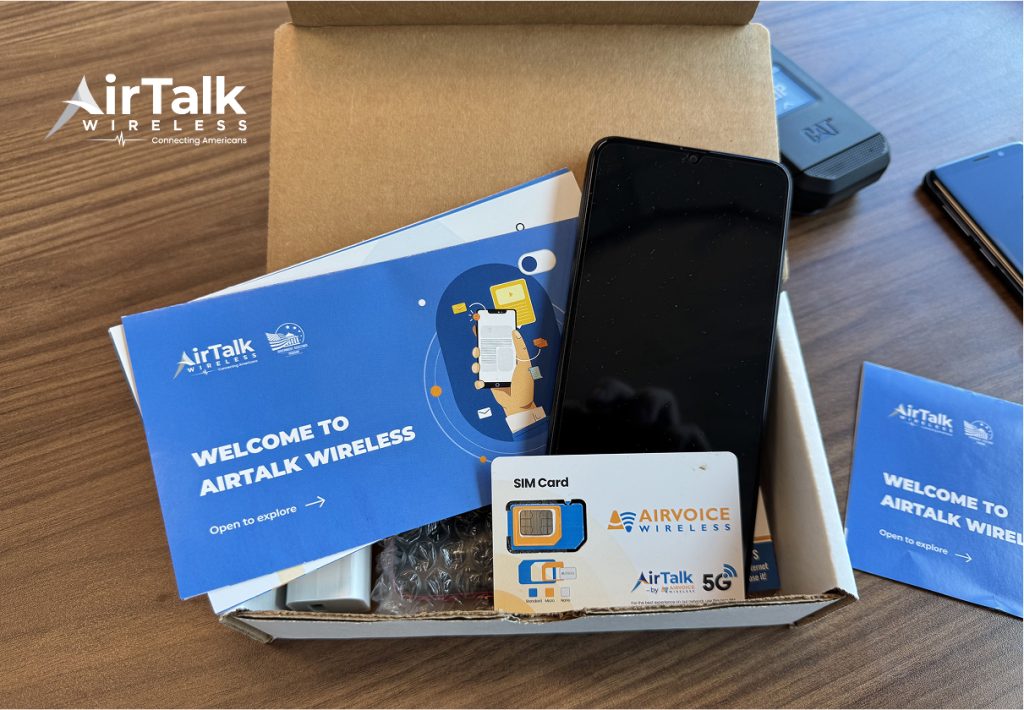
AirTalk Wireless is a federally approved Lifeline service provider, meaning it is authorized to deliver Lifeline benefits directly to eligible low-income households.


AirTalk Wireless does not create a separate assistance program. Instead, it helps qualified households enroll in the Lifeline Program and receive the benefits the government already allows, including discounted monthly service and access to eligible devices when available.
Through AirTalk Wireless, low-income households can:
- Apply for Lifeline using program-based eligibility (SNAP, Medicaid, SSI, Federal Public Housing Assistance) or income-based eligibility
- Complete eligibility verification through the official Lifeline process
- Receive monthly phone and data service covered by Lifeline benefits
- Select from discounted or promotional devices (such as phones or tablets), depending on state availability
- Manage their Lifeline account, support requests, and device issues through a single provider
IMPORTANT: The government does not subsidize devices. Lifeline programs cover basic service costs only. Free or discounted devices, upgrade plans, or top-ups are exclusive benefits provided by AirTalk Wireless as part of our promotional offers. Terms and conditions apply. Limited-time promotion—offers vary by state, stock availability, and eligibility.
For households that meet low-income criteria, AirTalk Wireless functions as the execution layer of Lifeline, turning federal eligibility into usable connectivity benefits without requiring applicants to navigate multiple agencies.

Conclusion
Knowing what is considered a low income household makes it easier to understand which assistance programs you may qualify for. Most federal programs use income thresholds tied to the federal poverty level (FPL), with eligibility varying by household size.
If you qualify, enrolling through an approved Lifeline provider like AirTalk Wireless can help turn that eligibility into real benefits such as free monthly connectivity.
FAQs
What does a low-income household mean?
A low-income household is generally defined as a household whose total income falls at or below a percentage of the federal poverty level (FPL), commonly 135%, 150%, or 200% FPL, depending on the assistance program.
What is considered low income in the US?
In the United States, low income is measured using federal poverty guidelines published annually by HHS. For many federal programs, households earning at or below 135% of the federal poverty level are considered low income, though some programs use higher thresholds.
What is considered low income in Oklahoma?
In Oklahoma, low-income status follows the same federal poverty guidelines used nationwide. Eligibility for programs like Lifeline, Medicaid, and SNAP is based on household size and income relative to the federal poverty level, not a separate state-specific income scale.