


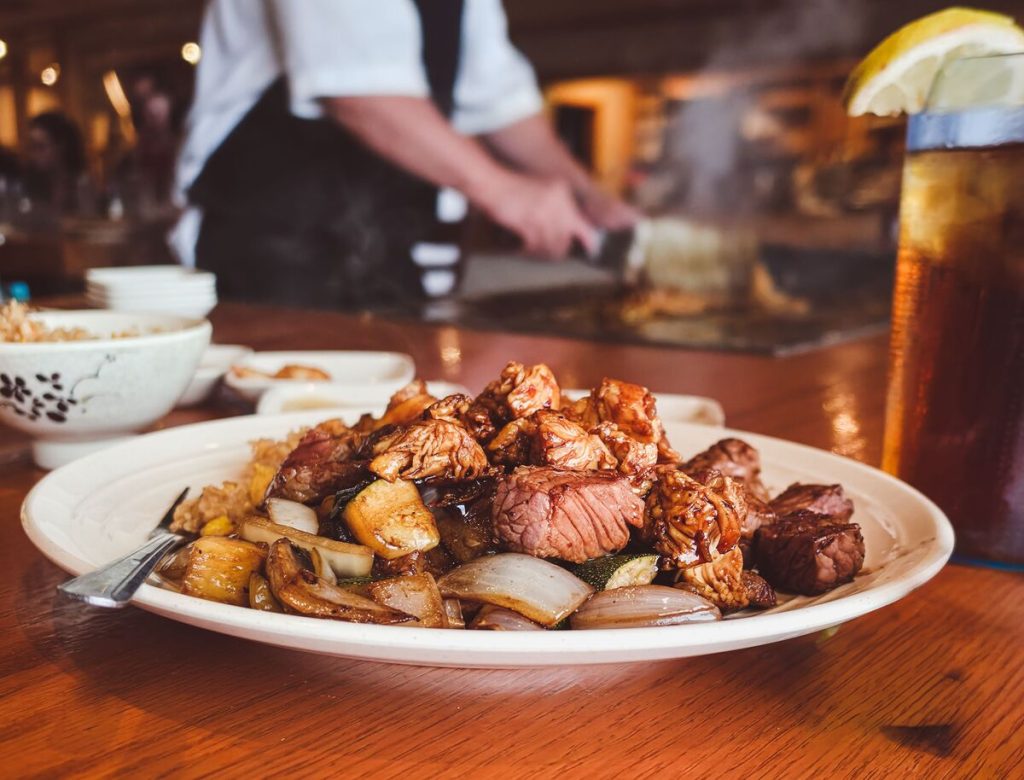
If you have ever sat around a large flat grill while a chef cooked steak, shrimp, fried rice, and vegetables in front of you, you have probably heard the experience called “hibachi.”
Traditional Japanese hibachi refers to a charcoal-heated fire container rather than the flat metal cooking surface common in American restaurants. That restaurant experience is technically closer to teppanyaki, where food is cooked on an iron plate in front of diners.
Understanding what is hibachi food therefore means looking at both the cooking style and the foods Americans commonly associate with the experience.
1. What Is Hibachi Food?
In everyday U.S. restaurant language, hibachi food usually refers to meat, seafood, rice, noodles, and vegetables cooked quickly on a very hot flat grill. Chicken, steak, shrimp, scallops, fried rice, zucchini, onions, and mushrooms are among the most familiar examples.
So, what kind of food is hibachi? It is better understood as a style of grilled meal than as one particular recipe.


The traditional Japanese meaning is different. Historical Japanese artwork documents the hibachi as a fire pot or fire box, including examples from the Edo period used for heating and practical household purposes.
By contrast, teppanyaki literally centers on cooking over an iron plate. Japan’s official tourism information describes teppanyaki as a preparation in which a chef grills food on an iron griddle, often directly in front of diners.
If you are asking “what type of food is hibachi”, there is no fixed ingredient list.
A hibachi-style restaurant meal might feature chicken one night and steak or seafood another. What connects the dishes is usually the hot-grill preparation, seasoning, sauces, vegetables, and table-side presentation.
2. Common Foods Served at Hibachi Restaurants
Once you understand what is hibachi food, the next step is looking at what usually appears on the plate.
Most American hibachi-style restaurants build meals around grilled protein, rice or noodles, vegetables, sauces, and simple side dishes.
Hibachi Chicken, Steak, and Seafood
Chicken and steak are two of the most recognizable options. Seafood choices may include shrimp, scallops, salmon, lobster, or combinations of several proteins.
At Benihana, for example, current hibachi-style offerings include chicken, steak, filet mignon, shrimp, scallops, and combinations accompanied by grilled vegetables and sauces.
The meat or seafood is generally cooked directly on the hot plate and seasoned during cooking.
Fried Rice and Noodles
Fried rice is another food strongly associated with U.S. hibachi restaurants, although it is not an automatic component of every traditional Japanese grilled meal.
A typical restaurant version may combine steamed rice with egg, chopped vegetables, seasoning, and sometimes chicken. One current hibachi chicken rice preparation uses rice, diced chicken, eggs, vegetables, garlic-flavored butter, and soy-based seasoning cooked directly on the teppan.
Vegetables and Side Dishes
Common grilled vegetables include zucchini, onions, mushrooms, carrots, and scallions. Depending on the restaurant, a full meal may also include soup, salad, dipping sauces, steamed rice, or fried rice.
This variety explains why hibachi is what kind of food is difficult to answer with a single dish name. The experience is usually a combination meal built around hot-griddle cooking.
>>> Read more: Best Mexican Food Near Me: How to Find the Right Restaurant
3. Is Hibachi Food Healthy?
Hibachi-style food can fit into a balanced meal, but its nutritional profile depends heavily on what you order and how it is prepared.
Grilled chicken, shrimp, steak, and vegetables can provide protein and vegetables without breading. However, fried rice, garlic butter, sauces, and larger portions can add substantial calories, fat, or sodium.
For example, one current restaurant nutrition guide lists a serving of Hibachi Chicken Rice at 560 calories and 570 mg of sodium, while sauces and other sides contribute additional nutrition separately.
“Hibachi” by itself therefore does not mean healthy or unhealthy. A plate centered on shrimp, vegetables, and steamed rice can be very different from a large combination meal with fried rice, generous butter, several sauces, and multiple meats.
4. Hibachi vs Teppanyaki: Why the Terms Get Confused
Another important part of understanding what is hibachi food is separating hibachi from teppanyaki.
In Japan, the two terms refer to different cooking equipment and methods, even though many U.S. restaurants use “hibachi” for the flat-griddle dining experience commonly associated with teppanyaki.
| Feature | Traditional Hibachi | Teppanyaki / U.S. “Hibachi” Restaurant |
| Cooking surface | Traditionally a charcoal-heated container/fire pot | Large flat iron or steel plate |
| Heat source | Traditionally charcoal | Heated metal cooking surface |
| Typical context | Traditional Japanese heating/cooking equipment | Restaurant cooking and dining experience |
| Common foods | Depends on use | Steak, chicken, seafood, rice, noodles, vegetables |
| Chef performance | Not defining feature | Often part of the experience |
| U.S. terminology | Less commonly used in traditional sense | Frequently called “hibachi” |
We can identify hibachi as a Japanese fire pot or fire box, while modern Japanese tourism materials describe teppanyaki as cooking on an iron plate.
So if someone asks what is hibachi food in an American restaurant context, they may be describing teppanyaki-style cooking, even though the historical Japanese meaning of hibachi is different.


5. How a Typical Hibachi Meal Is Served?
Knowing what is hibachi food also means knowing what to expect from the dining experience. At many U.S. hibachi-style restaurants, guests sit around a shared cooking surface while the chef prepares several parts of the meal in front of the table.
Soup or salad may arrive first. The chef then cooks vegetables, rice, meat, or seafood in stages, often serving each component as it becomes ready.
Entertainment can be part of the experience as well. Common table-side tricks include rapid utensil work, shaping fried rice, and building the well-known onion volcano.
Some restaurants also perform food-tossing tricks. At Benihana-style teppanyaki experiences, shrimp pieces or shrimp tails have traditionally been tossed as part of chef entertainment, although the exact performance varies by chef and location.
Because several diners typically share the grill, hibachi dinners can feel more social and interactive than an ordinary sit-down meal.
>>> Read more: California Food: Iconic Dishes, Local Ingredients, and What the State Is Known For
6. FAQs
Is hibachi Japanese food?
Yes, the word hibachi is Japanese, but the American restaurant experience commonly called hibachi is technically closer to teppanyaki. Traditional hibachi refers to a charcoal-heated fire container, while teppanyaki uses a flat iron cooking surface.
What meat is usually served with hibachi?
Chicken and steak are extremely common, while filet mignon, shrimp, scallops, lobster, and other seafood may also be available. Combination entrées often let diners choose two or more proteins.
Does hibachi always come with fried rice?
No. Fried rice is common at American hibachi-style restaurants, but it is not a required part of the cooking style. Some meals come with steamed rice, noodles, or another side, and restaurant offerings vary.
What do they toss in your mouth at hibachi?
At some American teppanyaki restaurants, chefs may toss a small piece of shrimp toward guests as part of the entertainment. The practice is not universal, and individual restaurants or chefs may use different tricks.
How to dress for a hibachi dinner?
Most hibachi restaurants are casual or smart casual unless the restaurant specifies a dress code. Comfortable everyday clothing usually works.
Final Thoughts
The simplest answer to what is hibachi food is that, in American restaurant language, it usually means chicken, steak, seafood, vegetables, rice, or noodles cooked on a hot flat grill in front of diners.
Technically, however, that cooking method is generally teppanyaki. Traditional Japanese hibachi refers to a charcoal-heated fire container rather than the large flat cooking plate familiar from U.S. restaurants.
The difference does not change what most customers expect when they book a “hibachi dinner”: freshly grilled proteins, vegetables, rice or noodles, dipping sauces, and an interactive chef performance shared around the table.