


Halloween may get most of the attention, but October 31 is only the beginning of a three-day period with deep Christian and cultural roots. What is the day after Halloween called? November 1 is most commonly known as All Saints’ Day, a day honoring Christian saints, both well-known and unnamed.
1. What Is the Day After Halloween Called?
The day after Halloween is most commonly called All Saints’ Day.
- Observed on November 1 in Western Christianity, the day honors both named and unnamed Christian saints.
- In the Roman Catholic Church, it is formally called the Solemnity of All Saints. The U.S. Conference of Catholic Bishops lists November 1 as the Solemnity of All Saints for Latin Rite Catholics in the United States.
- Other names include All Hallows’ Day, Allhallows, Hallowmas, and the Feast of All Saints. The word hallow means a holy person or saint, which also helps explain the name Halloween: All Hallows’ Eve is the evening before All Hallows’ Day.
- Dictionary.com notes that Hallowmas is an older English name for All Saints’ Day.
Why is the day after Halloween called All Saints’ Day? The name of the day after Halloween is tied to the purpose of November 1. All Saints’ Day celebrates the whole community of saints instead of focusing on one saint with an individual feast day.
The observance developed over centuries. In the eighth century, Pope Gregory III designated November 1 as a time to honor saints. The evening before became known as All Hallows’ Eve, later shortened to Halloween.


2. Halloween, All Saints’ Day, and All Souls’ Day: What Is the Difference?
Look at all three dates together.
In Western Christian tradition, October 31, November 1, and November 2 form a closely connected sequence. Halloween, All Saints’ Day, and All Souls’ Day form a traditional three-day period linked with remembrance of the dead.
- October 31 – Halloween: The name comes from “All Hallows’ Eve,” the evening before All Saints’ Day. Today it is widely celebrated with costumes, candy, parties, and trick-or-treating.
- November 1 – All Saints’ Day: What is the day after Halloween called? It is. It honors all saints.
- November 2 – All Souls’ Day: This day is traditionally dedicated to remembering and praying for the faithful departed, especially in Roman Catholic practice.
If you have ever searched “the day after Halloween is called what,” the calendar gives a simple answer: November 1 is All Saints’ Day, followed by All Souls’ Day on November 2.
The three dates are connected historically, but they are not interchangeable. Halloween is the eve, All Saints’ Day honors saints, and All Souls’ Day focuses on the faithful departed.

>>> Read more: What Countries Celebrate Halloween? How is Halloween Celebrated?
3. Is the Day After Halloween the Same as Día de los Muertos?
No.
When people ask, “What is the day after Halloween called?”, Día de los Muertos may come up because some observances overlap with November 1 and November 2. However, Día de los Muertos is a distinct cultural and religious tradition and should not be described simply as “Mexican Halloween.”
Day of the Dead traditions are rooted in Indigenous customs and Spanish Catholic ritual practices.
Families honor deceased loved ones through remembrance, ofrendas, food, flowers, music, candles, photographs, and cemetery visits. The emphasis is often on connection, memory, and welcoming loved ones’ spirits.
Día de los Muertos is commonly associated with November 1 and November 2, although customs and timing vary by community and region. In some settings, celebrations span October 31 through November 2.
That overlap can create confusion about what the day after Halloween is called. November 1 can be All Saints’ Day in Western Christian calendars and also part of Día de los Muertos observances, but the two are not simply different names for the same holiday.
4. Is All Saints’ Day Always Celebrated on November 1?
If your question is “what is the day after Halloween called in the Western Christian calendar?”, November 1 is generally All Saints’ Day. Roman Catholic and many other Western Christian communities observe the feast on that date.
Eastern Orthodox practice is different. The Orthodox Church in America and the Greek Orthodox Archdiocese of America identify the first Sunday after Pentecost as the Sunday of All Saints. Because Pentecost moves with Easter, this observance does not have a fixed November date.
“All Saints’ Day on November 1” is accurate for Western Christianity, but it should not be presented as a universal date for every Christian church.
Some denominations may also transfer celebrations to a nearby Sunday or follow local liturgical rules. The safest wording is that November 1 is the traditional Western Christian date for All Saints’ Day, whereas Eastern Orthodox traditions commonly observe all saints at another time of year.
>>> Read more: What To Do On Halloween: 25 Fun Ideas For Every Kind Of Celebration
5. How Is All Saints’ Day Celebrated Around the World?
What do people often do on November 1? Customs vary by country, church, and family, but several themes appear repeatedly.
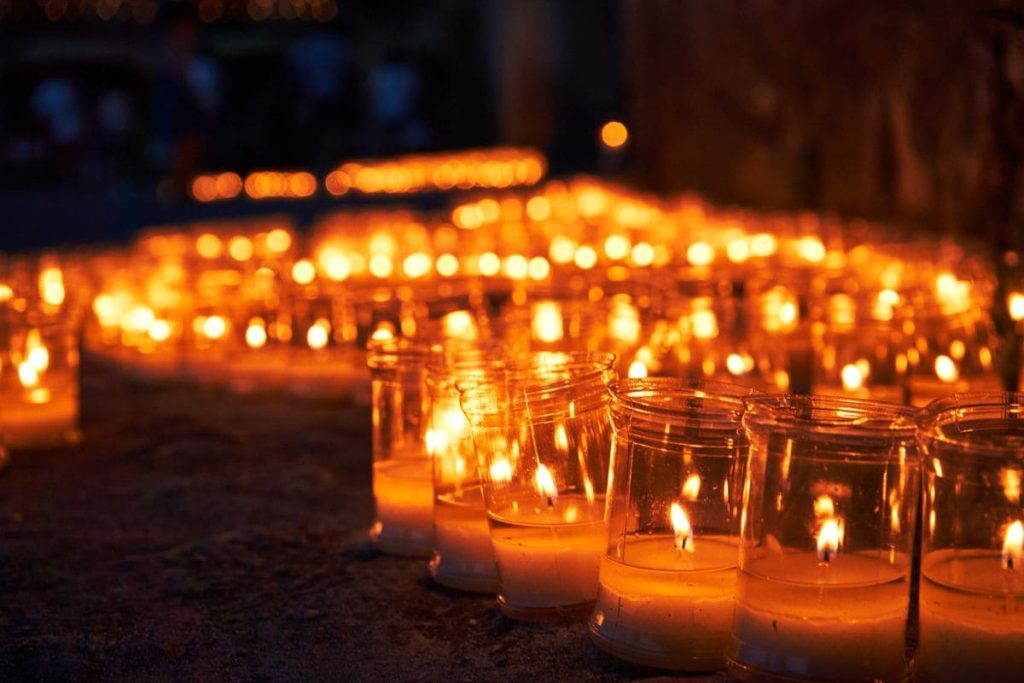
- Cemetery Visits, Candles, and Flowers: Families in many Catholic communities visit cemeteries, clean or decorate graves, leave flowers, and light candles.
- Church Services, Family Gatherings, and Local Foods: For practicing Christians, All Saints’ Day may include Mass, worship services, prayers, or readings about saints. Family gatherings and traditional foods also vary by local culture.
6. Is November 1 a Public Holiday?
The answer depends on the country. Some countries treat All Saints’ Day as a civil holiday or non-working day, while elsewhere it remains primarily a religious observance. Travelers and workers should check the relevant government calendar before making plans.
In the United States, November 1 is not a federal holiday. The federal holiday list includes only holidays established by law, and All Saints’ Day is not among them.
7. A Thoughtful Phone Gift for Daily Use
There are gaps that show up for some families.
Maybe it’s a grandparent on a fixed income who’s put off replacing a broken phone. Maybe it’s a relative between jobs who dropped their plan to save money.
If a monthly phone bill has been the reason someone in your family isn’t easily reachable, the federal Lifeline program is worth a look before the holiday season gets busier.
Lifeline helps qualifying low-income consumers cover phone or internet service, and it’s an important federal program.
AirTalk Wireless is one of the providers participating in Lifeline, and depending on the state, the company currently offers Lifeline plans with free monthly data, unlimited talk and text, and, for many qualifying applicants, a free smartphone at no cost.
For a grandparent, an aunt, or anyone in the family who could use a working phone, it’s a practical kind of gift, something that’s useful every day. Offers and device availability vary by state, so enter a ZIP code and check current deals before enrolling today!


Note: AirTalk Wireless operates under the federal Lifeline Program as an Eligible Telecommunications Carrier (ETC). Eligibility varies by state and program. Offers depend on availability and qualifications. Service is non-transferable and limited to one service per household.
8. Conclusion
In Western Christianity, November 1 is most commonly All Saints’ Day, also known as All Hallows’ Day or Hallowmas. It honors saints and sits between Halloween on October 31 and All Souls’ Day on November 2.
Now that you know what the day after Halloween is called, the calendar after Halloween makes much more sense – and carries far more history than one night of costumes and candy.