


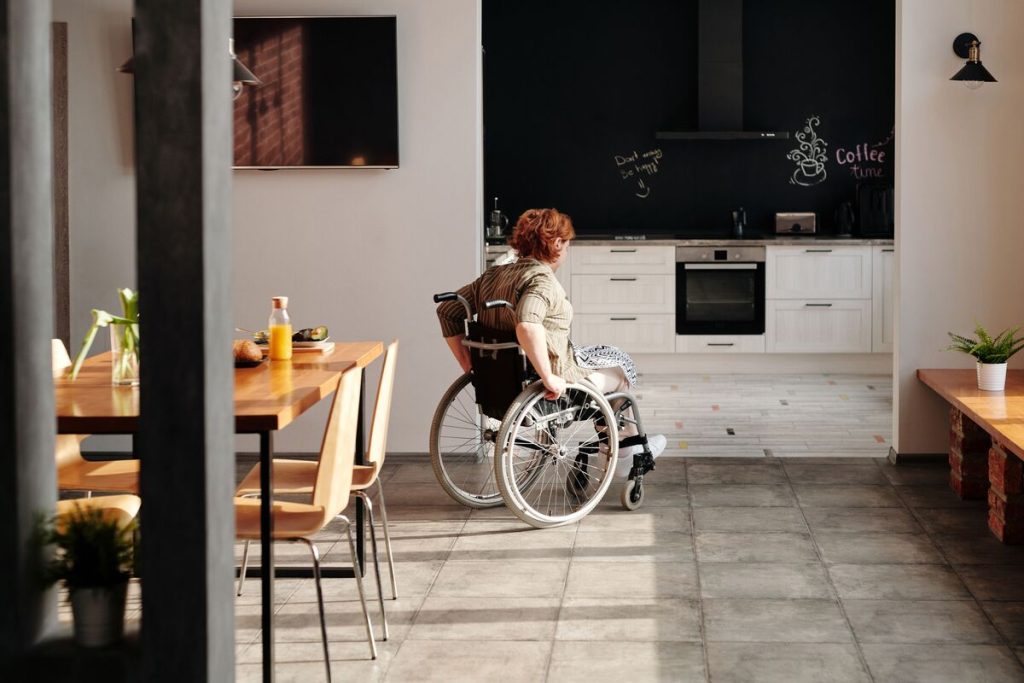
Using a wheelchair does not automatically mean an older adult needs nursing home care. Many people can remain active and relatively independent while using a manual or power wheelchair, especially when their living environment is accessible and appropriate support is available.
So, can you be in a wheelchair in assisted living? Other questions are whether the facility can safely accommodate the resident’s mobility needs and whether staff can provide the level of help required for transfers, toileting, bathing, medications, and other daily activities.
Let’s explore more in our guide.
1. Can You Be in a Wheelchair in Assisted Living?
In many cases, yes. Assisted living is generally intended for people who need help with daily care but do not require the level of medical care typically provided by a nursing home.
Services may include personal care, meals, medication assistance, housekeeping, supervision, and recreational activities.
That means wheelchair use by itself does not determine whether someone is appropriate for assisted living. When families ask “can you be in a wheelchair in assisted living?”, the resident’s overall functional needs matter more.
Someone who independently operates a wheelchair and needs only occasional personal-care assistance may fit comfortably within an assisted living setting. Someone who needs two caregivers for every transfer, extensive nursing care, or continuous medical monitoring may need a higher level of care.


2. What Wheelchair Accessibility Should an Assisted Living Facility Have?
Understanding whether you can be in a wheelchair in assisted living also requires looking beyond whether wheelchairs are technically allowed. Residents need to be able to move safely through the spaces they use every day.
The requirements that apply can depend on the type and age of the property, renovations, and other legal factors.
Accessible Bedrooms and Bathrooms
A wheelchair-accessible bedroom should provide enough usable space for the resident to approach the bed, turn the wheelchair, access storage, and move between the room and bathroom.
Bathrooms deserve even closer inspection. Accessible design standards address wheelchair turning space, clearance around toilets, grab bars, sinks, bathtubs, and showers.
Door thresholds, carpet, furniture placement, shower entries, toilet positioning, and space beside the bed can all affect daily independence.
Outdoor and Community Areas
A resident should also be able to reach dining rooms, lounges, activity spaces, outdoor areas, transportation pickup points, and other shared amenities.
ADA accessible-route standards address connections between accessible entrances, spaces, and elements within a site. Accessible routes may include appropriate walking surfaces, ramps, curb ramps, elevators, or platform lifts.
The Department of Justice also states that covered facilities must permit wheelchairs and manually powered mobility aids in areas open to pedestrian use.
>>> Read more: When to Move From Assisted Living to Nursing Home: 9 Warning Signs
3. Transfers and Daily Care Are Key Admission Factors
For many applicants, the biggest issue is not “can you be in a wheelchair in assisted living”, but “how much physical assistance is needed once the resident is in the wheelchair?”.
Assisted living facilities usually offer different levels of personal care, and residents may pay more as their needs increase. Exact services vary by facility and state.
Bed-to-Wheelchair Transfers
Facilities should know whether the resident can transfer independently, needs standby assistance, requires one staff member, or needs more extensive transfer support.
Transfer ability matters because moving between a bed, wheelchair, toilet, shower chair, and other surfaces can create fall or injury risks if the resident cannot bear weight or follow transfer instructions.
Families should ask exactly what transfer methods staff are trained and permitted to provide. If a mechanical lift is needed, confirm that the facility allows the equipment, has sufficient room to use it, and has employees trained according to applicable facility policies and state requirements.
A vague answer like “we assist with transfers” is not enough. Ask what happens during mornings, evenings, weekends, and emergencies when staffing patterns may differ.
Bathroom and Personal Care
Wheelchair users may need different levels of help with toileting, bathing, grooming, and dressing.
Assisted living commonly includes some personal-care support, but this does not mean every facility can accommodate every level of dependency.
For someone needing substantial assistance, confirm whether staff can provide transfer help in the bathroom, assist with showers, manage incontinence care, and respond when help is needed outside scheduled care times.
These details can ultimately determine can you be in a wheelchair in assisted living at a particular community.
Dining and Medication Support
Wheelchair accessibility should extend to meals and medication routines.
The resident should be able to reach the dining area and use dining tables comfortably. If hand strength, coordination, or another condition affects eating, ask what assistance can be provided.
Medication support is also commonly available in assisted living, although the scope differs by facility and state.
Families should explain all mobility and health needs together. A resident may be physically independent in a wheelchair but still need significant help managing medications, meals, or other activities.

4. FAQs
Can assisted living staff push a resident’s wheelchair?
Often, staff can assist a resident with wheelchair mobility when this service falls within the facility’s permitted care and the resident’s care plan. However, staffing rules, service levels, and facility policies vary. Families should confirm whether wheelchair assistance is available routinely or only in specific situations.
Do assisted living facilities allow mechanical lifts?
Some do, but policies vary considerably. A facility must have appropriate equipment space, trained staff, and procedures for performing transfers safely. If a resident depends on a mechanical lift, disclose this before admission and ask the facility to confirm in writing whether it can continue meeting that need.
Can someone who cannot walk live in assisted living?
Potentially, yes. In answering whether you can be in a wheelchair in assisted living, the ability to walk is not the only consideration. A non-ambulatory resident may still be appropriate if the facility can safely provide required transfers, personal care, evacuation assistance, and other services under its state license. A person whose needs exceed those capabilities may require nursing-home-level care.
Does Medicaid pay for wheelchair assistance in assisted living?
It may help cover qualifying personal-care or Home and Community-Based Services for eligible individuals, depending on the state and Medicaid program.
Federal Medicaid guidance allows states to offer HCBS services such as personal care, home health aide services, and other supports.
Families should contact their state Medicaid agency to determine whether assistance with mobility, transfers, or other activities of daily living is included in a specific program.
5. Final Thoughts
So, can you be in a wheelchair in assisted living? For many older adults, the answer is yes. Wheelchair use alone does not automatically require nursing home placement.
The real decision depends on whether the resident can safely navigate the facility and whether staff can consistently meet transfer, bathing, toileting, dining, medication, and other care needs.
When evaluating a community, do not stop at asking whether it is “wheelchair accessible.” Explain exactly how the person moves, transfers, uses the bathroom, and manages daily activities.
>>> Read more: What Assisted Living Facilities Accept Medicaid? Essential Guide in 2026