


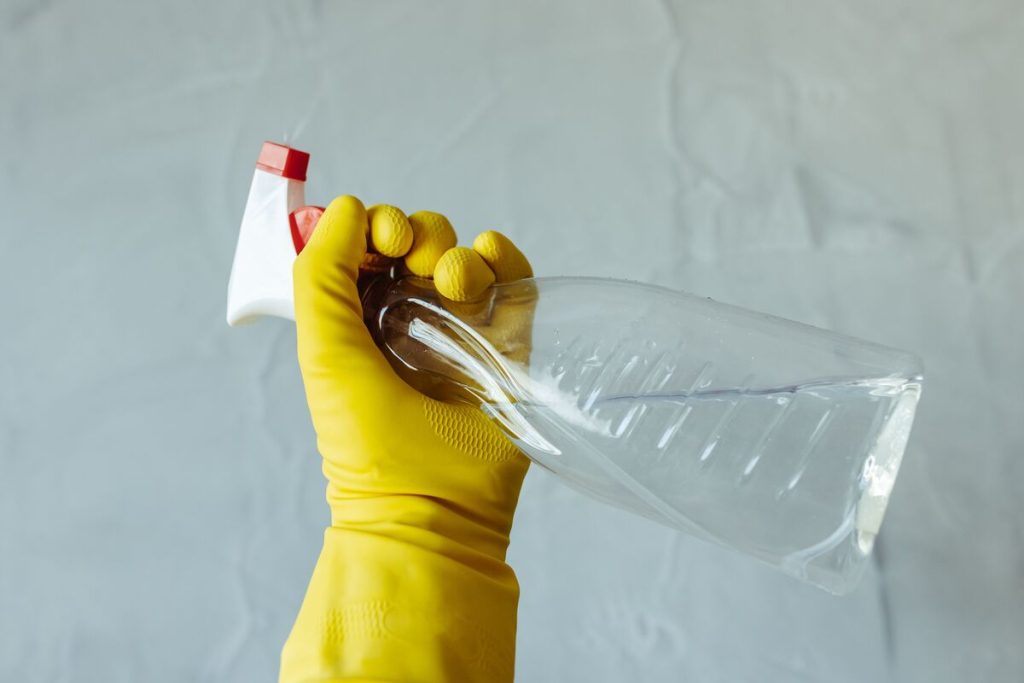
Vinegar is often recommended as a simple household cleaner, but mold requires more careful handling than an ordinary surface stain. The main goal is not just to “kill” visible mold. Mold growth must be physically removed, the surface must be dried, and the moisture problem that allowed it to grow must be corrected.
So, does vinegar kill mold?
Acetic acid, the active acid in vinegar, has shown antifungal activity against some tested fungi in laboratory studies. However, that does not mean household vinegar reliably eliminates every type of mold or makes professional remediation unnecessary.
1. Does Vinegar Kill Mold?
The answer to does vinegar kill mold is: sometimes, but not universally.
A 2020 study published in BMC Microbiology tested acetic acid against several microorganisms. In surface tests, 5% acetic acid produced complete reductions for the fungal organisms tested under the study conditions.
However, the researchers also noted that antimicrobial effectiveness depends on concentration, organism, and testing conditions, and their results should not be interpreted as proof that ordinary vinegar eliminates every household mold infestation.


The same caution applies to the question of whether vinegar kills black mold.
Stachybotrys chartarum is one greenish-black mold, but mold color alone does not determine risk, and homeowners generally do not need to identify the exact species before removal. All indoor mold growth should be addressed along with its moisture source.
Therefore, vinegar may help remove certain common household molds, but it is not effective against all types of mold. Vinegar may have a role on a small, cleanable surface, but it should not be treated as a guaranteed mold-eradication method.
2. Using Different Types of Vinegar on Mold
Not all vinegars are identical. Their acidity, color, and additional compounds vary, which matters when considering whether vinegar kills mold effectively enough for household cleaning.
White Vinegar
Distilled white vinegar is usually the more practical household option because it is clear and commonly sold at around 5% acidity. Both white distilled vinegar and cider vinegar are commonly available at 5% acidity.
So, does white vinegar kill mold? It can inhibit or reduce certain fungi, but the result depends on the organism and surface. White vinegar should not replace physical removal, drying, and moisture control.
Apple Cider Vinegar
The answer to “does apple cider vinegar kill mold?” is less straightforward. Apple cider vinegar also contains acetic acid and may be sold at about 5% acidity, but there is less direct evidence supporting it as a preferred household mold-cleaning agent.
Because apple cider vinegar contains natural color and additional compounds, it may also leave residue or discoloration on light surfaces.
For a small hard-surface cleanup where vinegar is appropriate, clear distilled white vinegar is generally the simpler choice.
>>> Read more: How to Remove Oil Stains from Clothes in 3 Instant Steps
3. How to Use Vinegar on a Small Mold Spot?
Homeowners can generally handle mold areas smaller than about 10 square feet themselves, according to the EPA, assuming there is not extensive water damage or another condition requiring professional remediation.
If you choose vinegar for a small cleanable area, how long does it take vinegar to kill mold?
Remember that there is no single reliable household answer. Laboratory studies use controlled concentrations, organisms, and contact times, so a fixed internet rule such as “wait exactly 30 or 60 minutes” should not be treated as universally proven.
Protect Yourself and Ventilate the Area
Before cleaning, reduce your exposure to mold.
- CDC recommends at least a NIOSH-approved N95 respirator for mold cleanup, along with gloves and eye protection. People with asthma, COPD, immune suppression, or significant mold allergies should not participate in cleanup because exposure can pose greater health risks.
- Open windows or doors when using cleaning products to improve ventilation. Never combine vinegar with bleach or other cleaners unless the product labels specifically say the combination is safe.
Test the Surface First
Before applying vinegar across the entire area, test a small hidden section.
- This is especially important on painted surfaces, finished wood, stone, grout, or other materials where acid could change the color or finish. Vinegar may be useful on some nonporous or easily cleaned surfaces but is less appropriate when mold has penetrated porous material.
- Porous materials can trap mold within spaces and crevices, making complete cleaning difficult or impossible.
This is one reason whether vinegar kills mold should not be the only question. You also need to ask whether the affected material can actually be cleaned.
Apply, Wait, Scrub, and Dry
Apply enough vinegar to wet the affected surface without soaking surrounding materials. Allow some contact time rather than wiping it away immediately, then scrub or wipe the visible mold from the surface.
There is no universally established household dwell time for vinegar and mold. The laboratory study cited above used controlled contact periods for antifungal testing, but those conditions do not translate directly into a single consumer recommendation.
After treatment, physically remove the residue and dry the surface thoroughly. Killing mold alone is insufficient; dead mold should still be removed, and moisture must be controlled to prevent recurrence.
If the mold returns quickly, covers more than about 10 square feet, involves HVAC contamination, or follows major water damage, professional assessment may be more appropriate.
4. How to Keep Mold From Coming Back?
The most important long-term strategy is moisture control. Indoor mold growth can be prevented or controlled by controlling moisture and correcting leaks or water problems. If mold is cleaned without fixing the moisture source, it will likely return.
Keep indoor relative humidity below 60% when possible, with an ideal range of approximately 30% to 50%. Repair plumbing leaks, address roof or window infiltration, dry wet materials quickly, and use bathroom or kitchen ventilation where moisture routinely accumulates.
Understanding “does vinegar kill mold?” is only part of solving the problem. Even an effective surface treatment will not prevent regrowth if condensation, leaks, or persistently high humidity remain.
>>> Read more: How to Descale Humidifier? Best Methods to Remove Mineral Buildup
5. Final Thoughts
After all, does vinegar kill mold? Acetic acid has demonstrated antifungal activity against certain fungi under laboratory conditions, and distilled white vinegar may be useful as part of cleaning a small surface spot. However, it cannot be assumed to eliminate every mold species or reach mold that has penetrated porous materials.
Focus on removal and moisture control rather than simply trying to kill mold. A small hard-surface spot may be manageable at home, while larger growth, major water damage, recurrent mold, or contaminated porous materials may require professional help.
Stay tuned to the AirTalk Wireless blog for more tips on keeping your home safe and clean.