


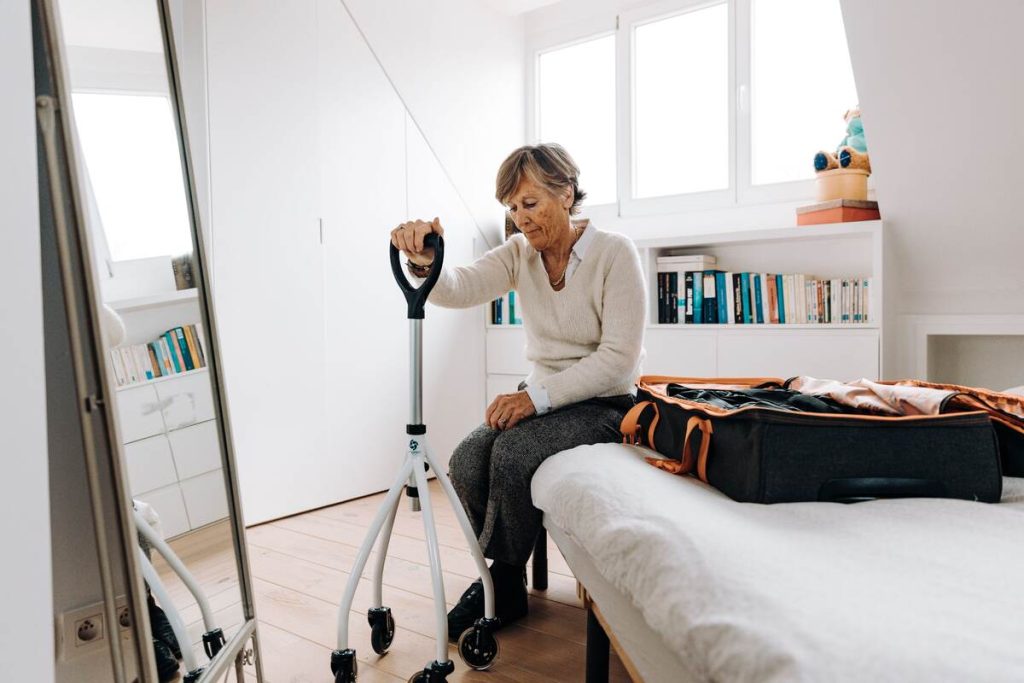
A home can feel completely safe for decades and then become harder to navigate as you get older. A loose rug that was never a problem before can become a tripping hazard. A dark hallway can make nighttime trips to the bathroom more difficult. Even reaching for a plate on a high shelf may become uncomfortable.
That is why learning how to make your home safe for aging in place is less about making your house look different and more about making everyday tasks easier, safer, and more manageable.
1. How to Assess Your Home for Aging in Place
Before buying equipment or starting a renovation, walk through your home with a different question in mind: What might become difficult if my balance, vision, strength, or mobility changes?
A room that works well today may need a few adjustments later. The National Council on Aging (NCOA) recommends reviewing the home regularly because everyday changes in balance, vision, hearing, strength, and reaction time can affect how safely someone moves around the house.
Start with these areas:
- Look for fall hazards. Check for loose rugs, clutter, electrical cords, uneven flooring, and anything that sticks out into a walkway.
- Consider lighting and visibility. Pay special attention to stairs, hallways, entrances, and areas used at night.
- Check whether daily-use items are easy to reach. Frequently used dishes, food, medications, and household supplies should not require a step stool or excessive bending.
- Think about stairs and bathroom access. Ask whether getting to a second-floor bedroom or stepping into the shower could become difficult with reduced mobility.
- Consider future mobility changes. Imagine using a walker or wheelchair through doorways, hallways, and bathrooms. Are there areas that would be difficult to navigate?
- Identify areas that may need professional assessment. An occupational therapist or other qualified professional can spot risks that may not be obvious during a routine walk-through.
This kind of assessment gives you a starting point. You do not have to change everything at once. Focus first on areas that create the greatest risk or make everyday activities unnecessarily difficult.
2. How to Make Your Home Safe for Aging in Place
Once you know where the trouble spots are, the next step is making practical changes. Some may cost very little, while others may involve a larger renovation.
The key is to work through the home one area at a time rather than trying to make the entire house accessible overnight.
Improve Floors, Hallways, and Stairs
Floors and stairs deserve special attention because they are part of almost every trip through the house.
1. Clear walking paths. Keep shoes, boxes, small furniture, and other objects out of hallways and frequently used routes.
2. Secure or remove loose rugs. If a rug tends to slide or curl at the edges, remove it or use an appropriate nonslip solution.
3. Secure electrical cords. Cords should stay along walls rather than crossing walkways.
4. Improve stair lighting. Make sure every step is clearly visible, especially at night. Motion-sensor or automatic lighting can be useful in darker areas.
5. Add sturdy handrails. A handrail can provide extra support when going up or down stairs. If stairs become increasingly difficult, consider whether a first-floor bedroom and bathroom would make daily life easier.
NCOA also recommends reducing clutter, improving hallway and stairway lighting, and addressing raised thresholds between rooms as part of making a home easier to navigate.


Make the Bathroom Safer
Bathrooms combine several risks: slippery surfaces, water, tight spaces, and frequent standing and sitting.
6. Install grab bars. Place them where they can actually help with entering the shower, standing, sitting, and getting out of the tub.
7. Add nonslip surfaces. Use appropriate nonslip flooring or mats, particularly around the shower and sink.
8. Improve shower access. A walk-in or low-threshold shower may be easier to use than stepping over a high tub wall.
9. Make the toilet easier to use. A raised toilet seat or strategically placed grab bar can make sitting down and standing up less demanding.
Good lighting matters here, too. A brighter bathroom and a clear path from the bedroom can make nighttime trips much easier.
Make the Bedroom and Kitchen Easier to Use
The bedroom and kitchen may not seem like high-risk areas, but small adjustments can make a noticeable difference.
10. Keep frequently used items within reach. Move everyday dishes, cookware, clothing, and personal items to shelves and drawers that do not require stretching or bending.
11. Make the bed easier to access. Leave enough space around the bed to move safely and keep a lamp or other light source within easy reach.
12. Keep kitchen appliances and counters accessible. Avoid placing heavy cookware or frequently used appliances in high cabinets. Pull-out shelves can also reduce the need to reach deep into cupboards.
Simple changes like lower storage, pull-out shelves, and easier-to-use handles can reduce unnecessary reaching. Keep frequently used items on lower shelves, and replace difficult round doorknobs with lever-style handles that are easier to operate.
Improve Entryways and Outdoor Areas
The safest home can still be difficult to use if getting through the front door requires navigating several steps.
13. Improve the entrance. A ramp or zero-step entry can make coming and going easier if stairs become difficult.
14. Add lighting outside. Make sure the front door, walkway, driveway, and steps are visible after dark.
15. Keep outdoor paths clear. Trim overgrown plants, repair uneven walkways, and remove objects that could create a trip hazard.
These changes can also make it easier for family members, caregivers, delivery workers, or emergency responders to reach the home.

>>> Also read: When to Move From Assisted Living to Nursing Home: 9 Warning Signs
3. What Simple Changes Can Make a Home Safer?
You do not always need a major remodeling project to make your home safer. In fact, some of the most useful improvements are inexpensive and can be completed in an afternoon.
Try these small updates first:
- Replace round doorknobs with lever-style handles.
- Add brighter bulbs to dim rooms and hallways.
- Use night-lights between the bedroom and bathroom.
- Move heavy or frequently used items to waist-level storage.
- Remove unnecessary furniture from narrow walkways.
- Secure loose cords against walls.
- Mark the edges of stairs if they are difficult to see.
- Keep a flashlight somewhere easy to reach.
- Test smoke and carbon monoxide detectors regularly.
- Keep a phone within reach of the bed and other commonly used areas.
These changes may seem minor individually. Together, however, they can make the home easier to move through and reduce the number of situations that require unnecessary reaching, bending, climbing, or rushing.
4. How Can You Prepare Your Home for Emergencies?
Knowing how to make your home safe for aging in place also means preparing for situations that cannot be prevented, such as a fall, fire, severe weather, or power outage.
A simple emergency plan should include:
- Emergency contacts: Keep phone numbers for family members, neighbors, caregivers, doctors, and other important contacts in an easy-to-find location.
- Medication and health information: Maintain an updated list of medications, allergies, medical conditions, healthcare providers, and insurance information.
- Emergency kit: Keep water, nonperishable food, flashlights, batteries, several days of medication, chargers, and supplies for medical equipment together in one accessible place.
- Power outage plan: If someone relies on an oxygen machine, CPAP, refrigerated medication, or another electrical device, plan ahead for backup power.
- Fire and severe weather plan: Know which exits to use, where to go during severe weather, and who can help if evacuation becomes necessary.
- Backup batteries: Keep batteries charged for phones, medical alert devices, flashlights, and essential medical equipment.
- Phone access: Keep a working phone within easy reach, particularly near the bed and in areas where a fall could leave someone unable to reach a wall-mounted phone.
- Medical alert systems: For someone who lives alone or has a history of falls, a medical alert device with an emergency button or fall detection may provide another way to request help.
Keep emergency contacts, medical information, medications, emergency supplies, and power-outage plans up to date. In addition, review the plan regularly, especially when health needs or caregiving arrangements change.
>>> Also read: Essential Questions to Ask a Home Health Care Agency Before Choosing Care
5. When Should You Get Professional Help With Home Modifications?
Some changes are easy to handle yourself. Others require more careful planning.
If an older adult has significant mobility limitations, has experienced repeated falls, uses a wheelchair or walker, or has difficulty with everyday activities, professional advice can be especially useful.
An occupational therapist can conduct a home safety assessment and look at how the person actually moves through the home. A qualified contractor can then help with larger modifications such as ramps, widened doorways, bathroom renovations, stair solutions, or other accessibility improvements.
Professional help is also worth considering when a modification involves electrical work, structural changes, plumbing, or anything that could create a new safety problem if installed incorrectly.
Most importantly, do not wait for a serious accident before asking for help. Planning earlier gives you more time to compare options, estimate costs, and make changes while the older adult can still participate in the decisions.
6. How Can Lifeline Help Older Adults Access Essential Phone Service at Home?
Home safety extends beyond floors, stairs, and grab bars. An older adult who lives independently also needs a simple way to call family, arrange transportation, speak with a healthcare provider, or request emergency help.
For eligible households, the Lifeline program can help lower the cost of wireless service.
Eligibility generally depends on household income or participation in qualifying government programs, which can include Medicaid, SNAP, SSI, Federal Public Housing Assistance, and Veterans and Survivors Pension Benefit. Program availability and qualifying programs can vary by state.
AirTalk Wireless is an Eligible Telecommunications Carrier that offers Lifeline-supported wireless service in participating areas.
AirTalk plans include benefits such as unlimited talk and text, free international calling to more than 200 countries and territories, free SIM or eSIM, Wi-Fi Calling, 911 access, Caller ID, call waiting, 3-way calling, and voicemail. Actual data allowance and device offers vary by state and plan.
Also, AirTalk Wireless may offer a free or discounted phone to eligible customers, which can be an important added benefit for older adults. Having a phone readily available at home can make everyday communication and emergency calls easier.


The application process with AirTalk Wireless only takes several simple steps:
- Enter your ZIP code. Start on the AirTalk application page to check whether service and Lifeline options are available in your area.
- Choose an available plan and device. Review the Lifeline options shown for your location and select the plan or device offer available to you.
- Provide your information. Enter the personal details required for the application.
- Verify your eligibility. Confirm your participation in a qualifying program or provide the required income or eligibility documentation.
- Complete the application. Once your eligibility is verified, follow the instructions to finalize your service and device selection.


Ready to make aging in place a little easier? Check AirTalk Wireless today to see which Lifeline service and device options are available for you or your loved one.
Note: AirTalk Wireless operates under the federal Lifeline Program as an Eligible Telecommunications Carrier (ETC). Eligibility varies by state and program. Offers depend on availability and qualifications. Service is non-transferable and limited to one service per household.
Final Thoughts
Learning how to make your home safe for aging in place does not require turning your house into a medical facility. Start with the places you use most, remove obvious hazards, improve lighting, make everyday items easier to reach, and prepare for emergencies.
A few thoughtful changes today can make the home easier to navigate and more comfortable as your needs change.