


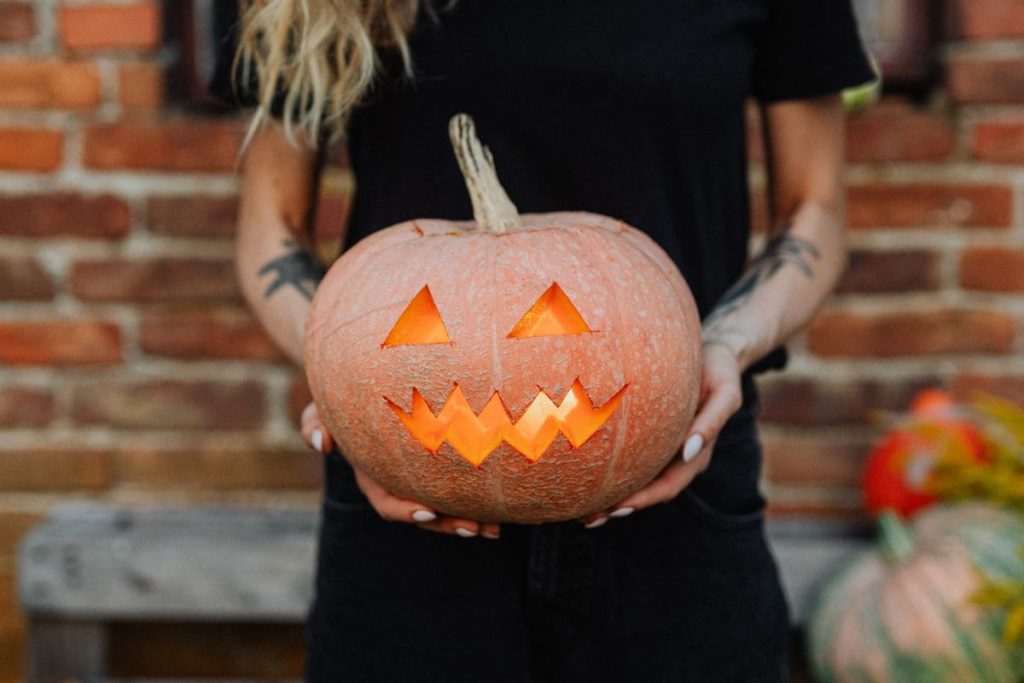
Is Halloween evil? This depends largely on what someone means by “Halloween.” For many families, October 31 is about costumes, candy, pumpkins, and neighborhood fun. For some Christians, however, its imagery of ghosts, witches, demons, and death raises genuine spiritual concerns.
1. Why Do Some People Believe Halloween Is Evil?
Is Halloween an evil holiday?
Haunted houses, witches, demons, skeletons, gore, and stories about spirits are common parts of modern Halloween. For Christians who want to avoid occult practices or imagery they believe glorifies evil, those themes can make participation uncomfortable.
A second concern is Halloween’s relationship with Samhain, an ancient Gaelic seasonal festival associated with the transition into winter and traditions involving the supernatural.
That connection is real, but it does not mean every modern Halloween activity is a continuation of an ancient religious ritual. Halloween is a tradition in which pre-Christian and Christian elements became mixed and changed over centuries.


Then, is Halloween the devil’s birthday in the Bible? There is no biblical passage identifying October 31 as Satan’s birthday, and Halloween is not named in the Bible. The holiday’s English name comes from All Hallows’ Eve, the evening before All Saints’ Day, not from a celebration of the devil.
Scripture does not label Halloween directly. Instead, Christians apply broader teachings about conscience, darkness, wisdom, and honoring God.
If you are questioning “is Halloween a demonic holiday”, some practices or themes may conflict with religious convictions, but Halloween today does not have one single religious meaning.
>>> Read more: What Does Halloween Mean in the Bible? 5 Must-Know Facts
2. Where Did Halloween Come From? A More Accurate History
Halloween did not emerge from one event or one belief system.
- Samhain, observed in Gaelic regions around the beginning of winter, is an important part of its historical background.
- Folklore connected this seasonal transition with the dead and supernatural beings, although historians caution against treating every popular claim about Samhain as certain.
Christian traditions also shaped the date and name.
- November 1 became associated in Western Christianity with All Saints’ Day, or All Hallows’ Day, while November 2 became All Souls’ Day. October 31 therefore became All Hallows’ Eve, eventually shortened to Halloween.
- Over time, Christian observances, older seasonal customs, folk beliefs, guising, mumming, and traditions surrounding the dead overlapped in Britain and Ireland.
Immigration then helped transform Halloween in the United States.
- Irish and Scottish immigrants brought customs with them during the nineteenth century.
- In America, the holiday increasingly developed into a community and family event involving parties, costumes, pranks, neighborhood activities, and eventually modern trick-or-treating.
That history makes two extreme claims difficult to support. Halloween is not simply an unchanged ancient pagan ritual, but neither did all of its customs originate purely within Christianity. Modern Halloween is a layered cultural tradition shaped by several historical streams.

3. How These 3 Different Groups Understand Halloween Today
Today, at least three broad approaches help explain why people give very different answers to “Is Halloween evil?”
- For many secular families, Halloween is primarily cultural. Costumes, pumpkin carving, candy, school events, and trick-or-treating are entertainment.
- Some Christians participate selectively. They may choose non-occult costumes, attend community or church events, hand out candy, or treat the evening as an opportunity for hospitality. Christian writers who take this position commonly distinguish ordinary cultural activities from actual participation in occult or spiritual practices.
- Other Christians choose not to participate. They may believe the holiday’s supernatural imagery, historical associations, or focus on fear and death conflicts with their understanding of biblical teaching.
These positions show why Halloween does not carry the same meaning for everyone. The activity, intention, religious belief, local tradition, and family context all affect how the day is understood.
4. Should You Let Your Children Celebrate Halloween?
Parents do not have to treat Halloween as an all-or-nothing decision. A more useful question is: What exactly will my child be doing, and does that activity fit our family’s beliefs and boundaries?
- Choose activities that match your values. A neighborhood candy walk, pumpkin carving, church harvest event, or costume party can be evaluated separately from séances, occult-themed activities, or intensely frightening attractions.
- Choose costumes intentionally. Parents uncomfortable with demons, gore, or occult imagery can set limits while still allowing costumes based on animals, careers, books, superheroes, or historical figures.
- Consider your child’s comfort and safety. Younger children may be frightened by realistic horror displays, masks, loud effects, or haunted attractions. Adults can also check costume visibility and supervise trick-or-treating appropriately.
For Christian families, conscience may also matter. The Bible does not provide a Halloween-specific rule, so believers often apply broader principles differently.
>>> Read more: What To Do On Halloween: 25 Fun Ideas
5. So, Is Halloween Evil?
Nearly two-thirds of Americans said they believe in spirits or unseen spiritual forces. But historically, Halloween cannot accurately be reduced to one inherently evil or demonic practice.
The most useful distinction is therefore not simply Halloween versus no Halloween, but what people actually do, what meaning they attach to those activities, and whether those choices are consistent with their beliefs.
6. FAQs
Is It a Sin for Christians to Celebrate Halloween?
The Bible does not specifically address Halloween, so it does not directly state that celebrating October 31 is a sin. Christians reach different conclusions by applying broader teachings about conscience, worship, avoiding evil, and doing everything in a way that honors God.
Can Christians Go Trick-or-Treating?
Some Christians view trick-or-treating as a harmless cultural activity involving costumes, neighbors, and candy, while others prefer not to participate because of Halloween’s imagery or historical associations. There is no Bible verse specifically prohibiting or approving trick-or-treating.
Can Christian Parents Let Their Children Dress Up for Halloween?
Many Christian parents allow costumes while setting boundaries around frightening, violent, demonic, or occult themes. Others avoid Halloween costumes entirely. The decision usually depends on the family’s convictions and how they understand participation rather than on a Halloween-specific biblical rule.
What Can Christians Do Instead of Traditional Halloween Celebrations?
Families who prefer not to celebrate traditional Halloween can attend a church or community fall event, organize a family gathering, carve pumpkins, prepare seasonal food, serve neighbors, or participate in an All Saints’ Day activity. The alternative can reflect the family’s own beliefs and traditions.