



Many families search for Medicaid death benefit when trying to understand what financial support may be available after a loved one passes away.
There is often confusion about whether Medicaid provides funeral assistance, survivor payments, or other death-related benefits. At the same time, concerns about estate recovery and asset repayment can create additional uncertainty.
Understanding what Medicaid does and does not provide after death is essential for families managing final expenses, legal responsibilities, and benefit transitions during an already difficult time.
1. Is There a Medicaid Death Benefit?
When people search for Medicaid death benefit, they are often looking for funeral assistance, survivor payments, or a lump-sum payout after a beneficiary passes away. However, Medicaid is a health insurance program, not a life insurance policy. It does not provide a traditional death benefit to family members.
Unlike Social Security, which may offer a small one-time death payment to certain survivors, Medicaid does not issue funeral payments or cash benefits to heirs. Medicaid’s purpose is to cover medical expenses for eligible individuals during their lifetime. Once the beneficiary dies, regular Medicaid coverage ends.
The confusion usually comes from misunderstanding the difference between health coverage and survivor benefits. Medicaid does not function as a payout program after death, and families should not expect it to cover burial or memorial costs.


2. What Happens to Medicaid When Someone Dies?
When a Medicaid recipient passes away, their active coverage stops as of the date of death. Medical bills incurred after that date are no longer covered under the deceased individual’s Medicaid eligibility.
However, the financial review does not always end there. Under federal law, states are required to operate a Medicaid Estate Recovery Program (MERP). This means that in certain cases, the state may seek repayment from the deceased person’s estate for specific Medicaid services that were provided during their lifetime.
Estate recovery most commonly applies to:
- Long-term care services (such as nursing home care)
- Home and community-based services
- Related hospital and prescription drug costs
It is important to understand that recovery does not happen automatically in every case. Certain protections may apply, especially if there is a surviving spouse, minor child, or disabled dependent. Still, families managing final affairs should be aware that Medicaid’s involvement can extend beyond the individual’s lifetime, even though there is no direct Medicaid death benefit paid to survivors.
>>> Also read: Will I Lose My Medicaid If I Get Married? The Critical Income Rules Most Couples Miss
2. Understanding Medicaid Estate Recovery
When discussing a Medicaid death benefit, many families are surprised to learn that the conversation often shifts from “what does Medicaid pay after death?” to “what may the state recover after death?” This is where Medicaid estate recovery becomes important.
What Is the Medicaid Estate Recovery Program (MERP)?
The Medicaid Estate Recovery Program, commonly called MERP, is a federally required program that allows states to seek repayment for certain Medicaid services after a beneficiary dies.
Federal law requires states to attempt recovery for Medicaid benefits paid on behalf of individuals age 55 or older who received long-term care services. Each state administers MERP according to its own procedures, but the general principle is the same: the state may file a claim against the deceased person’s estate to recover specific costs.
MERP does not apply while the person is alive. It only becomes relevant after death, and it does not function as a payout or death benefit.
What Costs Can Be Recovered After Death?
Under federal rules, states must attempt recovery for:
- Nursing home care
- Home and community-based services (HCBS)
- Related hospital services
- Prescription drug services connected to long-term care
Some states may also recover other Medicaid expenses, depending on their policies. Recovery is typically limited to the value of the deceased person’s probate estate, which may include assets such as a home or other property.
Importantly, recovery does not exceed the amount Medicaid paid for covered services.
When Estate Recovery May Not Apply
There are important protections built into estate recovery rules.
States generally cannot recover costs if there is:
- A surviving spouse
- A surviving child under age 21
- A surviving child who is blind or permanently disabled
Additionally, many states offer hardship waivers or exemptions for small estates. Because rules vary, families should review their state’s specific MERP guidelines before assuming recovery will occur.
Understanding MERP is essential when evaluating the broader topic of a medicaid death benefit, since Medicaid does not pay survivors but may seek repayment in certain circumstances.
3. Medicaid vs. Social Security Death Benefits
The confusion around a Medicaid death benefit often comes from mixing Medicaid with Social Security.
Social Security may provide a small one-time death benefit to certain surviving spouses or dependent children. This payment is separate from Medicare and Medicaid and is tied to Social Security work credits.
Medicaid, by contrast, does not provide:
- Lump-sum death payments
- Survivor cash benefits
- Funeral or burial reimbursements
Medicaid is strictly a health coverage program. While it may pay for medical services during a person’s lifetime, it does not provide financial support to family members after death. Understanding this distinction can help families plan more realistically when managing final expenses and benefit transitions.
4. Managing Benefits and Accounts After a Loved One’s Passing
When a Medicaid recipient passes away, families often need to manage multiple benefit programs, financial accounts, and legal responsibilities at the same time. Understanding how the Medicaid death benefit question connects to estate recovery, insurance policies, and other government programs can help reduce confusion during an already stressful period.
After a death, families should:
- Notify the state Medicaid office
- Inform Social Security and any managed care plan
- Review whether estate recovery may apply
- Close or transfer utility, bank, and service accounts
- Check for outstanding medical bills
Clear communication with agencies and providers is critical, especially when deadlines or documentation requests are involved.
How Medicaid Participation Can Also Qualify for Lifeline Benefits
Although there is no direct Medicaid death benefit, Medicaid enrollment frequently qualifies a household for the federal Lifeline program. If a surviving spouse or dependent remains eligible for Medicaid, they may also qualify for free or discounted phone service.
Through approved providers such as AirTalk Wireless, eligible Medicaid participants in many states can receive:
- A discounted or free device, such as a free smartphone (depending on device availability)
- Monthly unlimited talk and text
- Free monthly data

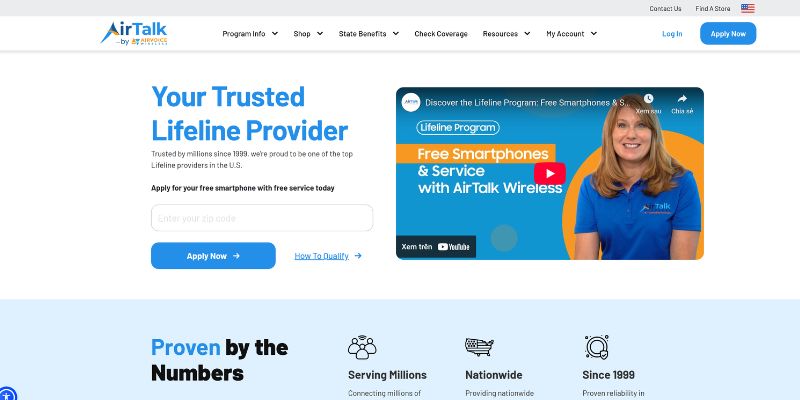
These benefits are designed to help individuals stay connected with healthcare providers, family members, and essential services. Reliable communication can be especially important for managing medical needs and responding to emergencies.
During estate recovery reviews, probate coordination, insurance claim filings, and agency notifications, reliable phone access becomes essential. Calls from Medicaid agencies, managed care plans, attorneys, and financial institutions often require quick responses.
IMPORTANT: The government does not subsidize devices. Lifeline programs cover basic service costs only. Free or discounted devices, upgrade plans, or top-ups are exclusive benefits provided by AirTalk Wireless as part of our promotional offers. Terms and conditions apply. Limited-time promotion—offers vary by state, stock availability, and eligibility.
Maintaining Essential Communication During Estate and Benefit Transitions
After a loved one’s passing, timely communication becomes especially important. Estate recovery notices, insurance correspondence, legal documents, and agency requests often arrive by mail or phone.
Reliable phone access allows families to:
- Respond to Medicaid or MERP inquiries
- Coordinate with attorneys or estate representatives
- Confirm benefit terminations or adjustments
- Handle Social Security and insurance follow-ups
Although Medicaid does not provide a death payout, staying connected can make the administrative process smoother and less overwhelming.
Conclusion
The idea of a Medicaid death benefit often leads to misunderstandings. Medicaid does not pay funeral expenses or provide survivor cash payments. Instead, coverage ends at death, and in certain cases, states may pursue estate recovery for long-term care costs.
Distinguishing Medicaid from programs like Social Security and understanding estate recovery rules can help families plan responsibly. Knowing what to expect allows survivors to focus on managing benefits, legal responsibilities, and financial transitions with greater clarity and fewer surprises.