



Medicaid Mississippi plays a critical role in providing healthcare access for some of the state’s most vulnerable residents, yet it is also one of the most misunderstood programs. Eligibility rules are stricter than in many other states, income limits vary by category, and not all low-income adults automatically qualify.
This guide breaks down how Medicaid works in Mississippi, who may be eligible, what the program covers, and what applicants should realistically expect when navigating income requirements, applications, and related assistance programs.
1. What Is Medicaid Mississippi?
Medicaid in Mississippi is a joint federal–state health coverage program administered by the Mississippi Division of Medicaid. Its purpose is to provide medical coverage to specific low-income populations who meet strict eligibility rules set by both federal law and state policy.


Unlike many states, Mississippi has not adopted Medicaid expansion for low-income adults, which means coverage is limited to defined groups rather than income alone. Eligibility depends heavily on category, such as pregnancy, disability status, age, or caregiver responsibility, in addition to household income.
Because of this structure, many residents with low wages may still fall outside Mississippi Medicaid eligibility despite financial need.
Medicaid Mississippi helps eligible residents access essential healthcare services such as doctor visits, hospital care, prescriptions, maternity care, and long-term services, but only if they qualify under one of the approved categories.
>>> Also read: Nursing Homes for Dementia Patients That Accept Medicaid 2026: What Families Need to Know
2. Who Qualifies for Medicaid in Mississippi?
Mississippi Medicaid eligibility is category-based, meaning applicants must first fit into an approved group before income is even considered. This is one of the most important distinctions that separates Mississippi from expansion states.
Category-Based Eligibility
You may qualify for Medicaid in Mississippi if you belong to one of the following groups recognized by the state:
- Children under age 19 who meet income requirements
- Pregnant women, including coverage during pregnancy and postpartum periods
- Parents or caretaker relatives of minor children, but only if household income is extremely low
- Seniors age 65 and older
- People with disabilities who meet medical and financial criteria
- Blind individuals as defined by Social Security standards
For many of these groups, eligibility is determined using both income thresholds and program-specific rules, such as disability determinations or pregnancy status.
Adult Eligibility Limits in Mississippi
This is where many applicants run into confusion. Mississippi does not offer Medicaid to most non-disabled adults ages 19-64, even if they earn very little. Adults without dependent children generally do not qualify at all, regardless of income.
For adults who are parents or caretakers, the income limits are among the lowest in the country. In practice, this means that even part-time work can place a household above Mississippi Medicaid eligibility income chart limits for adults.
Because of these restrictions, many low-income adults in Mississippi must rely on alternative coverage options, community clinics, or other assistance programs if they do not meet one of the state’s qualifying categories.
>>> Read more: Medicaid Billing Guide 2026: Simple Steps to Ensure Fast & Accurate Payments
3. What Does Medicaid Mississippi Cover?
Medicaid Mississippi covers a defined set of healthcare services for members who qualify under the state’s eligibility rules. Coverage is designed to support essential and medically necessary care, rather than optional or expanded benefits.
In general, Mississippi Medicaid coverage includes:
- Doctor visits and primary care, including preventive checkups
- Hospital services, such as inpatient and outpatient care
- Prescription medications, based on the state’s approved drug list
- Maternity and pregnancy-related care, including prenatal and postpartum services
- Care for children, including screenings, immunizations, and developmental services
- Long-term services and supports for seniors and individuals with disabilities who qualify
- Mental health and behavioral health services, when medically necessary
Coverage details can vary depending on which eligibility group you qualify under. For example, benefits available to children or pregnant women may differ from those available to seniors or people with disabilities. Some services may also require prior authorization or must be provided by Medicaid-approved providers.


4. How to Apply for Medicaid in Mississippi
Applying for Medicaid in Mississippi follows a structured process. To avoid delays or denials, it helps to complete each step carefully.
Step 1: Confirm You Belong to a Qualifying Group
Before applying, make sure you fall into an eligibility category recognized by Mississippi Medicaid, such as a child, pregnant woman, senior, person with a disability, or a parent or caretaker relative. Income alone is not enough in Mississippi.
Step 2: Gather Required Documents
Prepare documents that support your application, including:
- Proof of identity
- Proof of Mississippi residency
- Proof of household income (pay stubs, benefit letters, or statements)
- Social Security numbers for applicants, if available
- Medical or disability documentation, if applying under disability-based eligibility
Step 3: Submit Your Application
You can apply through the Mississippi Division of Medicaid using one of the following methods:
- Online, through the state’s Medicaid application portal
- By mail, by submitting a completed Medicaid application form
- In person, at a local Medicaid regional office
Choose the method that best fits your situation. Online applications are often the fastest, but paper applications are still accepted.
Step 4: Respond to Follow-Up Requests
After submission, Medicaid may request additional information or clarification. Responding promptly is critical. Missing paperwork or deadlines is one of the most common reasons applications are delayed or denied.
Step 5: Receive a Decision
Once your application is reviewed, you will receive a written notice explaining whether you are approved or denied. If approved, the notice will outline your coverage start date and next steps. If denied, the letter will explain the reason and whether you have appeal rights.
Step 6: Renew Coverage When Required
Mississippi Medicaid coverage is not permanent. Most beneficiaries must complete periodic renewals to confirm ongoing eligibility. Failing to renew on time can result in loss of coverage.
5. Does Medicaid Mississippi Qualify You for Other Assistance Programs?
Being approved for Medicaid in Mississippi often opens the door to additional support programs designed for low-income households.
While Medicaid itself focuses on healthcare coverage, eligibility can also act as proof of need for other federally supported benefits that help families manage daily necessities like food, utilities, and communication access.
One of the most commonly connected programs is Lifeline, which helps eligible households reduce the cost of staying connected by phone or internet through providers. For many Mississippi Medicaid members, this connection becomes especially important when managing appointments, renewals, and ongoing communication with healthcare providers.
Medicaid Mississippi and Lifeline Eligibility
Medicaid participation in Mississippi automatically qualify households for Lifeline under program-based eligibility rules. This means that if you are currently enrolled in Medicaid, you may meet Lifeline’s eligibility criteria without needing to re-verify income separately.
It is important to understand how Lifeline works:
- Lifeline is a federal benefit, not a phone company or service provider
- The program offers a monthly discount on phone or internet service for eligible households
- If applying for Lifeline through FCC-authorized providers, eligible applicants can get access to free/discounted devices like smartphones, tablets, or even smartwatches.
- Approved Lifeline providers deliver the actual phone service, and any device offers they make available
- Lifeline itself does not supply phones, tablets, or wireless plans directly
Because Medicaid enrollment already confirms financial eligibility, many Mississippi residents find Lifeline easier to access once they are approved for Medicaid. This is why people searching for a free phone with Medicaid are typically guided toward Lifeline-supported options offered through approved providers.
How AirTalk Wireless Supports Mississippi Medicaid Users
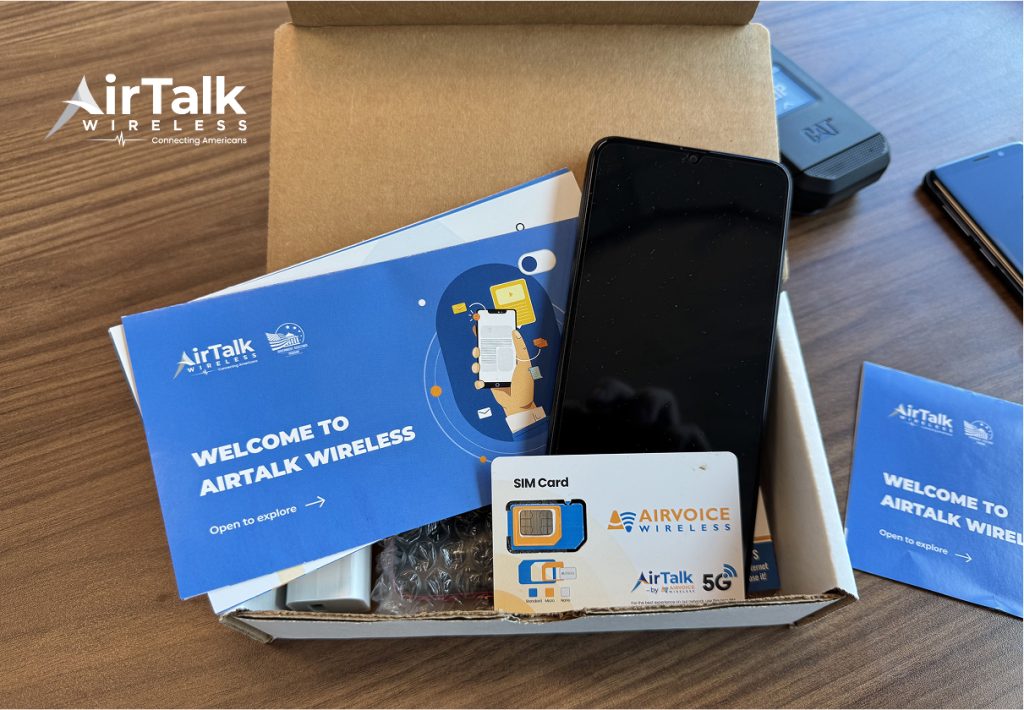
For Mississippi Medicaid members exploring Lifeline-supported communication options, AirTalk Wireless is one of the providers many households choose to work with.
Rather than leaving applicants to navigate eligibility rules alone, AirTalk focuses on helping users understand how their Medicaid status fits into the Lifeline application process.
AirTalk Wireless supports Mississippi Medicaid users by:
- Accepting Medicaid enrollment as qualifying documentation for Lifeline eligibility
- Offering brand-name smartphones and tablets, depending on availability and state-specific offers
- Providing wireless plans that include talk, text, and data for everyday use
- Allowing users to choose from available devices, instead of assigning a random model
- Handling applications through a secure online system designed to reduce processing delays
Because healthcare programs like Medicaid require frequent follow-ups, renewals, and provider communication, many households prioritize reliable phone access. AirTalk’s focus on device quality, clarity around eligibility, and user support makes it a practical option for Mississippi Medicaid members looking to stay reachable without adding new monthly costs.
IMPORTANT: The government does not subsidize devices. Lifeline programs cover basic service costs only. Free or discounted devices, upgrade plans, or top-ups are exclusive benefits provided by AirTalk Wireless as part of our promotional offers. Terms and conditions apply. Limited-time promotion—offers vary by state, stock availability, and eligibility.

Conclusion
Medicaid Mississippi does more than provide healthcare coverage. For eligible residents, it can also serve as a gateway to other essential assistance programs that support daily stability. Understanding how Medicaid connects to options like Lifeline helps households take full advantage of the benefits they qualify for.