


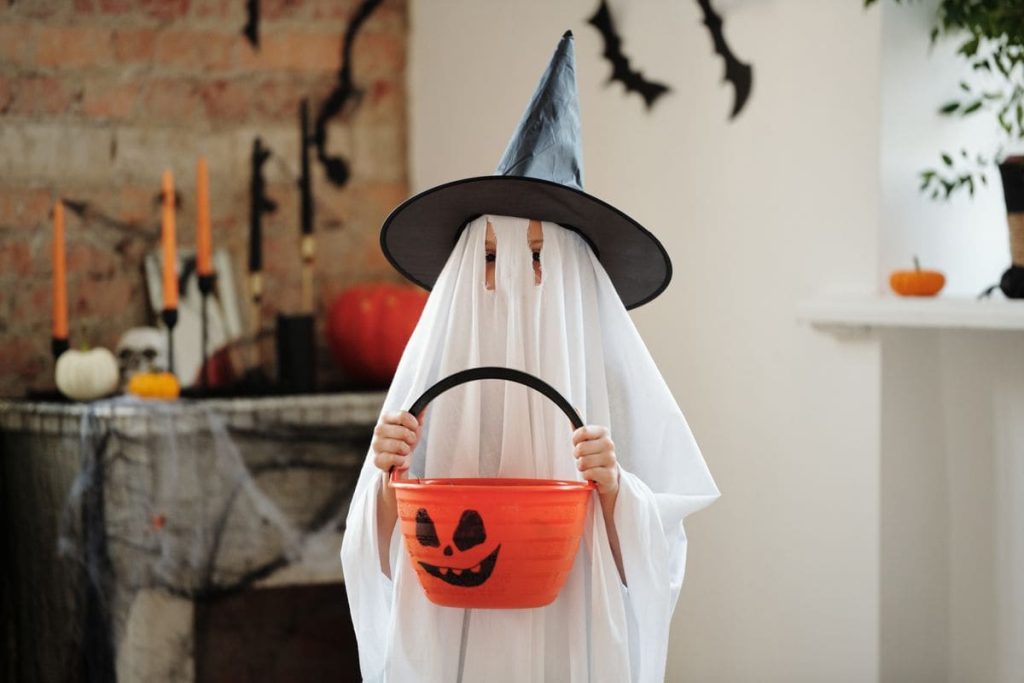
Halloween costumes now range from ghosts and witches to superheroes, celebrities, and movie characters, but the custom began long before costume stores and pop culture. Then, why do people dress up for Halloween?
1. Why Do People Dress Up for Halloween?
Why do people dress up for Halloween in the first place?
- One important part of the story is Samhain, a Gaelic seasonal festival marking the end of summer and the beginning of winter each year. Historical accounts connect the season with beliefs that supernatural beings and, in some traditions, the dead, could cross more freely into the human world.
- Costumes and disguise are often linked to these beliefs, but it is safer not to reduce the tradition to one rule such as “people dressed up so ghosts would not recognize them.” Disguises were believed to confuse or avoid spirits.
- Later Scottish traditions also included masked, veiled, painted, or blackened faces, while some accounts describe people dressing as supernatural beings themselves.
The evidence points to related practices developing across different places and periods.
Mumming and guising later added another layer. Participants could wear disguises, visit homes, perform songs, verses, jokes, or short acts, and receive food or gifts. Early Halloween-style costumes were therefore often eerie, anonymous, or supernatural rather than based on entertainment characters.
In short, why do people dress up for Halloween? Disguise became associated with the season through a mix of supernatural beliefs, masking, folk performance, and community customs that changed over time.


>>> Read more: Is Halloween Based On A True Story? The Real Inspiration Behind Michael Myers
2. How Did Halloween Costumes Become Part of Trick-or-Treating?
To understand why people dress up for Halloween while going door to door, it helps to separate traditions that eventually overlapped.
- One was souling, a medieval Christian custom associated with All Souls’ Day. Poorer people, and later some children, visited homes and received food in exchange for prayers for the dead.
- Another was guising, especially associated with Scotland and Ireland, in which people went from house to house in disguise and performed a song, rhyme, joke, or another act before receiving food, coins, or treats.
These practices were not identical, and modern trick-or-treating is not the direct continuation of one alone. Instead, Halloween developed through cultural syncretism: different religious, seasonal, and folk customs gradually mixed and acquired new meanings.
Why do people dress up in costumes for Halloween? This cannot be answered by calling the practice completely pagan or completely Christian.
- Samhain-related folklore contributed supernatural themes and disguise, while Christian-era customs contributed door-to-door visiting and remembrance of the dead.
- Irish and Scottish immigrants carried many of these traditions to North America, where Halloween changed again.
- By the early 20th century, costumed house-to-house activity was documented in the United States, with trick-or-treating spreading more widely by mid-century.
3. How Halloween Costumes Changed Over Time
In the United States, costumes moved from homemade disguises and spooky masks to mass-produced characters and pop-culture looks.
Early 1900s-1920s: Early 20th-century costumes were commonly homemade. Rather than accurately portraying a specific character, wearers often tried to look mysterious, unsettling, or anonymous. Ghosts, witches, black cats, skeleton-like figures, and masks fit the holiday’s supernatural atmosphere.
1930s-1950s: Commercial Halloween products expanded during the 20th century. By the 1950s, more affordable boxed costumes helped children dress as recognizable characters from comics, movies, and television.
Halloween becomes more family-friendly: American communities increasingly organized Halloween parties, parades, haunted attractions, and supervised trick-or-treating. Costumes became less tied only to frightening disguise and more closely associated with children’s entertainment.
1970s–1980s: Costume choices widened again. Star Wars characters became popular after the 1977 film, presidential masks became a recognizable form of parody and social commentary, and the rise of slasher films pushed horror costumes toward masked villains and more graphic imagery.
1990s to today: From the 1990s onward, Halloween costumes increasingly followed movies, television, music, celebrities, games, memes, and internet trends. For many, costumes reference shared culture, make people laugh, support a group theme, or reveal a side of themselves that everyday clothing doesn’t.

>>> Read more: What To Do On Halloween: 25 Fun Ideas For Every Kind Of Celebration
4. Why Do People Still Dress Up for Halloween Today?
Why do people like to dress up for Halloween when most people no longer connect costumes with ancient supernatural beliefs? Why do people dress up for Halloween today? Because costumes combine imagination, identity, and tradition year after year.
- Costumes let people temporarily become someone else. A costume creates a chance to step into another role.
- Costumes can change how people feel and behave. A bold, funny, frightening, or powerful costume can feel different from ordinary clothes.
- Masks and costumes create a sense of anonymity. Masks, makeup, wigs, and unfamiliar clothing can make a person feel less recognizable. That distance can make role-play easier and may reduce self-consciousness for some people.
- Dressing up is now a form of fun and self-expression. Why do people like to dress up for Halloween? Modern costumes can communicate humor, fandom, creativity, nostalgia, or personal style. Friends coordinate themes, families dress together, and adults participate alongside children. This social side is another reason why people dress up for Halloween.
5. Conclusion
Halloween costumes have changed a lot over time, but dressing up remains one of the holiday’s most enjoyable parts.
For many people, it is simply a chance to be creative, have fun with friends and family, and step into a different character for a night. Whatever the costume, the tradition continues because it brings imagination, humor, and a sense of shared celebration to Halloween.
FAQs
What is the true story behind Halloween?
Halloween comes from ancient Celtic traditions, especially the festival of Samhain, which marked the end of the harvest season. Over time, it blended with Christian observances such as All Hallows’ Eve, the night before All Saints’ Day. Modern Halloween combines elements from these traditions with newer customs like costumes, trick-or-treating, and decorations.
Is dressing up for Halloween against Christianity?
Views differ among Christians. Some see Halloween costumes as a harmless cultural tradition, while others avoid the holiday because of its historical connections to spirits and supernatural themes. Whether dressing up is acceptable often depends on personal beliefs and the practices of a specific Christian community.
Why was it called Halloween?
The name Halloween comes from “All Hallows’ Eve,” meaning the evening before All Hallows’ Day (All Saints’ Day) on November 1. Over time, the phrase was shortened and changed into the word “Halloween.”