

Free SIM Card With Free Service Government Program: How to Qualify in 2026
- Share This:
-


-

-

-

-

-

-

-


If you searched for a free SIM card with free service government program, you are likely looking for an affordable way to stay connected without paying a high monthly phone bill.
Through the federal Lifeline program, eligible low-income households may receive discounted phone service that can cost as little as $0 per month through participating providers.
Depending on the provider and location, benefits may include a SIM card, monthly talk, text, mobile data, hotspot access, or eSIM support.
This guide explains how the program works, who qualifies, what services may be available, and how to apply through AirTalk Wireless.
1. What Is a Free SIM Card With Free Service Government Program?
A free SIM card and free service government program generally refers to mobile service offered through Lifeline, a federal assistance program for eligible low-income households. The government does not usually send consumers a SIM card directly.
Instead, Lifeline provides a monthly service discount through approved telecommunications companies, which may use the benefit to offer qualifying customers a phone plan at little or no monthly cost.
After approval, customers may receive a physical SIM card or, when supported, activate an eSIM and use it with a compatible phone. Available service varies by provider and state but may include monthly talk, text, mobile data, and other plan features.
Lifeline remains active, but the Affordable Connectivity Program, or ACP, ended on June 1, 2024, after federal funding expired. Consumers can no longer enroll in ACP or receive its former broadband discount.
However, eligible households may still apply for Lifeline and select a participating provider that offers SIM-based mobile service.
2. What Do You Get With a Free Government SIM Card?
A free government SIM card typically comes with free cell phone services supported through the Lifeline program.
Depending on the provider, state, and available plan, eligible customers may receive:
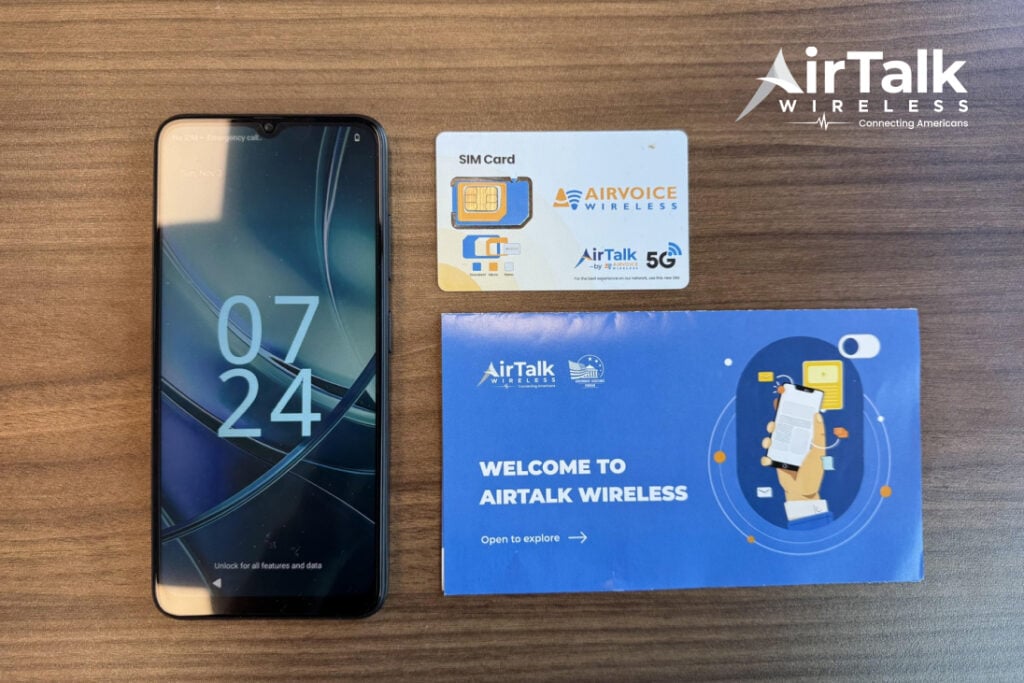
- A physical SIM card: The SIM connects a compatible phone to the provider’s mobile network.
- A free government-backed phone: Some participating providers may offer a phone at no additional cost with eligible Lifeline service. The device is provided by the carrier, not directly by the government, and model availability may vary.
- Monthly talk, text, and data: Many Lifeline plans include recurring call minutes, text messages, and mobile data at little or no monthly cost.
- Mobile hotspot access: Some plans allow customers to share their phone’s data connection with a tablet, laptop, or another device.
- eSIM availability: Customers with compatible devices may be able to activate service digitally without using a physical SIM card.
- Bring Your Own Device support: BYOD lets customers use an existing compatible phone with their Lifeline service.
Plan features, data allowances, device options, and network compatibility depend on the applicant’s ZIP code and provider availability.
>>> Also read: How to Get a Free iPhone 15 Pro Max (Without Scams)
3. Who Qualifies for a Free Government SIM Card?
To qualify for a free government SIM card through Lifeline, you must generally meet either an income-based or program-based requirement.
You may qualify if your household income is at or below 135% of the Federal Poverty Guidelines. The income limit depends on your household size and whether you live in the continental United States, Alaska, or Hawaii.
You may also qualify if you or someone in your household participates in an eligible assistance program, such as:
- Medicaid
- Supplemental Nutrition Assistance Program (SNAP)
- Supplemental Security Income (SSI)
- Federal Public Housing Assistance
- Veterans Pension or Survivors Benefit
Residents of qualifying Tribal lands may also be eligible through certain Tribal assistance programs.
Lifeline is generally limited to one benefit per household, not one benefit per person. Applicants may need to provide proof of income, program participation, identity, or address if their eligibility cannot be verified automatically.
After qualification, they can select a participating provider and apply for an available SIM card, phone plan with free phone.
4. Why Choose AirTalk Wireless for a Free Government SIM Card?
AirTalk Wireless gives eligible customers more than a basic SIM card. Its available plans include unlimited talk and text, nationwide coverage, and monthly mobile data, helping customers stay connected without a high phone bill.
Customers can choose a free physical SIM kit or eSIM, depending on device compatibility. AirTalk also supports Wi-Fi calling and useful calling features such as caller ID, call waiting, three-way calling, and voicemail.
Eligible customers who want to keep their current compatible phone can select the Bring Your Own Device option.
Another notable benefit is free international calling to more than 200 countries and territories, making it easier to keep in touch with family and friends abroad.
International roaming is available in 70 countries and territories, although additional charges apply. AirTalk also lists 5G-speed hotspot capacity as a coming-soon feature that may require additional payment.
Other advantages include exclusive rewards through AirTalk’s loyalty program and access to dedicated customer support.
Plan benefits, data allowances, eSIM compatibility, and availability may vary by state and ZIP code, so applicants should review the options shown during program enrollment.
IMPORTANT: The government does not subsidize devices. Lifeline programs cover basic service costs only. Free or discounted devices, upgrade plans, or top-ups are exclusive benefits provided by AirTalk Wireless as part of our promotional offers. Terms and conditions apply. Limited-time promotion—offers vary by state, stock availability, and eligibility.
>>> Also read: AirTalk Wireless 24 Hour Customer Service Phone Number: Official Support Guide
5. How to Apply for a Free SIM Card Through AirTalk Wireless
Applying for free SIM card with free service government through AirTalk Wireless can be completed online in a few simple steps.
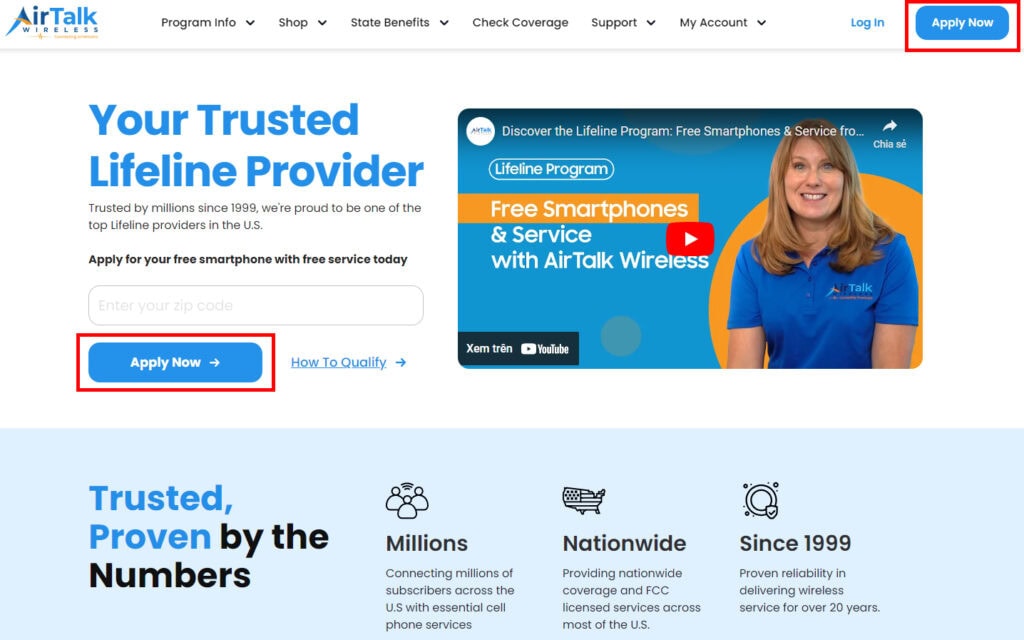
Step 1: Visit AirTalk Wireless
Go to the AirTalk Wireless website and enter your ZIP code. This allows you to confirm service availability and view the plans and benefits offered in your area.
Step 2: Choose Your Plan
Review the available options and select the one that best fits your needs:
- Free Phone and Plan: Receive an available phone, a new SIM card, and monthly service after approval.
- Bring Your Own Device (BYOD): Keep using your current compatible phone and connect it to an available AirTalk service plan with a free SIM kit or eSIM.
Step 3: Select a Device
Customers choosing a phone plan can browse available free or heavily discounted smartphones, tablets, and device bundles. Models, prices, and inventory vary by location and availability.
BYOD customers can skip purchasing a new phone, but they should confirm that their current device is compatible with AirTalk’s network.
Step 4: Submit Your Documents
Complete the application and provide any documents requested to verify your identity and Lifeline eligibility. These may include proof of participation in a qualifying assistance program, proof of income, identification, or proof of address.
You can check the required documents.
Step 5: Wait for Approval and Shipment
Submit your application for review. Once approved, AirTalk will send a confirmation and tracking information.
Most device and SIM orders arrive within approximately 7–10 business days, although delivery times may vary by location and shipping method.
>>> You might be interested in: Medicare Free Cell Phone: How to Get Free Phone & Data Plan
6. Final Thoughts
For people who need reliable but affordable phone service, a free SIM card with free service government program may offer a practical solution.
Eligible customers can use Lifeline benefits to access monthly mobile service, keep their current compatible phone, or choose from available device options through AirTalk Wireless.
Since eligibility and plan benefits depend on your household and location, the best next step is to check your ZIP code and explore the plans currently available to you.
7. FAQs
What is the best free phone government program?
Lifeline is the primary federal program that helps eligible low-income households reduce the cost of phone or internet service. Lifeline provides a monthly service discount, while participating providers may also offer a free SIM card or phone at no additional cost.
Device offers and service allowances vary by provider and location.
Is the SIM card really free?
Yes, some Lifeline providers, including AirTalk Wireless, may offer eligible customers a physical SIM kit or eSIM at no additional cost. However, the SIM and any promotional device are provided by the participating carrier, not directly by the government.
Available benefits depend on the plan and location.
Can I keep my current phone number?
Yes. You can usually keep your current number by requesting a port-in when switching to a participating provider. You may need your current carrier’s account number, transfer PIN, and billing information.
Keep your existing service active until the number transfer is complete.
Does Lifeline provide unlimited data?
No. Lifeline does not guarantee unlimited mobile data. It provides a monthly discount toward eligible phone or internet service, and each provider determines its plan’s data allowance.
Some plans may include unlimited talk and text with a limited amount of high-speed data.
Can I switch providers later?
Yes. You can generally transfer your Lifeline benefit to another participating provider. You cannot receive Lifeline service from two providers at the same time, so your previous benefit will end when the transfer is completed.
Compare coverage, plan features, and device compatibility before switching.
Another helpful guide for installing SIM card into your BYOD
- Share This:
-
-
-
-
-
-
-
-
New on AirTalk Wireless


How to Disconnect CarPlay (Wired, Wireless, or Permanently)
